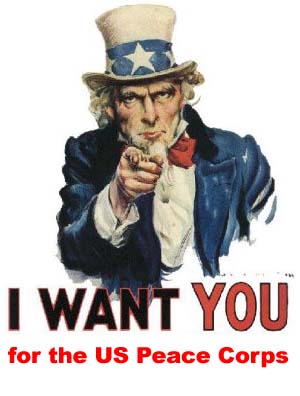
Saturday, February 28, 2009

February 28


“[I]f the president had been raised in the African-American community in the continental United States, he would never have been chosen as president. It is quite sadly simple: He would be too angry.”

--Washington Times Columnist Georgie Anne Geyer; see also Phillip Atiba Goff and Jennifer L. Eberhardt, "Race and the ape image," Los Angeles Times

“Hilary Mackie has detected in the Iliad a consistent differentiation between representations in Greek of Achaean and Trojan speech, where Achaeans repeatedly engage in public, ritualized abuse: 'Achaeans are proficient at blame, while Trojans perform praise poetry.'"

--Wikipedia, entry on "flyting, a contest of insults, often conducted in verse"

VIDEO

13-Year-Old Conservative Wunderkind Wows CPAC, Joe The PlumberHuffington Post

PUBLIC DIPLOMACY

Obama gets it right on Iraq - Marc Lynch, Foreign Policy: “Public diplomacy. Obama's decision to speak directly to the Iraqi people -- and not only to Iraqi leaders -- was brilliantly conceived and executed. His very clear statement that the U.S. had no aspirations on Iraqi territory or resources -- no permanent bases -- was pitch perfect. And I just really liked this frank, direct, respectful talk.”

Two Hopeful Signs – William Kiehl, My PD Blog: "In the past couple of days two hopeful harbingers of better times ahead

for public diplomacy took my eye. The first was Senator Lugar’s wonderfully lucid and much needed statement on the importance of American Cultural and Information Centers as a means to engage the world in a meaningful dialogue. … The other hopeful words were expressed by one of America’s finest diplomats, Career Ambassador Thomas J. Pickering. In a statement before a Congressional Committee, Pickering called for a doubling of funding for America’s exchange programs and with good reason—they work!” Image from

Kudos For Senator Lugar's Call To Re-Establish International American Centers - Michael Knigge, Across the Pond: "It doesn't happen often, but sometimes someone expresses an opinion one can entirely agree with. … Well, this just happened to me after reading Senator Richard Lugar's article arguing why the U.S. should reverse its long process of closing its America Centers around the world. … To be clear, the internet and other modern information tools as well as private sponsors are and should be a big part of public diplomacy. But can and should they replace a live forum, a marketplace of ideas where people in cities across the world can meet, talk and debate with Americans, not in a virtual chat room, but in a real reading room? I think not.” Image from

Democracy the antidote to jihadist radicalization, task force concludes - Michael Allen, Democracy Digest: “Annual U.S. government spending on democracy support and public diplomacy in the broader Middle East amounts to less than 1 percent of the Pentagon’s annual spending in Iraq. The Obama administration should double the resources available to the National Endowment for Democracy and the Middle East Partnership Initiative to continue their support for those ‘institutions and organizations that have a demonstrated track record in standing up to and competing with both violent and nonviolent extremists.’” Image from

VOL. V NO. 5, February 13-February 26, 2009 - The Layalina Review on Public Diplomacy and Arab Media

Newspaper reporting on GAO report on TV Martí observes TV Martí's report on the GAO report (updated) - Kim Andrew Elliott Discussing International Broadcasting and Public Diplomacy

A late Valentine’s Day letter – Ben, Silk Road Economy: “A Minnie Mouse watch … [is] a heavy-duty American cultural export. So, a word of advice to US Treasury Secretary Timothy Geithner. I agree, there are good reasons to argue that the Chinese currency is undervalued. However, a stronger currency doesn’t mean that outsourced factories will return to the United States.

And, more importantly, a young Syrian’s girl Minnie Mouse watch might just have a positive effect on the way she thinks about America as she grows older. If so, it’s a small public diplomacy win. It’s also a lot cheaper than America’s other public diplomacy efforts in the Middle East, such as running an Arabic-language television-station like Al Hurra. In fact, so long as the Chinese manufacturer is paying royalties to the Disney company, then the Minnie Mouse watch might just make America money. I’m arguing slightly tongue-in-cheek.” Image from

Citizen Diplomacy – Rebecca, Perspectives on Public Diplomacy: “I attended the first day of the Marshall Conference on Citizen Diplomacy at the State Department on Thursday. While I believe there was a lot to be learned, I also feel that, much like Public Diplomacy, nobody could give a clear answer on what their idea of Citizen Diplomacy was. … I got my chance to ask a question to the panel: ’Since there have been such successes with citizen and cultural diplomacy when they are not related directly to the government, how would the government be able to utilize these aspects of diplomacy without tainting it by the generally negative opinion abroad of the US government.’ The answer I received? In a nutshell, it was, Public Diplomacy needs to participate in more listening.” Image from

Rewriting the Narrative: An Integrated Strategy for counterradicalization - Matthew Levitt, Counterterrorism Blog: Rewriting the Narrative: An Integrated Strategy for Counterradicalization is the final report of the Task Force on Confronting the Ideology of Radical Extremism, a bipartisan, blue-ribbon commission of diplomats, legislators, strategists, scholars, and experts. … The report provides analysis and recommendations on a spectrum of discrete policy issues -- democracy promotion, political reform, public diplomacy, strategic communications, and counterradicalization -- offering an integrated approach to staunching the spread of Islamist extremism. The extensive recommendations suggest an array of policy instruments, from creating a Counterradicalization Forum that draws on ‘best practices’ of friends and partners in Europe and the Middle East, to infusing with renewed mission, urgency, and creativity U.S. international broadcasting to Arab and Muslim societies.” Image from

It is time to create a center for public diplomacy discourse and research - Matt Armstrong, MountainRunner

Consul (representative) - bill, koreatruthcommission.org: “Activities of a consulate include protecting the interests of their citizens temporarily or permanently resident in the host country, issuing passports; issuing visas to foreigners and public diplomacy.”

The Great Russian Firewall - Rebecca MacKinnon, Evgeny Morozov, Moscow Times: “Even the most cold-hearted realists would agree that the failure of communist censorship played a role in the collapse of the Iron Curtain: Voice of America, the fax machine, rock 'n' roll and the lure of Western capitalism helped to win over the people of the Soviet bloc. … Meanwhile, China is looking to Russia, which may have invented an entirely new model of controlling the Internet without recourse to censorship. Having established full control of traditional media, the Kremlin is now moving full-speed into the virtual world. The authorities' strategy is not new: establish tight control over the leading publishing platforms and fill them with propaganda and spin to shape online public opinion.” Image from

Public engagement key to better image: Spokesman
- Wang Zhuoqiong, China Daily: “For Zhao Qizheng, 2008 will be remembered as the year when China made a mark in ‘public diplomacy’. That is because, last year, the government disseminated timely and accurate information to the public on such major events as the Beijing Olympics, the destructive snowstorms and the devastating May 12 earthquake, Zhao told China Daily on Friday. This helped in boosting the government's standing among its citizens, Zhao, who used to head the State Council Information Office, said.”

Spaniards seek relations with Africa - Administrator, Namibia Economist:

“Casa África is a public consortium sponsored by the Spanish Ministry of Foreign Affairs and Cooperation, the Spanish Agency for International Cooperation for Development and authorities of the Canary Islands ... . Casa África is a new instrument of public diplomacy that aims to become a central reference between Spain, Europe and Africa, which considers the African continent a place of great challenges and enormous opportunities.” Image from

Sweden - reading in February - The Wonderful Adventures of SNIFF: A travel chronicle...:

”Svenska Dagbladet visited a seminar on 100 years of Swedish public diplomacy and dealing with the press. Dagens Nyheter wrote here on the same.” [Note: Both articles are in Swedish]. Image from

RELATED ITEMS

Time for Iraq: President Obama's strategy aims at success. Is that a goal congressional Democrats can support? – Editorial, Washington Post: Though Obama opposed the war, his strategy recognizes what has been achieved in Iraq, even at a terrible cost, and aims at preserving it. His party would do well to follow his lead. Image from

Obama's Plan for IraqWashington Post: The Post asked foreign policy experts for their impressions of President Obama's speech at Camp Lejeune on Friday. Contributions are from Randy Scheunemann, Zbigniew Brzezinski, Qubad J. Talabani, Andrew J. Bacevich, Douglas J. Feith, Jessica Mathews and Danielle Pletka.

An End to Baghdad's 'Dark Era': Nightclubs on the City's Famous Abu Nawas Street Are Open Again and Popular -- Even With U.S. Troops - Sudarsan Raghavan, Washington Post: At Hassan's nightclub, the American soldier danced, arm in arm, with his new Iraqi friends.

A Clean Fight - Timothy Hsia, New York Times: In the last few years, the United States military has become a much more environmentally conscious organization. But these eco-friendly practices need to be applied every place where the military and civilian contractors operate, including Iraq.

From Bush to Obama: Seven Years of Wartime Propaganda
- Anthony DiMaggio, CounterPunch: Whether the American public will be able to effectively hold the Obama Presidency to its pre-election promise to quickly end the war in Iraq is uncertain. One thing, however, is clear. If the public doesn’t place continued pressure on this administration, the U.S. will likely remain in Iraq for many years to come. Image from

War Reporting and Propaganda in Iraq and Afghanistan: The media takes a beating for not reporting on the positive aspects of war; it is a notion that most people who have spent time in a combat theater find ridiculous - Tim King, Salem-News.com: “I believe that with the right approach, truly setting out to win the hears and minds of the people the right way, we could help Afghanistan greatly. It starts with increasing relations, and keeping American l[i]aisons in place who don't leave the country on cue every 12 months when a deployment ends, effectively terminating any progress that had been made in local relations. Indiscriminate bombing is another huge issue that has turned many of our former allies against us.”

Playing With Fire in Pakistan – Editorial, New York Times: Pakistan must get serious about tackling its problems, including the fight against Al Qaeda and the Taliban. Pakistanis need to understand that this is their fight, not just America’s.

The war we gave Mexico: The drugs, guns and culture that fuel the violence all are linked to the U.S. - Tim Rutten, Los Angeles Times: If Americans really are concerned about the horrific toll inflicted by Mexico's narco-gangsters, we need to ask some tough questions about our own cultural and political delusions. Image from

Preaching vs. pragmatism - Georgie Anne Geyer, Washington Times: It seems clear that the nation's top diplomat has already thrown away her husband's ideological stances about speaking constantly and largely ineffectively about human rights, and is enthusiastically and effectively adopting President Obama's pragmatic approach to foreign policy.

Welcome to the Toughest Job in Town - David Ignatius, Washington Post: In the end, a National Security Adviser's success depends on his relationship with the person down the hall in the Oval Office. Though Jones and Obama are of different ages and backgrounds, they both seem to like a low-key, deliberative process, and they share a passion for policy reviews. Image from

Obama's Intelligence Blunder - Jon Chait, Washington Post: Obama has made one major mistake that has attracted little public attention: his appointment of Charles Freeman as chairman of the National Intelligence Council. Freeman was attacked by pro-Israel activists, but the contretemps over Freeman's view of Israel misses the broader problem, which is that he's an ideological fanatic.

Oh propaganda, How we adore theeeeeeee!Immorality:

Article about how we misquote to demonize from the most simple contexts from Ahmedinejad. Image from

The DMZ - Where is Cat?? Adventures of Cat the Lawyer... Meow!: Propaganda Town in North Korea. This is hilarious: until 2004, North Korea broadcasted propaganda from this town to the South for six to twelve hours everyday! It is a ghost town as lights turn on and turn off at the same time.

Online propaganda of a match.com generation - Cassie Hepler, Philadelphia Sex & Relationships Examiner: “I'm quite convinced that the Internet will bring more people together but alas; it is shuffling through the bullcrap that is the ultimate downfall.”

PHOTO: Homeless and in love. Photos/wardrobe by S. Jenx. Make up by Krysi King. Models: Cassie Hepler and Scott Staab.

Friday, February 27, 2009

February 27


“'Katyń' re-creates one of the everyday terrors of living under totalitarianism: no one in power ever tells you the truth, and you live on rumor and hope."

--The New Yorker’s David Denby, reviewing Andrzei Waida’s film

"'[Orwell’s statement that] all art is to some extent propaganda' looks striking, but is greatly weakened by the 'to some extent,' and what, finally, does it mean? Only that all art is 'about' something, even if it is only about itself. 'Art for art's sake'—a concept Orwell would abhor—is just 'propaganda' for art itself, which the movement was well aware of."

--Julian Barnes, “Such, Such Was Eric Blair,” New York Review of Books; image from

TWITTERING

Use this Financial Times graphic to find the twittering hot spots around the US and UK and to identify the most closely followed tweeting politicians.

PUBLIC DIPLOMACY

To win hearts and minds, get back in the game – Richard Lugar, Foreign Policy: “As part of a broader overhaul of its public diplomacy effort, the United States should reinvigorate the old American Centers concept-putting, when possible, new ones that are safe but accessible in vibrant downtown areas-support active cultural programming, and resume the teaching of English by American or U.S.-trained teachers hired directly by embassies.

That would help draw people to the centers and ensure that students got some American perspective along with their grammar. America's best players in public diplomacy have always been its people and its ideas. The United States should get them back into the game instead of standing on the sidelines.” Richard G. Lugar is a U.S. senator representing Indiana. VIA MC

Wake Up Call for the Senate Foreign Relations Committee - Jameson, Perspectives on Public Diplomacy: “We don't have that many embassy compounds within which to barricade all of these American Corners ... instead, we've partnered with local institutions to bring America to each locality in the way that matches the people, the time, and the place. Sens. Lugar and Kerry, you still haven't had enough? … You're going to need an abacus to count all of the American Corner locations on this spreadsheet that comes to you care of one of the four American Corner locations in Hungary alone. On top of the spreadsheet, the same American Corner in Eger, Hungary brings you a full agenda for 2008-2009 which includes a lecture series on American culture, a chance to talk with an economist about the economic crisis, a competition on knowledge of the U.S. for secondary students, workshops on studying in the U.S., a lecture series on the 1960s U.S. talking about the movements and people that shaped the decade, 'America through Hungarian Eyes' - an amateur photo competition for Hungarians, and a 'My America, or that's how I see the U.S.' multimedia art competition for primary and secondary school students.” Image from

Sen. Kit Bond Makes Powerful Statement in Support of Peace Corps on Senate Floor - Peace Corps Polyglot: The blog of the National Peace Corps Association: “Today, U.S. Senator Kit Bond of Missouri made statements on the Senate floor urging his colleagues to support expansion of Peace Corps and smart power initiatives. … Text of the Statement: … I urge my colleagues to join me in supporting an expansion of the Peace Corps and all of our nation’s Smart Power assets. Smart Power initiatives are our non-military diplomatic efforts, including educational exchanges, free trade, public diplomacy, economic and agricultural development, humanitarian assistance, and English language teaching just to name a few. All of these Smart Power initiatives contribute not only to a better life for so many in need, but also help create the conditions for a more stable, and peaceful world.” SEE ALSO; image from

Colin Powell, USGLC Leadership Applaud Obama FY10 Budget's 'Smart Power' Funding - Impact Wire: “The U.S. Global Leadership Campaign today applauded President Barack Obama's FY2010 International Affairs Budget request for $51.7 billion, an increase of 9.5% from FY2009's $47.2 billion, and called on Congress to fully fund the request. … The International Affairs Budget funds the State Department's diplomatic programs, global health initiatives on HIV/AIDS, malaria and tuberculosis, and other development and humanitarian assistance programs to help stabilize fragile states, reduce global poverty and assist refugees. It also covers U.S. food aid and democracy, human rights and public diplomacy efforts critical to restoring America's image abroad.” Image from

Getting Beat in the War of Ideas - Steven Corman, COMOPS Journal: “al Qaeda talking points are being agreed-to by large numbers of Muslims in diverse areas of the world selected by random sampling. We are getting beat–nay, getting our asses handed to us–in the War of Ideas. Thinking about how to turn things around is a very tough problem. Jim Glassman, immediate past Under Secretary for Public Diplomacy and Public Affairs, decided to attack the al Qaeda 'brand' because he concluded (correctly) that America wasn’t selling. Though that was a reasonable course of action for his short term in office, in the long run it doesn’t really fix things. … A general guideline would be to take actions that disprove the above beliefs.“ Image from

MobilityWorld-Wide-Matel: “The new media is more fluid, fragmented, decentralized and personalized than more traditional media. This creates challenges and opportunities for public diplomacy as well as for the traditional way we deliver messages at State Department. … Through all the changes in technologies, Edward R. Murrow’s famous observation remains true, 'The really crucial link in the international communication chain is the last three feet, which is bridged by personal contact, one person talking to another.'” Image from

Facebook Diplomacy: How Governments are Exploiting the Internet - Internet&democracy: “Th[e] mobilization of ordinary citizens to push government propaganda may be the most successful tactic for governments on the Internet, instead of public relations campaigns like the Bush administration’s failed efforts to ‘rebrand’ the US in the Middle East, or the Kremin hiring of a web-savvy PR firm to promote its agenda.”

The People-to-People People - Mark Dillen, Public Diplomacy: The World Affairs Blog Network, American Foreign Policy Association:

The World Affairs Blog Network, Foreign Policy Association: “Now is the time for all good men — and women — to come to the aid of public diplomacy. I have in mind citizen travel to countries that, until recently, were off-limits to Americans, like Iran, Libya or Syria.” Image from

A New Public Diplomacy Strategy for the United States - ThinktankWatch: “Now, as the Obama Presidency is generating a new positive wave, it seems America lives in a timely moment to change the mind of the world. Rand Corporation international relations scholars think that there are new opportunities. They argue that ‘U.S. strategic communication and public diplomacy have been the targets of scathing criticism and proposals for overhaul since shortly after September 11, 2001. Proposals and recommendations abound, but many reform efforts have stumbled or have been plagued by false starts.’”

Commission of Trend Communicator of Japanese Pop Culture in the Field of FashionMinistry of Foreign Affairs Japan: “With a view to promoting understanding of and confidence in Japan, the Ministry of Foreign Affairs is now planning to make more active use of Japan’s pop culture, which has been enjoying very high popularity among young people around the world, in addition to the traditional culture and arts that the ministry has so far used for that purpose.

1. The Ministry of Foreign Affairs has therefore decided to give a few young leaders who are conspicuously active in the field of fashion the title 'Trend Communicator of Japanese Pop Culture,' commissioning them to conduct PR and other activities, and asking them to extend as much cooperation as possible for cultural projects to be carried out by Japanese embassies abroad and the Japan Foundation. 2. ... [T]he Director-General, Public Diplomacy Department, Ministry of Foreign Affairs, will hand over a letter to ... persons selected from, in particular, the fashion field out of pop culture." Image from

Can Israel make peace with Syria without leaving Golan? - Aluf Benn, Haaretz: “The common denominator of all the failed [ peace] attempts was that both sides hesitated to take the final step that would burst through the psychological barriers, but also put them in great political danger. Israel refused to withdraw to the line that the Syrians demanded, which would have given them control of the northeastern shore of Lake Kinneret. Damascus refused normalization measures and public diplomacy, which might have softened Israeli opposition to a withdrawal.” Image from

RELATED ITEMS

Cross-Cultural Awareness in the U.S. Military - International Higher Education Consulting Blog™: A Source for News On International Education And Public Diplomacy by David Comp

The Obamaist Manifesto - Charles Krauthammer, Washington Post:
The president wants to transform America into Europe. Image from

Anger Grows in India over U.S. Visa Rules: It's protectionism, say Indian critics, that Congress has banned companies receiving bailout money from hiring foreigners on H-1B visas - Mehul Srivastava, Business Week

Why We Detain the Innocent
- Aziz Huq, Nation: Last week, a federal court of appeals in DC said, in astriking ruling, that the seventeen ethnic Uighurs detained at Guantánamo Bay, notwithstanding the fact they posed no threat to the U.S., can be detained indefinitely without hope of judicial remedy.

The New Reality In Iraq: Why a timeline for troop withdrawal is no longer only Washington's decision - Michael Wahid Hanna, New Republic: Iraqi public opinion now matters, whether we like it or not, and behaving as if the question of troop redeployments is a question to be answered solely in Washington will further strain U.S. relations with Iraq and the Arab world. Image from

A War Fought in Ignorance - William Pfaff, Truthdig: Afghanistan, Pakistan, Iran and India should be asked to a conference on regional stability, in which the U.S. puts on the table an offer of complete non-interference in the internal affairs, including the religious affairs, of these countries, unless there is further attack on the United States by any of them.

Lessons in Democracy From Bangladesh - Jalal Alamgir, Nation: Instead of allowing the local democratic process to choose winners and losers, the United States and its allies are quick to cry foul and interfere whenever an Islamist party threatens to win elections. In Muslim countries around the world, the United States really needs to let democracy take its own course. Image from

The $43 Billion Dollar Propaganda Film
- Coyote Blog: Dispatches from a Small Business: “I think everyone was blown away by the Olympic opening ceremony last year in Beijing. I usually yawn at such events, but this one was spectacular. I enjoyed it, even though I knew in my heart I was watching the modern version of ‘Triumph of the Will.’”

AMERICANA

Twitter 'fail whale' tattoo brings Internet notoriety, Baltimore Sun

Ryan Goff, a social marketing specialist at MGH advertising, shows off his tattoo of Twitter's iconic "fail whale," the symbol that appears when the social media site sputters out of service. He agreed to get the tattoo if the Baltimore Area Convention and Visitors Association's Twitter profile surpassed 3,000 followers. He and friend Tom Rowe live-streamed video of the tattooing, attracting viewers from all over the world.

Thursday, February 26, 2009

February 26


“Ask yourself, who leads the United States Foreign Service?”

--E. Wayne Merry, a career Foreign Service Officer and now a senior associate at the American Foreign Policy Council in Washington, D.C.; image from

"When Danish wrestlers meet Iranian colleagues, I’m sure that this will help strengthen the relationship between Denmark and Iran.”

--Ambassador of Public Diplomacy in the Foreign Ministry of Denmark Klaus A. Holm

"To his credit, Wurzelbacher is hip to the audacity of hype."

--Paul Farhi, The Washington Post, about "Joe the Plumber's" book promotion, attended by 11 people in a downtown DC Border's bookstore; phrase cited in Princess Sparkle Pony Photoblog; image from

PUBLIC DIPLOMACY

Democracy in the Middle East - Kevin Drum, Mother Jones: “Improved public diplomacy from Obama — including his still unscheduled big speech in a Muslim capital — will be valuable, but only if it's accompanied by policy changes as well. Getting out of Iraq will help. Seriously engaging in the Israeli-Palestinian peace process will help. And supporting democracy more consistently will help. But … it's going to be a long, hard slog.

There's a helluva lot of ground to be made up.” Image from

Study: Terror fight must include battle of ideas - Lolita C. Baldor, AP: “A task force of Middle East experts is urging the Obama administration to work within Muslim communities in the United States to counter extremism and prevent Islamic militant groups from gathering new recruits. In a study due out later this week, the Washington Institute for Near East Policy argues that the U.S. must not only defeat terrorists, but also mute the influence of radical groups that spread extremist ideologies and can eventually lead to violence. … The study, obtained by The Associated Press, suggests that instead of using goodwill ambassadors and other public relations campaigns to bolster opinions of the U.S. in Muslim countries, officials should build support for mainstream Muslim groups or activists to use their own voices to discount extremist discussions.”

Diplomacy and communication key to solving world conflicts: Former ambassador to numerous nations spoke on diplomatic relations - Tony Gorder, SDSUC collegian.com: “Diplomatic resources are currently lacking, making diplomacy abroad more and more difficult to achieve, according to William Caldwell Harrop, former United States ambassador to Guinea, Seychelles, Kenya, Congo and Israel … . [Among the functions of diplomacy], said Harrod, … is public diplomacy, which is the face of the U.S. It is when the U.S. explains what it is doing and why. ‘Public diplomacy is a big issue,’ said Harrop. ‘Public diplomacy staff is way down, budgets are down, and this is certainly attributed to the international policies of the Bush administration.’”

Traveling to Cuba is like going back in time - Peter Coyote, San Francisco Chronicle: “Mafiosi of Miami … receive millions in make-work grants for the totally ineffectual Radio Marti, our government's propaganda radio station that is jammed by the Cuban government so no one hears it.”

Dod Considers Way Ahead on Named Info Ops to Combat Terrorism - InsideDefense (subscription only, not affordable to the PDPBR compiler) -

‎From Google entry: “They tap the Internet; radio programs; military information support teams that travel to US embassies supporting public diplomacy efforts; and training to ...” Image from

Building a 21st Century Workforce raises new questions - Molly Lewis in Briefing: “Congresswoman Nita Lowey, Chairwoman of the Appropriations Subcommittee on State, Foreign Operations, and Related Programs, hosted a hearing this morning to address State and USAID personnel reform. Former Ambassadors Thomas Pickering and Prudence Bushnell testified, as well as former USAID officer James Kunder. … Thomas Pickering ... called for an improvement in public diplomacy initiatives, including American Cultural Centers. When pressed for a price tag, Pickering estimated $3.286 billion on top of the baseline. Read his full testimony here.” Photo: Thomas Pickering

Someone Tell Congress That Charity Begins At Home – JohnQPublic, Smoke Break:You want some brie with that whine?: “Congress is now hard at work on the Omnibus Spending Bill. A $410 billion dollar lump of lard to be tossed onto that pork pile affectionately referred to as bullshit. Errr…the stimulus bill.


… But the big kicker, included here in its entirety for your reading pleasure, is the section that includes the monies we send to other countries. … Educational and Cultural Exchanges: $538 million, $37 million above 2008, to fund educational, cultural and professional exchange programs worldwide. Broadcasting: $709 million, $40 million above 2008, for radio programs critical to the nation’s overall public diplomacy efforts. Peace Corps: $340 million, $9 million above 2008, for the program which has over 7,800 volunteers in 70 posts serving 76 countries. Democracy Fund: $116 million to the Department of State, Bureau of Democracy, Human Rights and Labor, and to the USAID, Office of Democracy and Governance to promote democracy, including support for human rights, media, and the rule of law.” Image from

Facebook Diplomacy: Washington wants to use the Web 2.0 to win hearts and minds. Trouble is, the tyrants got there first - Evgeny Morozov, Newsweek: “Clinton is right to be enthusiastic about Web 2.0 tools. They offer the promise of promoting democracy in countries that currently give the United States big geopolitical headaches—particularly Iran, China and Russia. But it's not going to be easy. Tehran, Beijing and Moscow already have a presence on the Internet and in recent months have stepped up their campaigns to manipulate public opinion at home.” Right image from

Diplo-Blogosphere: Ranking the French, Germans and Brits - Steve Clemons blog: “On the British front, I have been very impressed with David Miliband's commitment to blogging and to using the net as a way to engage in high quality public diplomacy.”

The Semantics of Terror – Andrew, Perspectives on Public Diplomacy: “To think that the success or failure of U.S. public diplomacy can sometimes hinge on something as little--and as much--as a word is not a comforting thought. But it is the reality of the U.S. message in the modern Middle East. …

Although the U.S. may readily reject the notion that using ‘terrorist’ as an adjective for at least the violent armed wings of popularly-elected political parties like Hamas and Hezbollah is tantamount to propaganda, recognizing that the message is oft received in this way in the Arab world may be the first step towards bridging the linguistically-loaded divide.” Image from

Do Ethics Trump Foreign Policy Goals in Public Diplomacy? - Craig Hayden, Intermap: “The double-bind of being ethical in PD means trying to cultivate credibility with communication that many feel is a priori a cynical attempt at perception management.”

Host a Foreign Exchange Student From the U. S. Department of State - Sher Christian, Academic Coordinator, Cultural Homestay International - County Writers’ Guide Update: “Secondary School Student exchange programs have been part of U. S. public diplomacy efforts since 1949. These programs promote mutual understanding by providing foreign students the opportunity to study in American high schools while living with an American host family.

Not only are the students themselves transformed by these experiences, so, too, are their families, friends, and teachers back home. Americans, such as the host families, students, and sponsor representatives whose lives intersect with these students benefit as well. The long-term success of the current model is based on the relationship between the participant and the host family, the success of which is the result of an act of generosity and citizenship.” Image: Host family profile from

RAND Report: Whither Strategic Communication - Matt Armstrong, MountainRunner: “RAND’s Chris Paul just published must read report on strategic communication and public diplomacy, Whither Strategic Communication? A Survey of Current Proposals and Recommendations. There is a lot to cite in this report, but I’ll just copy from the summary: ‘U.S. strategic communication and public diplomacy have been the targets of scathing criticism and proposals for overhaul since shortly after September 11, 2001. Proposals and recommendations abound, but many reform efforts have stumbled or have been plagued by false starts. Further contributing to this problem are the differences in terminology and approaches between the U.S. Department of State and U.S. Department of Defense, the two agencies with primary responsibility in this area. With the need for reform persisting and interest in this area continuing to grow, RAND elected to conduct a survey of existing reform and improvement proposals. The subsequent literature review and interviews with subject-matter experts exposed four core themes in these recommendations: a call for 'leadership,' demand for increased resources for strategic communication and public diplomacy, a call for a clear definition of an overall strategy, and the need for better coordination and organizational changes (or additions). The survey also includes a detailed discussion of several frequently appearing recommendations, including revised legislation, leveraging the private sector, the adoption of enterprise-level or whole-of-government solutions, better use of research, a greater focus on measurement, increased use of technology, training and education improvements, a quadrennial review of strategic communication and public diplomacy, and a review of international broadcasting.’

Food Security Cooperation Among D-8 Members ImportantBernama: “Kuala Lumpur -- Institutional development, capacity building, marketing and public diplomacy for food security cooperation are important for the Developing Eight (D-8) Organisation for Economic Cooperation member countries.”

Wrestling diplomacy - Copenhagen Post: "International relations with Iran and Egypt are expected to improve by using head locks, slams and a lot of sweat: The national wrestling team is touring Iran and Egypt in an effort to strengthen ties in the wrestling world in the run up to the World Championships, to be held in Denmark later this year. In a similar move to the American wrestling team’s visit to Iran 11 years ago, the Danes are hoping the trip will promote better understanding of their different cultures. The Ambassador of Public Diplomacy in the Foreign Ministry Klaus A. Holm, said that the trip was first and foremost be about wrestling, but that the visiting Danes could also act as informal ambassadors.” Image from

Remember the House Bank — James Glassman, The American, A Magazine of Ideas: “James K. Glassman was editor of Roll Call from 1988 to 1993. The former

under secretary of State for public diplomacy and public affairs, he is now president of the World Growth Institute.”

A historical nit-pic in today's account - E-Mail from Fred A. Coffey, Jr. FSO - Ret., no link: “COLD BOT WORLD [see, cited in PDPBR February 25]. It wasn't Carter who first kept CIA from entering USIA ranks. It was Edward R. Murrow circa 1962. The expose of a CIA officer in the USIS activity in Burma didn't help USIA. CIA approached me as BPAO in Surabaya and asked me to accept one of their people as an 'Asst. Motion Picture Officer.' The PAO in Jakarta passed it on to Washington. Back came a strong reply by Murrow. 'There will be no CIA people in USIS-Indonesia nor in Washington. Any USI officer abridging this order will be dismissed' an order with which I fully agreed. Best Fred." Image from

In failing economy, Foreign Service test attracts record numbers - Scott Olster, Columbia News Service: “Forget about a career in investment banking. Hedge funds, schmedge funds. For many these days, diplomacy is where it’s at. Late last month, the State Department announced that the February administration of its Foreign Service officer test had reached the agency’s 'worldwide scheduling limit,' reflecting a surge in applicants from previous years. … 'People are getting more excited about foreign policy,' said Erica Tun, a 24-year old public relations specialist from Fort Wayne, Ind., who is registered to take the exam in February. 'There is a president who is interested in making the nation more global.' Tun, who has applied for a position in the public diplomacy track, which focuses on defining America’s image abroad, first considered the Foreign Service just a few months ago when she found an online job posting as the presidential election reached a fever pitch. “It piqued my curiosity,” she said. 'I always had the interest, but didn’t have a way to focus my energy.'”

RELATED ITEMS

On The White House: Diplomatic Windfall as Goodwill for Obama Lingers - Helene Cooper, New York Times:

The honeymoon period between President Obama and Congress may be running its course in Washington. But on the world stage, the romantic flame is still flickering. But the question of how much of the early good will translates into real policy changes remains. Image from

Europe's off-again, on-again crush on Obama: Europe wants a strong US lead – as long as it's in the 'right' direction - Elizabeth Pond, Christian Science Monitor

Clinton's missed opportunity in China - Merle Goldman, Boston Globe:

The Obama administration should give more attention to human rights issues in China and support those who advocate peaceful political reforms. Clinton's trip to China was a missed opportunity.

At Last, Accepting Some Clues From Across the Pond - Joe Conason, Truthdig: At the brink of global ruin, many Americans suddenly seem willing to consider sensible ideas that were always deemed unthinkable, and to reject foolish notions that were once deemed brilliant. Soon we may be mature enough to observe how other developed countries address problems that have baffled us for generations.

Gates OKs war dead photos, with conditions, at baseUSA Today

Viewpoint: Obama finds his inner Bush - Jonah Goldberg, Baltimore Sun: Recall that during the primaries, Mr. Obama was probably second only to Dennis Kucinich as an anti-Iraq war and anti-Bush candidate. But he has kept George W. Bush's defense secretary and appointed a secretary of state, Hillary Rodham Clinton, who voted for the war. His vice president, Joe Biden, also voted for the war. Mr. Obama himself seems to be in less of a hurry to leave Iraq than we might have expected from listening to him over the last couple of years. Image from

Why No More 9/11s? Part 2 Is al-Qaida too preoccupied with Pakistan and Afghanistan to attack the United States?- Timothy Noah, Slate

Al-Marri Indictment Today? – Jane Mayer, New Yorker: Human-rights groups and civil-liberties lawyers are watching whether the Obama Adminstration will support the Bush Administration’s aggressive claims to executive detention powers in the war on terror.

Warning to the US: Beware Treating Afghanistan like Iraq: It's a mistake to think that 'failed states' won't put up strong resistance - Patrick Cockburn, Independent/UK/ Common Dreams

A Strategy for Afghanistan - Henry A. Kissinger, Washington Post:


The truism that the war is, in effect, a battle for the hearts and minds of the Afghan population is valid enough in concept. In the end, the fundamental issue is not so much how the war will be conducted but how it will be ended. Image from

"For This I Blame America": Afghanistan: Chaos Central - Chris Sands, CounterPunch: After all these years, there are no firm ideas about the way forward.

Iraq’s Year of Living Dangerously - Michael E. O’Hanlon and Kenneth M. Pollack – New York Times: American interests argue strongly for using all the leverage we have gained among Iraqis during six years of intense partnership to help Iraq through its “year of transitions” -- then we can bring our troops home quickly, but responsibly.

The New Reality In Iraq: Why a timeline for troop withdrawal is no longer only Washington's decision - Michael Wahid Hanna, New Republic

On Iran, an Apostle of Patience - David Ignatius, Washington Post: “If you ask White House officials whom President Obama listens to about Iran, they mention an interesting name -- Lee Hamilton, the former congressman from Indiana who co-chaired the 2006 Iraq Study Group that urged engagement with the Iranian regime.”

On the road to Damascus - Matthew Brodsky, Washington Times: If the Obama administration is interested in truly bringing the world's last Ba'athist state back into the fold, it will need an approach that ties the loosening of international penalties to concrete Syrian actions - rather than one that simply rewards its ruler in hopes that he will come to the negotiating table.

Some advice for Ambassador Rice - Richard Grenell, Washington Times:


The reality of how the U.N. works is not what some people on the right and the left would have you believe. As Susan Rice begins her tenure representing America at the U.N., she will find an institution in great need of change. Iamge from

Africa’s ‘Obama’ School - Nicholas D. Kristof, New York Times: The Obama administration is undertaking a review of the policy on Darfur, and it’s being conducted by Samantha Power, among others. She is a White House aide whose superb book, “A Problem From Hell,” catalogs all the ways that American politicians have found excuses to avoid confronting past genocides. Photo: Samantha Power

Foreign Service leadership gap? - E. Wayne Merry, Washington Times: In most developed countries, the diplomatic service enjoys a stature sorely lacking here. In part this is because the Foreign Service does not engage the American public, press and Congress.

Chas Freeman for NIC: Lots at Stake - Robert Dreyfuss, Nation: A thunderous, coordinated assault against one of President Obama's intelligence picks is now underway. It started in a few right-wing blogs, migrated to semi-official mouthpieces like the Jewish Telegraph Agency, and today it reached the op-ed pages of the Wall Street Journal, in the form of the scurrilous piece by Gabriel Schoenfeld, a resident scholar at some outfit called "the Witherspoon Institute." The target is Charles ("Chas") Freeman, the former US ambassador to Saudi Arabia, former top Defense Department official during the Reagan administration, and president of the Middle East Policy Council, whose wide-ranging experience stretches from the Middle East to China. Freeman is slated to become chairman of the National Intelligence Council (NIC),

Gideon Levy's view on Waltz With BashirPalestine Think Tank : “That Waltz With Bashir is propaganda (slick, financed by Israel, used for didactic purposes with a million dollar investment in a Viewer's Guide) was no secret… When the Director was brought here to promote it, during the heat of the Gaza War, he had not a word to say about that war. It was shocking coming from someone who claimed to be making a statement.”

McDonald's Plans to Open 40 New Stores in 2009
- Courtney Weaver, Moscow Times:

McDonald's will invest $120 million to open 40 new Russian restaurants this year, Khamzat Khasbulatov, the company's president for Russia and Eastern Europe, said Thursday.

Wednesday, February 25, 2009

February 25


“[T]o call for a return to public diplomacy, this time on steroids …

sounds like a good idea but there are at least a couple of difficulties with it.”


--Charles "Chas" Freeman Jr., reportedly appointed chairman of the National Intelligence Council -- which is responsible for producing national intelligence estimates -- in a speech in 2006; image from

PUBLIC DIPLOMACY

The Philadelphia Story - Mark Dillen, Public Diplomacy – The World Affairs Blog Network, Foreign Policy Association: “The wired world is reading fewer newspapers and, as publishers compensate by raising newstand prices, more readers are driven away. We are left with cable and satellite television, Internet media, and other evolving approaches. There are some implications for public diplomacy here. As with PR and advertising, the lesson is for practitioners to be nimble and hone skills in all media.”

The White Oak Recommendations On Public Diplomacy – William Kiehl, My PD Blog: “The recommendations are not exactly a great surprise or a departure from conventional wisdom and with the seventy or so people gathered around 'the White Oak table', so to speak, it would be remarkable to gain an agreement on anything but the conventional. And while I do agree with nearly all of what was listed in the recommendations (after all, a quick reading of them might strike anyone as a perfectly reasonable approach) I do get the feeling that there was an element of group think at play here.” Recommendations at; image from

Clinton takes diplomacy to the people - yuanyuan, Perspectives on Public Diplomacy: “The wielding of public diplomacy in her [Clinton's] Asia trip was closely observed by Chinese scholars, one of whom call it post-modern approach, meaning beyond the state-to-state/gov-to-gov contacts.”

AFRICOM: Failing And Flailing - EB - Hidden Unities:

“Matt Armstrong ('Mountainrunner', who has been doing INCREDIBLE work on public diplomacy in Washington D.C. and elsewhere) responded to my post with a well-informed analysis of how AFRICOM’s marketing was going badly but the concept was still solid. A year has passed, and AFRICOM has only continued to fail, not only in its marketing, but in its execution.”

U.S.-India Relationship Broad, Strategic, Diverse and Growing: An interview with Ambassador David C. Mulford By Laurinda Keys Long123oye's Online Article Resource: "[Q:] There has been quite a change in the process of Indians obtaining U.S. visas. How was that accomplished?

[A:] “You know, our so-called visa blitz was perhaps the most satisfying thing from a public diplomacy standpoint because we had arrived at the point, in the middle of 2006, where the waiting period was 187 days for an Indian citizen to get a visa interview. We convened the leadership of the Mission and determined that we would address and fix that problem. Within the space of some months we did, by reducing the waiting period to six days everywhere in India. And the most impressive thing, perhaps, is that we have maintained the waiting period at less than 14 days most of the time and in most places in India since, with very few exceptions.”

Michelle Kwan To Visit Ukraine - Office of the Spokesman
Bureau Of Public Affairs, State Department: “American Public Diplomacy Envoy Michelle Kwan will travel to Ukraine on February 28th where she will visit Kiev, Yalta, Sevastopol, Bakhchisarai and Odessa. This eight-day trip marks the figure skating champion’s fourth tour as an American Public Diplomacy Envoy for the U.S. Department of State’s Bureau of Educational and Cultural Affairs. As a Public Diplomacy Envoy, Ms. Kwan promotes cross-cultural dialogue with international youth and increases understanding of America by sharing her story and life experiences. Kwan’s activities during her trip will include participating in a roundtable discussion with university students, visiting high schools, conducting skating clinics and meeting with alumni of other Department of State exchange programs.”

Guantanamaybe - Cool bot world news: “Jimmy Carter passed an executive order that CIA agents could no longer be undercover at USIA (Public affairs, press, and cultural exhanges officers). He felt they undermined the credibility of the US Public Diplomacy effort. And although it was a bit inconvenient for the CIA, sometimes you weigh and measure what makes sense in terms of the credibility of the nation. Whew!”

New Kid On The Blog - afew, European Tribune: “We get mail: ‘NATO Deputy Assistant Secretary General for Public Diplomacy Strategy, Dr. Stefanie Babst, argues that public diplomacy needs to respond to the challenges of the Web 2.0 world and is encouraging NATO to be 'more courageous in using digital tools to directly interact with the public' ... What would you say to the NATO-blog initiative? “

Integrating Public Relations and Public Diplomacy: a workshop in Rome for 25 diplomats by FERPI, the Italian professional association - Toni Muzi Falconi, PR Conversations: “In agreement with the Diplomatic Institute of the Italian Ministry of Foreign Affairs, FERPI -the Italian Federation of Public Relations- is holding in the English language, on March 3,4,5,and 6 in Rome a four session workshop on Public Diplomacy for 25 mid career Italian diplomats according to this program.”

Diplomatico= venditore? - DiploMentor: “Per email Angelo mi segnala una intervista a Mario Cuomo recentemente apparsa sul Corriere della Sera. … Cuomo tocca … il tema della 'public diplomacy' che ho piu' volte affrontato nel blog.”

Event: CPD Distinguished Speaker Series: The Public Diplomacy of the Emerging World Powers: India - Shashi TharoorAssociation of Indian Students at USC: “Date: 10th March ... The USC Center on Public Diplomacy presents former Under-Secretary-General of the United Nations, Dr. Shashi Tharoor, as part of the CPD Distinguished Speaker Series: The Public Diplomacy of the Emerging World Powers. Based on his recent book The Elephant, the Tiger, and the Cell Phone, Dr. Tharoor will discuss India's rise to world leadership and how India represents itself to the world through public diplomacy.”

Political Science Degree Career: Steps to Becoming a Foreign Service Officer – James, College-Pages.com:

"A political science degree career with the Foreign Service can follow one of five tracks. Applicants may decide to enter management affairs, consular affairs, economic affairs, political affairs, or public diplomacy."

RELATED ITEMS

Comparing the Areas of Responsibility of State and Defense (Updated) - Matt Armstrong, MountainRunner

Paging Uncle Sam - Thomas L. Friedman, New York Times: “In random conversations here in Seoul with Korean and Asian thinkers, journalists and business executives, I found people really worried:

Could it be, they ask, that the Americans don’t know what they are doing, or, worse, that they know what they are doing but the problem is just so much bigger than anything we’ve ever seen?” Image from

Obama's Intelligence Choice: The president picks a China apologist and Israel basher to write his intelligence summaries - Gabriel Schoenfeld, Wall Street Journal

Tuesday, February 24, 2009

February 24


"'Creative' is by a very wide margin the most boring, most generic and most predictable of all place positionings in the world today…”

--Simon Anholt, an adviser to various governments on nation branding and an editor of the journal Place Branding and Public Diplomacy; image from

“Have you read ‘The Audacity of Hope’?” someone might ask you. “Why, no, but I’ll download it now!”

--David Pogue, “The Kindle: Good Before, Better Now,” New York Times

PUBLIC DIPLOMACY

Just Words Who Cares What Hillary Clinton Says To China's Leaders About Human Rights? - Anne Applebaum, Slate: “Many nations overthrow dictatorships, and many become more democratic, or at least more open, as a result. In the past, we have sometimes helped this process along. The Obama administration, if it starts now, can do so again—though it needn't start by lecturing the foreign minister of China. Certainly, we can help by using small, even tiny, amounts of money directed at the people who promote debate, not armed rebellion, inside repressive countries.

One can argue that the pennies we spent funding Radio Free Europe or anti-Communist magazines like now-defunct Encounter during the Cold War were far more effective than the billions we spent on military equipment. … We can also use traditional tools of public diplomacy to greater effect. Instead of appointing cronies and fundraisers to ambassadorships, Obama could, over the next few months, appoint people with the talent to act as real spokesmen for U.S. policy—on local television, speaking the local language, writing in the local press. For that matter, Obama himself could directly address the Chinese or the North Koreans, if not on local television then on CNN and the BBC. It might indeed be pointless to bargain over human rights with the Chinese government, but public statements about democracy and human rights—of the sort Clinton herself made in Indonesia last week—will be heard, if not by all then by some.” Image from

Clinton's winning road trip – Editorial, Los Angeles Times: ”Clinton used President Obama's popularity and the force of her personality to try to restore America's standing abroad.”

Public Diplomacy – From Dvorak To The Beatles – Tom Plate, Pacific Perspective: “There’s a relatively new fad in the academic and diplomatic world. They call it 'public diplomacy.' On the whole, it is a good thing. It is no substitute for a solid, well-thought-out, well-executed foreign policy, of course. But it can be a considerable help to a country’s national interest and international understanding. … Two first-class examples of public diplomacy that we should mention could even be nominated for some kind of award. In fact, one of them did receive a nice award – just last week in Los Angeles. It went to a phenomenon named Loren Maazel, the first-class music director of the New York Philharmonic. He flew to Los Angeles to accept a 'Building Bridges' award. The distinction cited Maazel for heading up the unprecedented visit of the New York Philharmonic to play an amazing concert last year to Pyongyang, the capital of extremely troubled, largely isolated and semi-dangerous North Korea. The day before the Pyongyang performance, when he guest-conducted the North Korean state orchestra in a run-though of some Tchaikovsky, he told the L.A. audience at the awards dinner that the heretofore hardened collective personality of the musicians completely melted when they dove into the deeply romantic 'Romeo and Juliet' ballet suite. … The audience clearly bought into the honest persona of the great artist, as – from all reports – did audiences in Asia just last week to the public performance of U.S. Secretary of State Hilary Clinton.

Unapologetic about candid remarks about possible impending political instability in North Korea, she emphasized the personal as well as the political, commenting on her musical preferences (the Beatles and the Rolling Stones), her thoughts on the Islamic world, the difficulty women face in balancing a career and a family, and how playing baseball 'with a lot of boys' helped her prepare for her career. … No apologies are necessary for relating to other people with respect, even when – as in China or North Korea – fundamental differences with their governments cannot be papered over, especially with traditional diplomacy. That’s when, in fact, public diplomacy is all the more important.” Clinton image from

State clarifies Venezuela policy: Oops!Caracas Gringo: “So what, exactly, is the US government’s policy towards Venezuela? If it’s not 'watch what Chavez does, not what he says' anymore, then what? Soft containment? Before he was Assistant Secretary of State for Latin America, Thomas Shanon spoke of 'soft containment,' i.e. effective regional public diplomacy.”

The limits of likeability - Joe Tobacco, Cadillac Tight: “Interesting article in FP today, pointing out that public diplomacy and 'soft power' are not ends in and of themselves, but should serve as one of several means to an end.”

Public Diplomacy in the Digital Age, Part 1Mark Hanna, MediaShift: "’What is public diplomacy?’ was the first question that Ted Koppel posed at the recent Media as a Global Diplomat conference attended largely by public diplomacy professionals. ... Public diplomacy is a practice that is poorly understood and poorly funded -- but it's of considerable consequence, especially in the digital age.” Contains a comment by former Under Secretary of State for Public Diplomacy and Public Affairs James Glassman. Image from

PD20.org – Matt Armstrong, Mountain Runner: “There’s a new kid coming to the block: Public Diplomacy 2.0, or PD20.org for short. According to the website, Public Diplomacy 2.0 seeks to 'document the use of web 2.0 and social media technologies in the practice of public diplomacy. PD 2.0.org will represent opinions and present examples from a wide range of public and private institutions from around the world. Through interviews with practitioners and thought leaders, analysis of examples in practice, how-to articles, press digests and other sourced and original content, PD 2.0.org's goal is to become a central source for information on Public Diplomacy 2.0.'”

White House Announced Internet Team - Matt Armstrong, MountainRunner: “President Obama announced the 'White House Internet Team' on Monday…. I doubt they’ll have the same limited agility as State's various 'Internet teams', from America.gov to DipNote to Digital Outreach and beyond. Speaking of agility, it would be nice to have State’s R, the public diplomacy bureau, not alternating between sitting with palms down on the desk and chasing their tails while wondering if they have a future and if so, what that future will be.“ Image from

Worthwhile: Public Diplomacy reading - Matt Armstrong, MountainRunner: “The Association of Public Diplomacy Scholars at the University of Southern California last week launched their twice-yearly magazine. Titled simply 'PD', the website is http://publicdiplomacymagazine.com/, it is edited by graduate students and published with the support of the USC Center on Public Diplomacy and the USC School for International Relations. … Calling it a magazine is a bit of stretch considering its publishing schedule, but I know from when we tried to launch the same thing a couple of years ago at USC, there was significant (fatal) resistance to calling it a journal (and we were pushing for 3-4 times a year with classifieds, event calendar, etc.).”

The Challenge Of Terrorism,28 to 29 March 2009 Kolkata, West Bengal, IndiaConference Alert:

The two day Conference is Sponsored by The Public Diplomacy Division, Government of India. Venue: Jadavpur University.

Murrow, Refracted - Fawda Munathema: “Marc Lynch posted highlights on his blog of his long piece in The National (an Emirati newspaper) on what should be on the Obama administration's public diplomacy agenda. This is of particular interest to me as someone who is taking the Foreign Service exam for to become a Public Affairs Officer--if I get the job (in sha' allah), I'll be on the front lines for implementing whatever changes are made to public diplomacy. I'm torn about Lynch's recommendations, though.”

RELATED ITEMS

The Cool Presidency: An inquiry into Obama's hipness - Michelle Cottle, New Republic:

Somehow, this nerd-in-chief has ascended to a level of global cool uninhabited by any of his political forebears. The opening spread of a recent Entertainment Weekly cover story, titled "President Rock Star," neatly summarized the situation: "He's bigger than Brangelina, bigger than Beyonc e: See how our new president has become the biggest celebrity in the world." Image from

The "Smart Power" List - Rachel Sklar, Daily Beast: The reigning philosophy in Washington is Smart Power -- a subtle combination of brains and the wisdom to use them to get things done. Hillary Clinton embodies Smart Power.

Transparency at the Pentagon – Editorial, Boston Globe:

Defense Secretary Robert Gates has the emphasis right when he says it's time to review the ban on press photographs of flag-draped coffins of soldiers returning to Dover Air Force Base and other military facilities. Image from

Another Problem for Obama: Our Allies - William Fisher, The World According to Bill Fisher: The administration of U.S. President Barack Obama must take a leadership position in championing human rights in the Middle East and North Africa by using U.S. economic and trade leverage and confronting the growing global threat of authoritarianism being promoted by Arab regimes. This is the view of the Cairo Institute for Human Rights Studies (CIHRS), whose recent annual report concludes that the region has witnessed a “grave deterioration of human rights while reform faces a dead end,” fuelled by increasingly repressive actions by many Arab countries acting in concert with the Arab League. Image from

Free the Uighurs: It's time to untie the legal knot keeping 17 Chinese Muslim dissidents at Guantanamo – Editorial, International Herald Tribune: As the clock runs down, the United States is shifting responsibility for counterinsurgency to Iraqis, replacing Americans with recent enemies as the vanguard of pacification.

Afghan-Pakistan War Council - Robert Dreyfuss, Nation: What's troubling so far about the administration's signals on Afghanistan and Pakistan is that it's all tilted toward war and "counterinsurgency," and there's precious little being said about negotiations, deal-making with the Taliban, and diplomacy. Image: Indian war council

What Obama's Risking in Afghanistan - John Bruhns, Philadelphia Daily News/Common Dreams: Americans are fed up with war. History shows that no war can be won without the support of the people. And the economy is so dire it's hard to understand why Obama would allow such an expensive military commitment.

Obama's Bananastan - Jeff Huber, Antiwar.com: Obama should stop listening to whoever told him to commit 17,000 additional troops to Afghanistan.

In Afghanistan, it's deadly at the top: Rather than perpetuating a love-hate-kill relationship with their leaders, Afghans need to develop respect for the laws and institutions of their new democracy - Cheryl Benard, A violent history repeated in Pakistan - H.D.S. Greenway, Boston Globe: Northwest Pakistan and Afghanistan are slipping steadily into Islamic hands, and there is no coherent policy to prevent it.

Pakistan's extremist triumph: The government has caved in to the Taliban in the Swat Valley to avert more violence - Ahmed Rashid, Los Angeles Times: For Pakistan, the U.S. and its allies have far fewer policy options. Large injections of money are desperately needed to give the government and the army the time and space to reestablish the writ of the state. Nevertheless, the question being asked in Washington and other capitals, as well as by millions of Pakistanis, is whether the government and the army have the will and the capability to do so.

Obama's goad to Damascus: As more US officials visit Syria, the president must be careful with any concessions - Editorial Board, Christian Science Monitor: Candidate Barack Obama pledged during the campaign to engage Syria in contrast to President Bush's attempt to isolate it. Now a limited engagement has begun and it's time to ask what President Obama will give up as he tiptoes toward the likelihood of bazaar-like haggling with Damascus.

Whose Israel Shall It Be? - Richard Cohen, Washington Post: It is clear that the world has grown weary of Israel. Its problems seem intractable, insoluble. Its solicitous critics suggest it imbibe the hemlock of proportionality -- a missile for a missile, a rocket for a rocket. To do otherwise amounts to "state terrorism," in the felicitous phrase of Bill Moyers. It turns out winning isn't everything; losing gracefully is. Image from

Lugar Report Calls for New Cuba Policy - Jim Lobe, Antiwar.com: Monday's call by Sen. Richard Lugar for a major reassessment of Washington's nearly half-century effort to isolate Cuba increases the likelihood that U.S. President Barack Obama will make substantial changes in policy toward Havana beyond those he promised during his election campaign, according to experts.

A Look at American Artists Wrestling With Asian Ideas - Lee Lawrence, Wall Street Journal: Not so much an art exhibition as a dissertation illustrated with artworks, "The Third Mind: American Artists Contemplate Asia, 1860-1989," on view at the Solomon R. Guggenheim Museum through April 19, presents a new art-historical construct aimed at upending the view that American artists forged the idioms of modern art in dialogue exclusively with Europe.

Was Pasternak's Path To The Nobel Prize Paved By The CIA? Did the CIA fund a Russian-language publication of Boris Pasternak's "Doctor Zhivago" in order to help the dissident author win the Nobel Prize? Ivan Tolstoi, a literary historian and correspondent with RFE/RL's Russian Service, has spent the better part of two decades trying to find out. Tolstoi's research has resulted in a book, "The Laundered Novel: Doctor Zhivago, Between the KGB and the CIA,” which was recently published in Russia. In this first-person account, Tolstoi describes his pursuit of the truth behind "Zhivago's" first appearance in Russian - Ivan Tolstoi, RFE/RL:

“By December 2006, I felt I had collected enough evidence to support my suspicions: that the first Russian edition of 'Doctor Zhivago' had been published by the CIA.”

Monday, February 23, 2009

February 23


“A big part of ‘public’ diplomacy really is just showing up,

versus manning a phone in DC a la Colin Powell.”

--JM Hane, in a comment on “Showing Up,” JustOneMinute: We are all Joe the Plumber now

PUBLIC DIPLOMACY

Secretary Clinton’s Remarkable Transformation-- Xinhua, China: “Apart from singing on a television show in Indonesia, she also chatted with Japanese students during a visit to Tokyo University last Tuesday, with topics ranging from her conversation with the Japanese empress to baseball and robots. ‘This is what diplomacy is about,’ Clinton said. 'It doesn't just operate government to government. It operates people to people.’ Furthering public diplomacy and meeting ordinary people was a ‘key part' of Clinton's tour, explained Professor Pang Zhongying, of Renmin University of China.’ … . 'By exercising public diplomacy she is attempting to restore an American image tarnished by the war on terror," added Pang, who referred to Clinton's visit to Indonesia, which has the largest Muslim population in the world, as an example.” See also

How much is America liked, and how much does it matter? - Peter Feaver, Foreign policy: “UN Ambassador Rice put her finger on a very important point about public diplomacy that is all-too-often ignored by the Pew poll watchers: public diplomacy is not an end in itself;
it is a means to an end. … [T]he real Bush problem in this area was not inept public diplomacy but rather a bona fide conflict of interest among our friends and allies over key foreign policy challenges -- a conflict of interest that derives more from the power disparities of the international system than from cowboy brusqueness.”

Obama’s Middle East Policy: Beyond Special Envoys…
- Seema Sridhar, Mainstream, India: “Obama’s Middle East Policy: Beyond Special Envoys… - There has been a vacuous dearth of measures at the official level in the realm of public relations to address public opinion amongst Muslim populations. A vigorous public diplomacy drive to engage the youth in populations that are prone to be swayed by radical Islamic ideology is imperative.”

Digital Diplomacy? The State Department Engages the Public - Cali Mortenso, Pax Bellona: “Secretary Clinton is rapidly engaging the State Department in popular internet technologies. … The Secretary herself is quoted on the blog as saying, ‘There is no doubt in my mind that we have barely scratched the surface as to what we can use to communicate with people around the world.’ However, a brief perusal of these sites seem to me like their audience is less like that of Radio Free Europe and more targeted at the American public. This is fine, as President Obama promised greater transparency in his administration than President Bush. But it seems to me that this is public diplomacy for Americans, not for the world. … Nonetheless, the constant development of new types of social media invite novel approaches to public diplomacy.”

Digital Diplomacy: Toward Experimentation – Joshua Fouts, DIP's Dispatches from the Imagination Age: “Pax Bellona blog has posted a solid analysis with recommendations reacting to Secretary of State Clinton's new digital diplomacy outreach efforts. … These are all great tools, which I also recommend. The challenge, however, in addition to adopting these new tools, is creating a culture within the organization that reinforces entrepreneurialism and creative problem-solving.”

Public Diplomacy is the U.S.'s most powerful tool in its arsenal vis-a-vis the Middle East - Iyad Dakka, Global Axioms: “The U.S. can better put to use its massive technological and information superiority via public and official diplomacy, track-two diplomatic initiatives and most importantly, simply listening more and talking less.”

Will Brand America regain its shine? - Katie O'Connell, NAFSA: The Economist is hosting an online debate called “This house believes that Brand America will regain its shine” February 17 - 27. Will Brand America regain its shine?

The online debate inludes arguments from Kihsore Mahbubani, Dean and Professor in the Practice of Public Policy at Lee Kuan Yew School of Public Policy NUS, who spoke at NAFSA conference in 2007, and Keith Reinhard, Chairman Emeritus of DDB Worldwide who was part of a panel on public diplomacy moderated by Judy Woodruff at the 2008 NAFSA conference.”

Some Interesting Blogs I Found - Kevin, Strategy Revolutions: “There are a couple of blogs that I have been reading lately and quite enjoy. The first is MountainRunner. I think that this is interesting. I think that most U.S. Military members feel that there needs to be a heavy dose of public diplomacy. I just do not think that the U.S. is any good at it. I think that we should be good at it. If we can sell toothpaste and rock and roll all over the world; why can't we sell the most amazing asset we have, our American principles. But to tell the truth, it is hard to tell these principles watching our politicians in Washington.”

More ISA reflections: Technology, IR, and the study of IR – peter, The Duck of Minerva: “Of all the agencies within the US government, the Pentagon is far and away the most innovative in using information technology resources. Imagine the State Department embedding journalists in the 6 party talks. Imagine the State Department's public diplomacy program with the resources of the Pentagon's information operations. Imagine the State Department with a website filled with cool photos like any of the .mil sites. Imagine a first-person interactive negotiating game on the state department's website (like the Army's first person shooter games). … Information technology is changing the stuff that we study. Information technology is changing the way we conduct our craft. And yet, some institutions seem slow to catch up. Alas, our own profession seems to be one of them. … And, for crying out loud, how hard would it be to get a truly transformational diplomacy?”

Junior Fulbright Program United States - Scholarships Information Center: “The Fulbright Program supports educational exchanges that strengthen understanding and communication between the United States and over 140 countries. It is an effective and prestigious form of public diplomacy.”

Let's Buy More MRAPs! - Armchair Generalist: A Progressive View on Military Affairs – “[A] former US Ambassador penned an article in Foreign Affairs magazine discussing the same sense of risk aversion among the US State Department. He noted that, since 1983, US embassies have turned into isolated 'fortresses', 'far from city centers' and are counter to efforts to improve American public diplomacy.”

Comment - Robert L. Michael, FSO, USIA, retired, Williamsburg, VA 23185 - A Proposed Strategy for Public Diplomacy by Spencer Ackerman: “One of the biggest mistakes the Clinton Administration made in the area of Foreign Affairs was the dis-mantling of the U.S. Information Agency, USIA, and forcing what was left of it into the U.S. Department of State. … I know several of the White Oak [see] participants. I have enormous respect for their experience, knowledge, professionalism and dedication to serving the U.S. national interest. … We must move now to restore and re-invigorate America's ability to communicate effectively with diverse publics around the globe. The White Oak group has given us direction if not a road map that can take us there. As for Mr. John Brown's Letterman-like list of ten reasons to oppose an effective USG public diplomacy initiative [see], there is nothing in his mean-spirited and snarky commentary to commend serious attention. The old canards about ‘useless,’ as a moniker for the overseas identity of USIA offices and the incredibly poor taste shown in the lame joke about dropping the ‘i’ [l] from ‘public,’ only underscore Mr. Brown's limitations and inability to truly understand the continuing need for an effective public diplomacy initiative to strengthen all aspects of American foreign policy.”

A glance of Stratcomm – Afril Wibisono, Strategic Communication Diaries: A glance of Stratcomm: “Strategic Communication (STRATCOMM) is getting the right message, through the right media, to the right audience at the right time and with the right effect.

Effectively reaching and communicating clearly to a targeted audience with specific constraints. While originating as a military term it has branched out into the corporate world in relating to communicating with a clear purpose or message. This is a relatively new term of art for the military counterpart to Public Diplomacy. It emerged as a major focus for defense transformation as a result of a Defense Science Board study by the same title. See also Information Operations.”

What Obama should tell Congress - Gary Andres and Patrick J. Griffin, Politico: “Passage of the stimulus package two weeks ago underscores this point. It was always clear the White House had the necessary votes. So Obama's public diplomacy was aimed more at reminding lawmakers and outside supporters that he was still driving the debate, and that they were doing the right thing, than at trying to apply public pressure.”

A New Public Diplomacy Approach for NATO - Joerg Wolf, Transatlantic Relations: “Dr. Stefanie Babst, NATO Deputy Assistant Secretary General for Public Diplomacy Strategy, argues that public diplomacy needs to respond to the challenges of the Web 2.0 world:
NATO should be more courageous in using digital tools to directly interact with the public. Why not host a permanent blog on the NATO website? Why not widen the debate about NATO's new Strategic Concept beyond the 'usual suspects' and try to obtain new thinking through, for instance, online discussions with citizens on specific aspects of NATO's future role? Let us hope that when Allies discuss NATO's future strategic course at the forthcoming Summit in Strasbourg and Kehl, they will also take a moment to sign up to a 21st century public diplomacy approach.”

Pakistan Truce - Aly Jiwani, Perspectives on Public Diplomacy: “[I]t is a success point for Al-Qaeda's public diplomacy that they are able to mesh their agenda with local insurgency agendas and increase its base such that is is becoming harder to distinguish the various groups.”

RELATED ITEMS

Israeli film [Ari Folman’s animated psychological drama ‘Waltz with Bashir’] passed over at Academy Awards - Tom Tugend and Ben Harris, JTA: “David Saranga, the Israeli consul for media and public affairs in New York, said …

[T]he fact that the person who is asking the tough questions is an Israeli shows the morality of the Israeli society and the Israeli soldiers. So it's important to show what are the moral values that the Israelis and the Israeli soldiers have. So I don't find it as something that can hurt our hasbara [public relations], not at all.”

Xinhua gets $10b to promote China's image to the world - The Australian: The Chinese Government will spend $10 billion to promote the country's image internationally by boosting the resources of the state news agency Xinhua, the communist party newspaper People's Daily, and state-owned China Central TV.

China plans 50 propaganda pics: Films mark 60th anniversary of communist rule - Clifford Coonan, Variety

Detecting Deception: A Bibliography of Counterdeception – Matt Armstrong, MountainRunner:

“Briefly, a resource some may find useful: Detecting Deception: A Bibliography of Counterdeception Across Time, Cultures and Disciplines by Barton Whaley (edited by Susan Stratton Aykroyd) for the Foreign Denial & Deception Committee of the National Intelligence Council. … Definitely an interesting resource for the engaging in the struggle for minds and wills.”

AMERICANA

KaCHING! - Princess Sparkle Pony's Photo Blog I STILL keep track of Condoleezza's hairdo so you don't have to: You'll be thrilled to learn that Random House/Crown has rewarded America's Princess Diplomat with a $2.5 million (at least!) contract for three books.

There will be a memoir about her Bush years, a book about her family, and a Readers' Digest condensed version of the latter for the kiddies.

Sunday, February 22, 2009

February 22


“I came to understand why my father had to lie.”

--Leslie Absher, “My dad, the spy: He hid his life in the CIA, even from his family. Now he's out in the open, but the secret still has a power,” Los Angeles Times

“Director of Digital Engagement”

--A £160,000 civil service job to boost The British Government’s profile on social networking websites; cited in Sarah Knapton, “Government 'Twittercrat' to be paid more than Lord Chancellor networking websites,” Daily Telegraph; image from

PUBLIC DIPLOMACY

US can no longer write script for world - Nathan Gardels and Mike MedavoyGulfnews.com: “[T]raditional public and cultural diplomacy, which is aimed at persuading foreign publics of America's merits, should be inverted.

In the global age, Americans have become inextricably tethered to others of whom they often have little understanding. Americans thus not only need to develop a cosmopolitan capacity for empathy and understanding of those with whom they share this shrinking planet; they need to be educated to embrace the rules of engagement for globalisation that require forging common and fair rules of the game.” Image from

Clinton Style Bodes Well for the Obama Message - Patricia Lee Sharpe, Whirled View: “Body language counts, and Hillary is on the right track. … She’s a star … However, when it comes to making foreign policy, she’s only one among many, and we don’t yet have a clear idea of what the Obama administration’s policies and priorities in the international sphere will be. No matter how adept or charming a diplomat may be, bad or indifferent policy doesn’t make for greatness.” Image from

Clinton and Japan – Diana, Perspectives on Public Diplomacy: “What do you all think about personal mannerisms, appearance, and character in the role of public diplomacy?”

Hillary Speaks on Burma - Buffalohair Gazette International: “Secretary of Hate Hillary Clinton suggested that lifting sanctions may be a possibility in dealing with the criminal regime of Burma according to a Washington Post article today. … The media boasts a wondrous and successful visit to Indonesia showing Hillary at fanciful meetings at Obama’s former elementary school. They also failed make mention she was a total failure in the main reason for her trip, to establish dialogue with the Muslim community. … Some people call her a contemporary Neville Chamberlain while others call her a minion of Satan. I call her the Queen of Corporatism.”

Clinton presides over State Department 2.0 - Chris Lefkow, France24, France: “The former first lady has taken to digital diplomacy with a vengeance, contributing to DipNote, the slick State Department blog, and soliciting questions from the public online, a feature called 'Ask the Secretary.' She also has her aides firing off updates -- more than 1,000 so far -- on the @dipnote feed on micro-blogging service Twitter and posting photos on the State Department Flickr page at flickr.com/photos/statephotos/. In addition to longstanding websites State.gov and America.gov, there is an official State Department YouTube channel at youtube.com/statevideo and a State Department Facebook page which instead of friends has 'fans.' Clinton is not just using the Web for public diplomacy. One of her first acts after taking office was to create an internal State Department website, 'The Sounding Board,' to solicit feedback from department staff, who have the option of posting anonymously if they prefer.”

Taking Black History Month to ... India? - Julia Ross, World Hum: “U.S. Secretary of State Hillary Clinton is apparently making good use of cultural diplomacy early in her term. Before she departed on her current Asia tour, Clinton sent a delegation of U.S. congressional representatives, civil rights leaders and musicians, including Herbie Hancock and Chaka Khan, to India to commemorate U.S. Black History Month. The group includes Martin Luther King III, who is retracing a trip his parents, Dr. Martin Luther King, Jr. and Coretta Scott King, took 50 years ago to study Gandhi’s philosophy of nonviolence. Meanwhile, Hancock, Khan and jazz students from New Orleans will perform at concerts in Mumbai and New Delhi, then jam with students at the Ravi Shankar Institute of the Performing Arts. I’m pleased to see the group continue a long tradition of U.S. jazz ambassadorship abroad.”

Director of Iraqi orchestra to join ArtsWeek panel on diplomacy and the artsIU Newsroom: “WHAT: "Arts, Diplomacy, and the U.S.A." panel discussion WHEN: Sunday, Feb. 22, 1 p.m. WHERE: Sweeney Hall, IU Jacobs School of Music.”

New York Philharmonic to play in VN: One of the world’s most famous orchestras will perform here in October - Viet Nam News, Vietnam: “[M]ore and more examples of individual diplomacy can be found throughout the world. An excellent article discusses the globalization of diplomacy and though individualized grassroots diplomacy is increasing, 'one policy decision made very quickly can offset the success that a public diplomacy program has achieved over many years.' (Hainsfurther)"

The Art of Museum Diplomacy - William Lee Adams, Time: “When western diplomats seek concessions from Iran, they typically dish out tough rhetoric and threaten sanctions. Neil MacGregor, the cherub-faced director of the British Museum, uses a more refined arsenal: cultural relics and priceless artifacts. In January, MacGregor traveled to Tehran to finalize the loan of treasures from eight of Iran's best museums. In exchange, he promised to loan the National Museum of Iran the Cyrus Cylinder,

a 2,500-year-old clay cylinder inscribed with decrees from the Persian emperor Cyrus the Great. Following a request by the Iranian Vice President's office, he also vowed to raise international awareness of damage done to archaeological sites in Gaza during Israel's recent military operation. The lofty maneuvering paid off: three weeks later, dozens of crates containing Persian rugs and 17th century mosque ornaments were winging their way to London.”

Romania views Vietnam as a bridge to southeast AsiaVietnam.net.nv: “Romania considers Vietnam a traditional partner which acts as an important bridge for its relationship with the Southeast Asian region, according to Romanian President, Traian Basescu. … The Romanian President made these remarks during a reception for Vietnamese Ambassador, Nguyen Quang Chien, who presented his credentials on February 18. … The Vietnamese diplomat also expressed his determination to act as an effective middleman for friendship and cooperation activities between the two countries, most notably the 2009 Cultural Diplomacy Programme, a ceremony to mark the 60 th anniversary of Vietnam-Romania bilateral ties.”

Klimt: The art of diplomacy – Yoav Cerralbo, Korea Herald: “Since entering the new year, the Austrian Embassy has filled up the calendar with top quality cultural events. The newest exhibition showcases the art from one of the most prominent members of the Vienna Art Nouveau movement, Austrian symbolist painter Gustav Klimt.

What makes this exhibition special, besides the beauty of his art, is that it is the largest and most comprehensive exhibition of his work in Asia. ‘Austria is well-known in Korea as a country of culture and fine arts. Cultural policy is an integral part of Austrian foreign policy,’ said Austrian Ambassador Willhelm Donko.” Photo of Klimt from

A fascinating discussion about public diplomacy is trying to escape from this report - Kim Andrew Elliott Discussing International Broadcasting and Public Diplomacy: "Over the weekend of January 30 through February 1, the Howard Gilman Foundation, Meridian International Center, and The Public Diplomacy Council brought together seventy people - public and private sector stakeholders frustrated with this demise and determined to restore public diplomacy as a viable tool of foreign policy - to discuss the structure of America’s global engagement at the White Oak Conference Center in Florida." Matt Armstrong, MountainRunner, 20 February 2009. Elliott Comment: “What a discussion they must have had. Note that the list of participants is a pdf document that weighs 84 kB, but the report is only 26 kB. The report is brief, noncommital, inoffensive, and doesn't say much.”

The Practioners’ Day: The Committee of Public Safety: Losing Our Heads Since 1793: “Matt Armstrong has been doing stellar work in getting U.S, public diplomacy back on the map and pulling its weight as a tool in the national security toolbox. He was recently part of a conference at the White Oak conference center in Florida that released the following recommendations for improving U.S. public diplomacy.”


Israel-Pakistan Public Diplomacy Campaign [research paper] - Paul Rockower, 12/12/08, Pub D 504; cited in Levantine

Evet, deutsch! - Alison, One Ticket to Adventure– “Diyarbakir is a Kurdish city in Turkey’s southeast, and the Kurds have serious beef with Americans in general - remember how we encouraged the Iraqi Kurds to rise up against Saddam Hussein and then sat on our hands when he gassed them all? No? They do. … [T]hey consider U.S. foreign policy under Bush to be 'two-faced' and untrustworthy. … Unfortunately for us (and our half-assed public diplomacy efforts), modern Kurds on both sides of the border use things called ‘telephones’ and ‘interwebs’ that allow them to compare notes.”

RELATED ITEMS

Government 'Twittercrat' to be paid more than Lord Chancellor: Campaigners have criticised the Government for creating a £160,000 civil service job to boost its profile on social networking websites – Sarah Knapton, Daily Telegraph

Obama vs. the Clenched Fists - Jim Hoagland, Washington Post: Obama will spark misgivings and apprehensions among European and Arab allies if he gets too close to nations that still threaten them.

Obama's War and the Risks Of Realism - Fred Hiatt, Washington Post: Vice President Biden recently defined the U.S. objective as "a stable Afghanistan that is not a haven for terrorists" Well, that is a safe promise. But what does it actually mean? A seemingly hardheaded turn to "realism" in Afghanistan may be riskier than it sounds.

Obama's Iran strategy: The Obama administration is likely to opt for a policy of containment in the event that Tehran acquires nuclear capabilities - Doyle McManus, Boston Globe: The US objective for Iraq should be to see the country become stable and independent. That's what is beginning to happen, and that is what drew Frenc President Sarkozy to Baghdad

An Iconic Artist Of The Moment: The Creator Of The Most Famous Poster Of Campaign '08 Takes His Street Art In New Directions - Rita Braver, CBS: The man behind the iconic poster of the Obama campaign is turning a corner, and then some.

A guerilla street artist not so long ago, Shepard Fairey is now being honored with his own museum show. has a portrait of the artist. Fairey is also a proud capitalist. He employs 20 people, producing not only fine art but also album covers, book jackets and movie posters (like "Walk the Line," left). His studio just created a new advertising campaign for Saks Fifth Ave. Married and the father of two, he dismisses critics who say he has sold. FAIREY POSTER FROM

DOCUMENTS

From:

« 牛逼分页导航插件 Paginator
Twitter 相关合成词全集
Twitter 发展到今天,已经有了很多自己的专有名词,除了一些带有功能性的术语,更多的是由 Twitter 和 其他单词组成的术语——即合成词。
维基百科(您可能需要翻墙才能访问)收集了很多 Twitter 的相关术语,有些术语比较常用,而有些术语在 Twitter 上甚至一条相关信息都找不到,所以,这些术语能否被广泛的接受和应用,还是个未知数。
维基百科上的解释是英文的,我翻译成了中文,并为每个合成词造个句子(Tweet)——有些是自己造的,有些是从 Twitter 上搜索而来的,算是自己对这些术语的理解吧。
twacklist
由 Twitter + blacklist 组成,指 Twitter 上的黑名单。
Tweet: Nearly no one use twacklist on twitter.
twacklog
由 Twitter + Backlog 合成,指待处理的 tweets。
Tweet: There’s a huge twacklog for me to go through - lots of people have been tweeting.(by johncrago)
twammer
由 Twitter + spammer 组成,指 Twitter 上的垃圾制造者。
Tweet: Reading many excellent NPO articles/sites I would love to share with the world. If I shared them all, you’d think I was a twammer [spammer].(by OKE_Menachem)
twandle
由 Twitter + handle 组成,指 Twitter 用户名。
Tweet: Hey man, what’s your twandle? (from twictionary.pbwiki.com)
twat
由 Twitter + acct 组成,意思同 Twammer,也是指 Twitter 上的垃圾制造者。
Tweet: I really need to stop making a twat of myself, I never seem to be able to stop myself. God damn it! Self control for me alas does not exist! (by Petra_Leanne)
twait
由 Twitter + Wait 组成,指计划在未来某个时间发送的 twitter 信息。
Tweet: I ever used FutureTweets to make some twaits.
twaitter
指按时发表 Twitter 信息的人。
Tweet: A twaitter is the one who make twaits timely.
twarmy
由 Twitter + Army 组成,指 Twitter 上的大军。
Tweet: And @Andrew303 is the #1 Sydney tweeter - 22530 followers. Andrew, please use your army (twarmy?) for evil and not good.(by pubzak)
twavatar
由 Twitter + Avatar 组成,指 Twitter 用户的头像。
Tweet: Maybe I should change my twavatar again.
twawkward
由 Twitter + awkward 组成,指在 Twitter 上感到尴尬。
Tweet: I felt very twawkward after saying that @denishua i <3 href="http://twitter.com/runester/statuses/1236483603">runester)
tweetheart
由 Twitter + Sweetheart 合成,直译为 Twitter 情人。
Tweet: @marycomm Let me call you Tweetheart, I’m in love with you …(by joelcomm)
tweetspeak
由 Tweet + Speak 组成,指强迫性发表不超过140个字的 Twitter 信息。
Tweet: Some Tweeple just mix up the tweetspeak and the twitterspeak.
tweetup
由 Twitter + meetup 组成,指 Twitter 用户之间的聚会。
Tweet: Tweetup means a gathering of folks based on a twitter conversation (oftenimpromptu).
tweme
由 Twitter + Meme 组成,指 Twitter 上的 Meme( 文化的基本单位——有点玄)。
Tweet: @daltonsbriefs - Thanks for mentioning me as one of your top 5 on #followfriday; I can’t believe I missed that tweme.(by pchaney)
tweople/tweeple
由 Twitter + people 组成,指 Twitter 用户。
Tweet: You are a tweeple when you are on twitter.
twequilibrium
指你的 Following 数量刚好等于 Followers 数量。
Tweet: Enjoying the warm weather, reading twerminology, and apparently hanging in twequilibrium.(by KGrosso)
twerd
由 twitter + nerd 组成,指 Twitter 上的专家。
Tweet: The one who contributes to a twitter dictionary can be named as a twerd.
twerminology
由 Twitter + terminology 组成,指对 Twitter 术语的研究。
Tweet: I have read lots of twerminology before writing this post.
twerp
指在 Twitter 上表现不好的用户。
Tweet: Don’t try to be a twerp.
Twestival
由 Twitter + Festival 组成,指 Twitter 节,也叫推特节,日期为每年2月12号,活动的筹款全部用于慈善活动。
Tweet: Twestival raises over $250K this year for the water charity.
Twesting
由 Twitter + Test 组成,指在 Twitter 上做测试。
I am twesting the twitterminology Hashtag now.
Twitterers
由 Twitter 用户组成的群体。
twetin
由 Twitter + cretin 组成,指白痴的 Twitter 用户.
Tweet: No one is twetin if you are not.
twewbie
由 Twitter + Newbie 组成,指一个牛逼的 Twitter 用户。
Tweet: I am a twewbie, and so you are.
twhater
认为 Twitter 是愚蠢的人。
Tweet: You will be a twhater if you think Twitter is dumb.
twiend
由 Twitter + friend 合成,即互相 Follow 的 Twitter 用户(推友)。
Tweet:We are twiends now, cheers!
twiller
由 Twitter + Thriller 组成,指令人毛骨悚然的 Twitter 信息。
Tweet: apologies but have been distracted from the twiller, will start updates later today… (by KarlHovath)
twinsight
由 Twitter + Insight 组成,指通过 Twitter 认识的新观点,也指两个人在同一时间发表同样的 Tweets。
Tweet:I usually get twinsight everyday when I am tweeting.
twinterview
由 Twitter + Interview 组成,指通过 Twitter 展开或者促进面试。
Tweet: It will be very romantic if I can get a job from a twinterview.
twintro
由 Twitter + Introduce 组成,指通过 Twitter 介绍两个人相互认识。
Tweet: Twintro.com is a website which will twintro you to its followers and the Twitter puplic.
twiplomacy
由 Twitter + diplomacy 组成,指把 Twitter 作为一种公共交际工具。
Tweet: Has someone already coined "Twiplomacy" as term for public diplomacy via Twitter? (by joelwhitaker)
twirt
由 Twitter + Flirt 组成,指通过 Twitter 公然调情或者公然调情者。
Tweet: i’m going to twirt the hell out of these twitter hotties. time to get ready for a mass unfollowing. (by ayeshamus)
twissues
由 Twitter + Issues 组成,指 Twitter 应用存在的问题。
Tweet: Tomorrow, for instance, I’m guessing we’ll all need a few "twissues" during all the inauguration hoop-la! (by cwebbtech)
twater
由 twitter + hater 组成,指憎恨 Twitter 的人。
Tweet: Twitter is so popular that she gets some twaters(= who hates twitter).
twistory
由 Twitter + history 组成,有两种意思: 一是指某 Twitter 用户的 Tweets 和 @ 的历史;而是指在 Twitter 上发生的重大事件或者里程碑。
Tweet:I made twistory today by gaining 10,000 followers.
twitaddict
100% 的 Twitter 瘾君子,通常一个小时不玩 Twitter 就受不了。
twitaddict 同时也是一个 Twitter 用户。
Tweet: I am starting to worry that I might become a twitaddict. Anyone do this as their job? (by auvius)
twittarr
涉及海盗的 Twitter 信息。
Tweet: As a matter of fact, I haven’t seen any twittarr (= A tweet related to pirates)on twitter yet, look forward to it in the future.
twitcrush
由 Twitter + Crush 组成,指宣称自己暗恋某个 Twitter 用户。你可以通过 twitcrush.com 宣称自己暗恋了谁。
Tweet; twitcrush.com is a website which let you declare to crush(=love)another tweeple with a tweet.
twitter squatter
明显,这不是合成词而是一个词组,指持有某个 Twitter 用户名并想获得好处的人。比如,brianclark 可以看作是一个 twitter squatter,因为其明显是抢注了著名博客兼推客 Copyblogger 作者的名字,不过这种行为是合法合理的,因为其并没有说自己就是 Copyblogger 的作者。
Tweet:@Jesse if a name squatter claims to be the famous person, Twitter needs to step in. (by ChristianBurns)
twitebate
由 Twitter + Debate 组成,指 Twitter 上的辩论,通常指政治辩论。
Tweet: @adronbh My brain is all politc’d out for tonight. That was a marathon twitebate, which I’m sure anyone who follows me is just as tired of! (by StevenWalling)
twiterature
由 Twitter + Literature 组成,指 twitter 上的文学著作。
Tweet: Twiterature means literary works in twitter.
twitery
由 Twitter + poetry 组成,指 Twitter 上的诗歌。twitery.wordpress.com 是一个以发表 twitery 为主的博客。
Tweet: If you search Twitery on twitter, you will nearly find nothing but twitery.wordpress.com or @christwitery.
twitfluencer
由 Twitter + Influencer 组成,指有影响力的 Twitter 用户。
Tweet: You will be a twitfluencer if you have many followers, and when you are a twitfluencer, you will have more followers.
twitterati
由 Twitter + literati 组成,指 Twitter 上的文人,这个词在 Twitter 上常见。
Tweet: Twitterati originmeans a literati on twitter, but it seems
twittercane
由 Twitter + hurricane 组成,就是 Tweet 旋风。
Tweet: In a reversal of fortune oddly coincident with a recent Twittercane and blogstorm, Commerce changes its mind:(by Michael Boss)
twitterdipity
指突然发现或者发送一些对自己或其他 Twitter 用户有用的链接或其他信息。
Tweet: I am confused by the explanation about twitterdipity on twictionary.pbwiki.com,and suggest to delete the words "Happening to see or send".
twitterfam
对 follower 的亲切称呼。
Tweet:If you follower me, you will be my twitterfam.
twitterholic
指沉迷于 Twitter 的用户,也指 twitterholic.com 网站(提供 Twitter 排名服务)。
Tweet: I think I am a twitterholic, since I can’t stop tweeting when reading or being free.
twitterluia
由 Twitter + halleluia 组成,用来描述当奇迹发生时,Twitter 用户看见并发表到 Twitter 上。
Tweet: Knight Obama in shining White House Armor will kill Recession Dragon before she pops out Depression 2.0 Baby Dragon Egg. Twitterluia!(by hg47)
twittermentia
记不住最后在 Twitter 上发表的信息。
Tweet: 2009 New Year’s Resolution: Use Twitter for actual Twittworking, instead of my usual Egotwistical Twittermentia & Twitterrhea.(by hg47)
twitterminology
由 Twitter + terminology 组成,指 Twitter 术语,意思同 twitterspeak。
Tweet: This post is all bout twitterminology.
twitterpreneur
由 Twitter + enterpreneur 组成,指 Twitter 企业家, 包括玩 Twitter 的企业家和企业是建立在 Twitter 基础上的企业家。
Tweet: I think I will be a twitterpreneur if I can earn money from Twitter.
twitterpuff
由 Twitter + Puff 组成,表示在 Twitter 上自夸的人。
Tweet: Don’t say how great you are, or you will be a twitterpuff.
twitterrhea
大声令人讨厌混乱的 Twitter 信息。
Tweet: Sorry for my twitterrhea today. It’s just that I’m bored and don’t have much better to do than update Twitter incessantly. (by ehunyadi)
twittiquette
由 Twitter + Ettiquette 组成,指 Twitter 上不成文的相关规则。
Tweet:I haven’t known any twittiquette yet = I have no sense of twittiquette.
twittersation
由 Twitter + Conversation组成,指在Twitter 上的交流。
Tweet:To be an interesting tweeple, you’d better have twittersation with others.
twitterscuse
由 Twitter + Excuse 组成,指 Twitter 不能正常运作的借口。
但是这个单词很少用,我在 Twitter Search 上找不到包含这个单词的相关 Tweets。
twitterspeak
由 Twitter + Speak 組成,指专门用于 Twitter 的语言。
In twitterspeak, @somebody means to sent to somebody in public or among your followers.
twitterverse
Twitter 空间,类似于博客空间(blogosphere)
Tweet: I think I’m going to get rid of my twitter feed from my blog … and just live in the anonymity of the twitterverse … with a follow me link! (by carmenincalgary)
twitty
同 witty,是“诙谐的”意思。
Tweet:I always try to post some twitty tweets.
twollector
由 Twitter + Collector 组成,指那些尽量多地 Follow 别人的 Twitter 用户。
Tweet:I think JohnChow was a twollector, since he would follow anyone that followed him.
twollower
由 Twitter + Follower 组成,指那些 Follower 你的 Twitter 用户。
Tweet:If you follow your twollowers, they will be your twiends.
twonanism
指在 Twitter 上自我夸奖。
Tweet: I followed Jonathan Ross (@Wossy) on Twitter for roughly a day. But, as detailed in my tweet on the subject, I decided earlier today that I couldn’t stomach any more of his celebrity “Twonanism” and have now unfollowed him.(from blonde)
tw00b
一个牛逼的 Twitter 用户。
Tweet:I am a tw00b, what do you think?
twoosh
指刚好 140 个字的 Tweet。
Tweet: @drickey - That’s okay, “Twoosh” was a silly idea that died a year ago. Meaningless metric, nobody cares today. (by ikepigott)
twoutage
Twitter 某种功能的失败。
Tweet: Just under 20 minutes to go Are we really having a scheduled twoutage? (by amoyal)
twunch
由 Lunch + Twitter 合成,意为推友之间自由的午餐聚会。
twunch 同时也是有一个 Twitter 用户,并且拥有一个 twunch.be(荷兰语),推友们可以通过 @twunch 进行公开约会。
Tweet: You can arrange or take part in a twunch(= lunch in twitter style)with your twitter friends via @twunch.
twunken
酒后玩 Twitter 或者沉醉于玩 Twitter。
Tweet: Twug … Twunken … twit-faced … What does these have in common? They can all be drunken related tweets.(by TwitDictionary)
twurzel
由 Twitter + The Wurzels 合成,通常指牛逼的 Twitter 用户,意思同 tw00b 和 Twewbie。
Tweet: Twurzel is the same as tw00b or Twewbie which means a newbie on twitter.
twypo
由 Twitter + Typo 合成,指 Twitter 上的错别字。
twypos.com 是一个专门收集 twypo 的网站。
Tweet: twypos.com is a website which collect all the English twypos (=typos on twitter)they founded on Twitter.
tweehab
由 Twitter + Rehab 合成,指离开 Twitter 做一个恢复性的休息。
Going away for the weekend. No internet. No cell service. No twitter. Am I sure about this trip? I think I might need tweehab.(by mistymeeks)
twerrorism
由 Twitter + Terrorism 合成,指 Twitter 黑客行动。
Tweet:Fight twerrorism, change password. (From twictionary.pbwiki.com)
twincidence
两个不相关的 Twitter 用户讲述同一件事。
Tweet: It’s a romantic twincidence that I said fuck GFW and she said GFW should be fucked.
twoff
长期不在 Twitter 上。
Tweet:I have been twoff today.
twescapade
各抒己见的线下聚会。
Tweet: Boise and Portland twitterati are meeting in Bend for a giant twescapade.(From twictionary.pbwiki.com)
twingup
由 twitter + wings+ meetup 组成,指有计划的线下吃鸡翅聚会。
Tweet: I’m having wings for lunch. 11:30 at Fire on the Mountain - Burnside. Join me. Would this be a Twingup? (by ahockley)
此文属于 Twitter 系列。您如果还有别的 Twitter 合成词,欢迎分享;文章中如有不妥当的解释或者例句,欢迎指正;Twitter 相关合成词会保持更新,欢迎关注。

Twitter 相关合成词全集
相关博文
最常用的 Twitter 功能术语
如何在Twitter上获得更多Follower
整合 Twitter 到博客的10种方法

这篇文章发布于 2009年02月22日,星期天,07:14,归类于 web2.0。 您可以跟踪这篇文章的评论通过 RSS 2.0 feed。 您可以跳过直接留下评论。目前不允许Pinging。
留下回复

Saturday, February 21, 2009

February 21


“I feel more like an advice columnist than a secretary of state.”

--Hillary Clinton, during her Asian tour

“Three weeks into the Obama administration, the transformational diplomacy of his predecessor is out, and transactional diplomacy is in.”

--Aaron David Miller, Public policy fellow at the Woodrow Wilson International Center for Scholars

Below Images from: The paintings of Sun Mu, from "’Faceless’ artist touches divided Korea,” International Herald Tribune

PUBLIC DIPLOMACY

US Secretary Remarks: Putting the Elements of Smart Power Into Practice - PacificEyeWitness.org: “Hillary Rodham Clinton Secretary of State En Route Seoul, South Korea Seoul, DC, South Korea February 19, 2009 … QUESTION: Madame Secretary … And in the coming months and years, do you feel that you need to address beyond the traditional mechanisms of public diplomacy, which many would argue have really failed in the last - certainly in the last eight years- but you have to come up with new ways of perhaps what you’re doing now in going beyond government -but new ways to assert American leadership and restore respect for America abroad? You know, how damaged are we, and how much anger do you feel out there? SECRETARY CLINTON: Well, I think that people around the world are bewildered by what is happening. And there is a certain expectation that the United States, with our large, resilient economy, can recover and lead the way for the rest of the world to recover, and that’s why we’re working so hard to turn that expectation into a reality. … QUESTION: Thank you, Secretary Clinton. On this smart power issue, I was really struck by the appearance on 'Awesome' and the civil society dinner and the town hall in Tokyo. And in a lot of these places, you’re being greeted as, you know, they love you, it’s effusive. … [T]hese are people who are already predisposed to be pro-American. So to what extent is your smart power message getting out to those people in Indonesia or in Tokyo, who aren’t in the room and who don’t already love the United States and you personally? SECRETARY CLINTON: Well, Indira, I think that every one of those events had a much broader audience. … And … about public diplomacy. We haven’t done a very good job. … We are in a struggle over ideas. … And I think our failure to engage on that level going back years, partly because we didn’t realize it was going on right underneath our noses, and then when we did, we didn’t exactly connect with the right messages for people in a way that they accepted. So we’ve got a lot of work to do. I mean, I have no illusions about how high a hill we have to climb here to inspire confidence and respect in people’s minds again.”

Clinton Reshapes Diplomacy by Tossing the Script
- Mark Landler, New York Times: “As she neared the end of her maiden voyage as secretary of state with a two-day visit to Beijing, Mrs. Clinton said she was determined

to make a connection to people ‘in a way that is not traditional, not confined by the ministerial greeting and the staged handshake photo.’ ‘I see our job right now, given where we are in the world and what we’ve inherited, as repairing relations, not only with governments but with people,’ she said to reporters on Friday. … For all of her innovations, Mrs. Clinton’s schedule in Beijing on Saturday looks like that of any other secretary of state: meetings with President Hu Jintao, Prime Minister Wen Jiabao and other senior officials.”

Clinton first looks east – Editorial, San Francisco Chronicle: "No grand treaties will be signed or peace pacts reached on this trip. This trip is about sending messages, showing interest and letting foreign listeners meet the new sheriff at the State Department. This White House is headed in a new direction: eastwards."

Hillary Clinton Refuses to Sing for Indonesian TV HostsDaily Intel: "Hillary Clinton took a break from meeting with government leaders on her pan-Asian tour to drop by the set of the Indonesian youth-oriented music show Dahsyat, which means ‘Awesome’ in English. … Clinton was able to hold her own despite the language and generational barriers, discussing topics from her music preferences (Stones and Beatles) to the Middle East peace process. However, Clinton may have seriously strained U.S.-Indo relations when she declined a request to sing, a faux pas diplomats are likely scrambling to correct.”

Does "Al Amrikiya" have a nice ring to it in Arabic? - Kim Andrew Elliott Discussing International Broadcasting and Public Diplomacy: “President Obama's selection of of Al Arabiya was wise on a number of fronts. It was good public diplomacy, because Al Arabiya has a large audience, and because it is not a US government-funded station, questions from whose correspondents may have been treated with suspicion. As it turned out, Al Arabiya's questions were not especially hard-hitting. As Aaron Barnhart of the Kansas City Star pointed out, the interviewer ‘did not even raise the subject of Hamas with President Obama!’ The selection of Al Arabiya was also wise (though perhaps not intentionally so) for the sake of US international broadcasting. Alhurra is now involved in the long process of building its credibility. If President Obama requested, or ordered, an interview on Alhurra, the audience would likely have concluded that the president is just using Alhurra as his own personal intercom to the Arab world.”

White Oak Recommendations: Rethinking Public Diplomacy (Updated) - Matt Armstrong, MountainRunner: "The product of the conference is a short, easily read document of common sense recommendations that would otherwise be in larger reports. All but three of the conference participants endorsed the report. Those who abstained did so because their employers do not permit even personal endorsements. The report is simple and straight forward, so much so that the endorsements run longer than the report. Download the Recommendations here (26kb PDF).Download the Endorsements here (84kb PDF)."

White Oak Recommendation – Julie, Perspectives on Public Diplomacy: “The ‘White Oak Recommendations on Public Diplomacy’ stress the need for a concerted, planned, funded, and leadership driven approach to public diplomacy. While our class may find the ten recommendations obvious, the coming together of experts and the dedication to increasing funds has put a spotlight on public diplomacy.”

A White Oak for Public Diplomacy - zenpundit.com: “American public diplomacy is beyond broken - it borders on non-existent. There’s a great deal of building that needs to be done and the White Oak Conference was an important step forward.”

Noteworthy – Matt Armstrong, MountainRunner:

Comment by Nick Cull re article "DOD says decision not final: Flournoy aims to curtail or nix pentagon's public diplomacy shop" by Fawzia Sheikh at InsideDefense.com: “It seems far too early to be closing down the Pentagon's assistance to public diplomacy shop. US public diplomacy has many problems but this office - under Mike Doran at least - was certainly not one of them.”

Ten Reasons Why We Don't Need an Under Secretary of State for Public Diplomacy and Public Affairs – John Brown, Huffington Post: Slightly revised version of piece cited in PDPBR February 19.

CPD Research Associate Launches Global Media Monitor - CPD Announcements, USC Center on Public Diplomacy: ”As part of his course entitled ‘International Broadcasting: Influence and Power in the Age of Information,’ CPD Research Associate Shawn Powers has launched the Global Media Monitor blog to monitor how different international broadcasters are covering and framing global events.”

Event: Senate Foreign Relations Committee and Engaging Muslim Communities Around the World - Matt Armstrong, Mountain Runner: “Briefly, as Public Diplomacy Week comes to a close, the 'week' may actually be a month. In other words, this might be declared Public Diplomacy Month. Besides the likely official announcement of the intent to nominate Judith McHale for Under Secretary of State for Public Diplomacy, there will likely more public and vigorous discussion on public diplomacy percolating to the surface.“

Foreign Policy Entrepreneurship - Amicable Collisions: A Boutique Of Psychedelic Whiggery: “Our era is one in which individuals are being empowered in ways that would not have been possible in the past. This is the whole rationale behind the Strategic Citizen idea and my interest in entrepreneurship. I have argued for ‘public diplomacy entrepreneurship’…”

United States: A Mistrusted Ally of Sri Lanka - Prelude to Lunstead Testimony to US Congress February 24 - Daya Gamage, Asian Tribune: “In the absence of Sri Lankan representation at the senate committee the LTTE is using its well developed public diplomacy and boroughing the recently developed techniques of strategic communication to portray the Rajapaksa regime as the most ruthless genocidal regime ever produced in Sri Lanka to influence the U.S. Congress, State Department officials and the principal players in the international community.”

The US Media & Democracy in Crisis – Robert Parry, Middle East Online: “To get around legal prohibitions on the CIA influencing US politics, CIA Director William Casey transferred Walter Raymond Jr., one of the CIA’s top propagandists, to Reagan’s National Security Council where Raymond headed up a government-wide task force on 'public diplomacy.' [For details, see Robert Parry’s Lost History.]” Above image from

RELATED ITEMS

Below images from:World War II Propaganda To Stay Off The PhonesSociological Images: Posters of Government-sponsored ads to stay off of phone lines during the hours when soldiers were likely to call home.

BBC World: Propaganda as News - hoberfeld, Keeping it Real… - How long is BBC World going to get away with its horrible one-sided reporting/portrayals of life/politics/news in the Middle East!

Is no one in Britain watching what BBC World broadcasts to millions of viewers in the rest of the world?

Grading the Listening ToursWashington Post: With President Obama's trip to Canada, and Secretary of State Hillary Clinton touring Asia, The Post asked foreign policy experts to assess the expectations on the Obama administration. Below are responses from Danielle Pletka, Daniel P. Serwer, Aaron David Miller, Rick Barton, Karin von Hippel, Shannon Hayden and David Shambaugh.

The law and terrorists: Bush's attempts to use extra-legal means against suspected terrorists was a mistake that Obama, thankfully, is stopping - Tim Rutten, Los Angeles Times

Iran's Détente Gesture to Obama? - Muhammad Sahimi, Antiwar.com:

The United States is trapped deeply in Afghanistan. Any decent resolution of that conflict entails political accommodation with Iran (and Russia).

Obama Nixed Full Afghan Surge After Quizzing Brass -
Gareth Porter, Antiwar.com

Twilight in Afghanistan- Philip Giraldi, Campaign for Liberty: Afghanistan wants the United States to leave, but on its own timetable enabling the Karzai regime to survive. Perhaps it would be appropriate to move that timetable up in America's own national interest and leave now.

U.S. Fear, U.S. Folly in Afghanistan- William Pfaff, Truthdig: What do Afghanistan and Pakistan have that so disturbs Americans that Washington will fight a new war because of it? The answer is that they harbor the prophets of a new religion, which says that the world can be saved if everyone is converted to Islam and scrupulously follows its laws, as interpreted by certain Pashtun tribal groups in Pakistan’s North West Frontier Territory. This seems to be what Washington fears. But why?

Iraq's Resurgent Nationalism - Robert Dreyfuss, Nation: A nationalist Sunni-Shiite cross-sectarian alliance, much of which has roots in the insurgency that followed the US invasion, is reaching for power. There's no stopping it. By prolonging the occupation, the United States is only standing in its way.

Mideast Peace Talks on Hold Amid Dual Power Struggles -
Helena Cobban, Antiwar.com:

Palestinian analysts are divided over whether nearly all, or only some, of the intra-Palestinian dispute of recent years could be attributed to that U.S. policy. But they all agree that if the policy ends, the prospects for a workable reconciliation will certainly improve.

In Mexico, Faltering, Not Failed - Edward Schumacher-Matos, Washington Post: Mexico is not a failing state, as it has become fashionable to say. What has failed is our "war on drugs." That failure and the drug-related violence wracking Mexico suggest it is time to open a national discussion on legalizing drugs.

Chinese Women Say Divine Performing Arts Is the Real Rise of China - Xin Fei, Epoch Times: The two Divine Performing Arts (DPA) shows at the Kennedy Center on Saturday, Feb. 14 moved many audience members to tears. For some, the shows were much more than perfect visual and audio artistic presentations—they marked the beginning of a new age. Zhao, a lady who moved from mainland China to the United States two years ago, said the DPA show is reviving the true Chinese culture and regaining the admiration and respect China has lost since the communist reign. Zhao criticized the profit-driven propaganda shows that the Chinese authorities exported overseas. “Every show they brought here was a total failure. There are many talented people in China, but their talents are wasted. That’s a shame.”

"Faceless" artist touches divided Korea - Choe Sang-Hun, International Herald Tribune:

Sun Mu, who was trained to create posters and murals for the Communist government, is the first defector from the North to have won fame as a painter in the South, by applying that same propagandistic style to produce biting parodies of the North Korean regime. While serving in the North Korean Army, Sun Mu was assigned to create propaganda paintings. He produced countless images of North Korean soldiers cutting the throats of American soldiers or crushing Japanese invaders. SEE ALSO

Friday, February 20, 2009

February 20

"Today, almost 40% of VOA's Internet users come from the United States.”

--Broadcasting expert Alvin Snyder

"Voice of America ... is legally prohibited from broadcasting within the U.S."

--Ian Derk, COMOPS Journal

PUBLIC DIPLOMACY

Clinton trip puts Asia back on US agendaInternational Relations Articles:

“Washington's disregard and strategic neglect of Asia - epitomised by former Secretary of State Condoleezza Rice's repeated absence from high-level ministerial meetings - gave China an opportunity to launch a diplomatic 'charm offensive' and gain political capital among regional allies. Clinton's trip signifies an appreciation of Asia's diplomatic culture, which values face-time and presence, and will be crucial to fostering a more balanced US foreign policy. … One of the many lessons learned from the Bush administration is that military force alone is insufficient to counter terrorists and their radical ideology. Clinton's decision to go to Indonesia, the world's most populous Muslim nation, underscores how serious Obama is about enhancing US public diplomacy and outreach efforts in the Muslim world.” Photo from Huffington Post

Awesome Redux! – Charles J. Brown, Undiplomatic: Re Hillary Clinton’s appearance on Indonesian television: “In all seriousness, this isn’t a bad bit of public diplomacy — appear on a program popular with young Indonesians and talk about the importance of good U.S-Indonesian relations, in the process using your own experiences to explain the relevance of the American experience to what is happening there.”

Winning the Hearts And Minds of Muslims – Steve York
Takoma Park, Letter to the Editor, Washington Post: “Ms. Clinton seems to think that America's estrangement from many of the world's Muslims is an image or public relations problem. In her remarks [in Tokyo], she cited the challenge of 'how to better communicate . . . what we stand for and who we truly are.' Does she not understand that the problem is not ‘who we are’ but what we do? Instead of another wasted public relations offensive, why not withdraw U.S. support for authoritarians and abusers of human rights in the Muslim world and elsewhere?”

Durban II – Martin Peretz, New Republic: “The first full-fledged exercise in accommodating our international antagonists so they might accommodate us is now playing itself out in Geneva where the planning for Durban II is taking place. … Maybe [UN] Ambassador Rice should have been sent.

Apparently, that the U.S. should attend this pre-extravaganza extravaganza was her cause. But there is no indication that she wanted to be directly saddled with the costs of going herself. She certainly grasped what the likely results would be. My guess, moreover, is that, contrary to the right-wing blogoshpere, Samantha Power was not especially hot on this experiment in public diplomacy. … Durban II will be chaired by Libya, with its co-chairs being filled by Cuba, Pakistan, Iran etc. Do you have confidence in this group? In any event, the preparatory documents are already out. They are horrendous.” On the Durban conference, see

International Service and the Obama Administration - David L. Caprara, Brookings Institution: “David Caprara, the director of Brookings’s Initiative on International Volunteering and Service, explores the administration’s agenda in this Q&A. … Q: The Obama administration has expressed an interest in establishing an ‘America’s Voice Initiative’ to utilize Americans with foreign language skills for public diplomacy efforts, and to increase opportunities for older individuals to serve overseas in volunteer capacities. What would these types of efforts mean for America volunteer and service programs overall? [A:]The Administration’s America’s Voice Initiative and multilateral approach to service signal a new direction that place greater emphasis on ‘track two diplomacy’ and smart power assets represented in our nation’s greatest diplomats – our volunteers. Our project policy team and national advisors will continue shaping policy options that could make multi-lateral service a reality.”

US senator urges Somalia policy overhaul – AFP, posted at Galbeed.com: US President “Barack Obama must urgently seize the opportunity to help Somalia’s new leaders unite their strife-torn country under the rule of law, a senator said in a letter released Thursday. ‘The need to develop and implement a new approach is urgent,’ Democratic Senator Russ Feingold told Obama in a letter dated February 13, urging the new US president to break with predecessor George W. Bush’s approach. Feingold, an outspoken Bush critic, urged Obama ‘to consider making a public, unequivocal statement that you intend to make a clear break from past policies toward Somalia.’ ‘I believe doing so could make a tremendous impression on ordinary Somalis and greatly advance US public diplomacy efforts in the Horn of Africa and across the Muslim world,’ he said.”

Part Two: Clocking Government Internet Traffic: Let The Races Begin - Alvin Snyder, Public Diplomacy Blog, University of Southern California Center on Public Diplomacy:

“The Voice of America has one of the most popular Internet news websites in the world, and in the United States as well, based on website page turns and user reach. … [A]lthough its news website is one of the most popular in the U.S., it [VOA] was not intended to be heard in the U.S., as the Congress's Smith-Mundt Act banned domestic dissemination of such information intended for audiences abroad in 1948. Today, almost 40% of VOA's Internet users come from the United States."

Wanted: a public diplomacy director who blows a lot of smoke - Kim Andrew Elliott Discussing International Broadcasting and Public Diplomacy: "Under USIA, VOA was subject to pendulum swings of leadership favoring policy advocacy or favoring independent journalism.The peculiar notion that it is possible to mix news and public diplomacy is the main reason the United States may never succeed at either."

International broadcasting can be strategic communication. Or it can have an audience - Kim Andrew Elliott Discussing International Broadcasting and Public Diplomacy: “US international broadcasting cannot be autonomous if it is not under an independent, bipartisan board.”

Recurring theme: VOA jazz memories - Kim Andrew Elliott Discussing International Broadcasting and Public Diplomacy

Amazing Appointment — Chas Freeman as NIC Chairman – Jim Lobe, LobeLog.com: “[I]t appears that Chas Freeman has been appointed chairman of the National Intelligence Council (NIC), the body that is charged by the Director of National Intelligence (DNI) with synthesizing the analyses of the entire U.S. intelligence community and producing National Intelligence Estimates (NIEs) … .

For a taste of both his rhetorical style and his politics, see, for example, this speech he gave to the U.S. Information Agency Alumni Association two years ago or, better yet, this one to the Pacific Council on International Policy in October 2007 in which he says: … ‘Israel and the United States each have our reasons for what we are doing, but no amount of public diplomacy can persuade the victims of our policies that their suffering is justified, or spin away their anger, or assuage their desire for reprisal and revenge.’”

Travelers as ambassadors – Scott Gilbertson, Vagablogging:“Audrey Scott, who has some background in formal diplomacy, talks about how travelers impact locals’ perceptions. ‘We impact the people who normally fall outside the range of formal diplomacy and intellectual exchanges… Perhaps the interconnectedness of today’s international travelers can help close the gap between formal programs and the hearts and minds of ordinary people.’ … I’m curious to hear what fellow vagablogging reader[s] think. Is Scott right when she suggests that 'traditional diplomats and traditional public diplomacy are critical, but maybe it’s time to augment the set of tools in our country’s diplomatic toolbox?' Do you see yourself as a supplement to formal ambassadors abroad? Or are you just happy to travel and do what comes naturally while on the road?”

More speculation about the new PD undersecretary (updated) - Kim Andrew Elliott Discussing International Broadcasting and Public Diplomacy:


“[A] problem for me is that the State Department has no bureau or division of public diplomacy. It's just an unnamed bunch of offices under the Under Secretary of State for Public Diplomacy and Public Affairs. Given that the activities of public diplomacy are so closely linked to the State Department and the U.S. embassies, perhaps the solution is an entity like USAID, 'an independent federal government agency that receives overall foreign policy guidance from the Secretary of State.' The head of USAID is called Administrator. That's not as crisp as Director, but better than Under Secretary of State for Public Diplomacy and Public Affairs. Other agencies are headed by an Administrator, such as the Federal Emergency Management Agency and the Environmental Protection Agency. But the Peace Corps has a Director.”

The conversation - Marc Lynch, Independent: “Strategic communications is about control: dominating the information battlefield, shaping the message, defeating the enemy. Traditional public diplomacy is about relationships: building trust, creating networks, establishing credibility. This requires a longer-term outlook, where nurturing a free and independent media in which a variety of voices, friendly and hostile, can compete on an even playing field is more important than momentary tactical information dominance. … A new model for public diplomacy is required, and it should be based not on spinning or marketing bad policies to hostile audiences, but on helping to shape policies that genuinely take into account common ideas and interests. … The traditional instruments of public diplomacy can and should be enhanced, particularly to reach millions of Arab and Muslim youth. Exchange programmes should be encouraged and visa problems dealt with more effectively, while more funding should go to support English-language instruction, libraries and speaker series in Muslim countries.”

Public, Private Sector Leaders to Present Administration with Recommendations 'To Restore Public Diplomacy as Vital, Viable Element of Smart Power' – Press Release, PRNewswire-USNewswire, posted on SunHerald.com:

“Some seventy men and women, representing a broad spectrum of public diplomacy stakeholders and practitioners, are calling on the Administration and Congress to reinvent and restore public diplomacy as a vital and viable element of 'Smart Power'. The group today issued a set of ten recommendations to guide the new Administration and Congress as they seek to revitalize and adapt public diplomacy in the context of new geopolitical realities and new communications tools. … The meeting was held at the Howard Gilman Foundation's White Oak Conference Center in northern Florida.”

Nothing New in White Oak Recommendations on Public Diplomacy - Steven R. Corman, COMOPS Journal: “Yesterday I participated in a bloggers’ roundtable on the just-released White Oak Recommendations on Public Diplomacy. … . I find nothing to disagree with in these recommendations, but my reaction to them is a strong sense of deja vu. They have been repeated over and over again in an slew of reports published over the last four years. … My point here is not to criticize the conferees or their conclusions. … However this exercise shows (as I have argued before) that our problem is not a lack of understanding or consensus about what needs to be done. Rather it is the operation of some mysterious force in the USG that keeps smart recommendations like the ones in all these reports–including those in the the White Oak report–from being implemented.”

Reinventing America's Public Diplomacy 2009: Step By Step - Patricia H. Kushlis, Whirled View: “The [White Oak] conference was based on widely held views that America's public diplomacy apparatus - a major key to the implementation of ‘smart power’ as it is now configured does not work. The result was a one and one-half page document entitled ‘The White Oak Recommendations on Public Diplomacy’ which has just been released to the media. … If I’ve got it right, the overarching conference goal was to create a consensus that would provide a coherent and concise road-map – as opposed to the innumerable piece-meal recommendations and 30 plus lengthy reports representing various views and interests - for presentation to Congress and the new administration.”

Before You Speak Think About What You’re Trying To Say - Spencer Ackerman, Attackerman: “Last week I reported that Doug Wilson, a veteran of public diplomacy efforts at the defunct U.S. Information Agency and the Pentagon, was passed over for the job of undersecretary of state for public diplomacy by the Obama administration. One interesting thing about Wilson: even though he won't get the position, he helped bring a bunch of diplomats, concerned businessmen, military figures and other national-security heavies to a Florida plantation called White Oak three weeks ago to brainstorm a strategy for public diplomacy. He talked me through the strategy last week on the condition that I couldn't describe it in anything but generic terms. But now the embargo is lifted. After the jump: Wilson and the White Oak conference's public-diplomacy strategy. … What, nothing about Twitter [in the conference report] ? In all seriousness, the State Department officials I spoke with last week for this piece indicated that they wouldn’t be pleased if the Obama administration made a National Security Council staffer the quarterback for public diplomacy. We’ll see what happens after, as expected, Judith McHale is nominated for the undersecretaryship.”

White Oak: We’re going to need a bigger boat (for PD) - Craig Hayden, Intermap: Hayden’s reaction to some of the recommendations of the Howard Gilman Foundation’s White Oak conference center public diplomacy conference.

Networked R&D - Wandren PD: A testing ground for new possibilities: “The ISA panel session; Bridging the gap between theory and practice in Public Diplomacy provided a useful opportunity to discuss how links could be strengthened between academics and practitioners. Accepting the premise that there is a gap between academics and practitioners I considered the means to create a bridge for theoretical perspectives to enter practice, and equally for the reverse to occur.”

Center on Public Diplomacy examines Olympics through worldwide lens - Lara Levin, USC Annenberg News, University of Southern California: "As part of its conference series, the USC Center on Public Diplomacy at the Annenberg School united scholars from across the country for a Jan. 30 symposium titled The 2008 Beijing Olympics: Public Policy Triumph or Public Relations Spectacle?. After presentations on the international and domestic politics, economy legacy, and the role of the media in the Games, the common feeling among all panelists of varying disciplines was one of anticipation for the future of China in face of numerous challenges after what the International Olympic Committee called 'an undisputable success.'”

CPD announces the launch of PD MagazineUSC Center on Public Diplomacy: “In February 2009, the Association of Public Diplomacy Scholars at the University of Southern California launched the inaugural issue of PD the world’s first magazine focused exclusively on Public Diplomacy issues.”

Bright Ideas: Mary Dudziak on Exporting American Dreams: Thurgood Marshall’s African Journey - Deven Desai, Concurring Opinions: “Professor Dudziak is the Judge Edward J. and Ruey L. Guirado Professor of Law, History and Political Science at the University of Southern California. Her most recent book is Exporting American Dreams: Thurgood Marshall’s African Journey (Oxford, 2008). … MARY DUDZIAK: ‘But how did Marshall end up in Kenya? This book [Exporting American Dreams] started with a question that grew out of research on my first book, Cold War Civil Rights: Race and the Image of American Democracy. That work made it clear that American law has played a role in U.S. public diplomacy. The image of American constitutionalism and rights has been important to the construction of American identity around the world (something we learned again the hard way in the era of Abu Ghraib). To focus more on the story of American law in the world, my starting point was simply to follow American lawyers overseas. But then I learned that Thurgood Marshall participated in deliberations on an independence constitution for Kenya. Before long, Marshall’s work in Kenya became the focus of the book.’”

Jennifer Mitzen on Ontological Security, Multilateral Diplomacy, and States’ Addiction to War – Theory Talk #26: Jennifer Mitzen, Theory Talks: “In this Talk, Jennifer Mitzen shows – amongst others – how the most important thing seems to be not the nature of state relations but rather their stability, and, in this line of thought, she probes into the history of multilateral diplomacy to show how it provokes peace for surprising reasons. … [Q:] Anarchy is, for realists, the most structural characteristic of the international system. However, if public diplomacy matters, couldn’t one argue that there is no anarchy between states? [A:] It depends on what we mean by anarchy. If we’re talking about the fact that the use of force is de-centralized and not unified into a world state, then of course there is still anarchy. But when anarchy is defined as a distribution of political authority, namely as the flip side of sovereignty, where sovereignty implies that all political authority is inside the state and none is between them, then whether anarchy exists is an open question.”

NATO's New Public Diplomacy: The Art of Engaging and Influencing - Stefanie Babst, Atlantic-community.org: “If governments are to deal effectively with the key foreign policy challenges of our age, they must engage in a new form of public diplomacy: one that combines understanding a given challenge with the ability to mobilize networks and public support to bring about concrete change.”

Youth Summit @ Strasbourg NATO Summit - “NATO in 2020: What lies ahead” - vpedicino, INTA Graduate Advising: “This April, young leaders from across the Atlantic Community will meet on the margins of the 60th Anniversary NATO Summit in Strasbourg for a major event, ‘NATO in 2020: What lies ahead?’ This initiative is being organized under the leadership of NATO’s Public Diplomacy Division and in partnership with the Atlantic Council of the United States, Youth Atlantic Treaty Association, the, l’Ecole Nationale D’Administration (ENA) and l’Office Franco-Allemand pour la Jeunesse (OFAJ).”

Rat Catcher TV – Admin, Thinktank: “Like all international bodies, the European Union is concerned about public diplomacy.

So in order to communicate its message more effectively, the European Parliament launched its own internet-based TV Channel this September – ‘Europarl-TV’. At a cost of €40 million (c. $50 million) over four years, the Parliament’s Vice-President for Information and Communication Policy predicted it would garner an audience of 20-40 million viewers for important debates. Sadly, Bruno Waterfield from the Telegraph has burst the EU’s bubble by revealing that Europarl-TV attracts less than 1,200 viewers per day.”

If China is in economic trouble, bad expectations -
ThinktankWatch: “We have to reinforce the public diplomacy strategy to persuade Chinese officials about the need to increase the reforms towards a more balanced economic system.”

Boy Abunda still refuses to talk about rumored case against John Lapus -Melba Llanera, PEP News Feed: "I'm on my second term, International on Public Diplomacy sa Helena Benitez School of Diplomacy and by March, I'm supposed to defend my thesis. Sa isa naman, I'm doing my ComArts thesis also this March.”

RELATED ITEMS

Obama's Supine Diplomacy - Charles Krauthammer, Washington Post: “I would like to think the supine posture is attributable to a rookie leader otherwise preoccupied (i.e., domestically), leading a foreign policy team as yet unorganized if not disoriented.

But when the State Department says that Hugo Chávez's president-for-life referendum, which was preceded by a sham government-controlled campaign featuring the tear-gassing of the opposition, was ‘for the most part . . . a process that was fully consistent with democratic process,’ you have to wonder if Month One is not a harbinger of things to come.”

When the World Knocks at the White House Door
- Robert Dallek, New York Times: Obama will learn, as his predecessors did, that foreign crises are an unavoidable part of the job.

Backsliding on the rule of law? President Obama should immediately free Chinese detainees held at Guantanamo - Our view, Baltimore Sun

The Arab world's (uneven) progress: A knowledge society is budding. But further reform is needed, for the sake of American security, global prosperity, and Arab dignity - Kristin M. Lord, Christian Science Monitor: For the United States and the global community, thriving Arab societies bear the promise of less political instability, less anger and despair, and less animosity toward the West.

Salvaging Afghanistan – Editorial, New York Times: In coming weeks, Mr. Obama will have to grapple with a series of very difficult questions starting with how he will define success in Afghanistan.

Reverse 'oil weapon' on Iran: A card to play against Tehran's drive toward nuclear power - Mark Wallace, Washington Times:Serious countries and businesses must understand that Iran's growing economic isolation is a vital component to a diplomatic solution to the potential atomic standoff.

No 'reset' on Russia yet - Ariel Cohen, Washington Times: The Obama administration's desire to push the "reset" button in relations with Russia is understandable. Were Moscow on board, nuclear disarmament, the stabilization of Afghanistan, and sanctions to deter Iran from going nuclear might be easier to accomplish. However, haste is the enemy of wisdom when it comes to the 200-year relationship between Russia and America.

Last Flight Out of Kyrgyzstan: How the U.S. Lost a Vital Air Base - Baktybek Abdrisaev, Washington Post: Once the Manas Air Base in Kyrgyzstan was established, it became clear that while other concerns might be voiced from time to time, only one thing really mattered: the air base. In the end, this shift served neither country's interests.

Burma's Clenched Fist: Is it time for the United States to reach out to the junta? – Editorial, Washington Post: If the United States is to extend a hand to Burma, that country's tyrants must first relax their grip on power

MORE QUOTATIONS FOR THE DAY

“The interior minister of a landlocked country

went on to the U.S. Naval Defense University?”


--Broadcasting expert Kim Andrew Elliott, speaking about Ali Ahmad Jalali, the former interior minister of Afghanistan

“Systems that facilitate high-quality content creation and editing are crucial for the Internet's continued growth, because without them we will all sink in a cesspool of drivel.”

---Jonathan Rosenberg, a top executive at Google

Thursday, February 19, 2009

February 19


”The Greek city states from the sixth century onwards adopted the pratice of choosing as their Ambassadors the finest orators, the most plausible forensic advocates, that the community could produce.


The task of these envoys was to plead the cause of their city before the popular assemblies of foreign leagues or cities. They were not expected to acquire information regarding the countries which they visited or to write reports on their return; all that was expected of them was that they should make a magnificent speech.”

--Sir Harold Nicolson, Diplomacy (Institute for the Study of Diplomacy, Georgetown University, 1988), pp. 7-8; image from

PUBLIC DIPLOMACY

The New Ethic of Public Diplomacy - Joshua S. Fouts, Policy Innovations: “Public diplomacy in its most successful form is authentic communication of our culture with other cultures. This will require an unprecedented level of nuance and open-mindedness to be successful in the post-Bush era, and it gets to the heart of the battle over what public diplomacy is: Is it messaging or dialogue? A conversation or propaganda? … If public diplomacy is to include information warfare, then we must also supplement it with something fresh to ensure that we are communicating with the world in an authentic way—in a way that the world will at least listen and, at best, trust.”

Ten Reasons Why We Don't Need an Under Secretary of State for Public Diplomacy and Public Affairs - John Brown, Notes and Essays

International broadcasting can be strategic communication. Or it can have an audience - Kim Andrew Elliott Discussing International Broadcasting and Public Diplomacy: “US international broadcasting cannot be autonomous if it is not under an independent, bipartisan board.”

Flournoy Aims To Curtail Or Nix Pentagon’s Public Diplomacy Shop - InsideDefense.com: "Newly appointed Under Secretary of Defense for Policy Michèle Flournoy is pushing an idea to downsize or eliminate the department’s public diplomacy shop [From Google entry]. TEXT AVAILABLE ONLY THROUGH SUBSCRIPTION. COURTESY LEN BALDYGA

Lies, Damn Lies and Stereotypes - In Harmonium: Being in the main the musings of a Symbolic Anthropologist: “I’ve been thinking about the effects of ‘net interactivity on perception and the formation of meaning systems for a long time now (about 20 years).

A lot of this thinking has been focused on population level, structural changes that have taken place, i.e. a shift from redistributive communications systems to reciprocity based communications systems (e.g. here, here, here, here, and here). Recently, I have been pushed back into thinking about the specifics of how such reciprocity based systems operate thanks, in part, to discussions with Max Forte and Matt Armstrong. Max and I have been engaging on discussions about, amongst other things, rhetoric and logic, while Matt and I have been talking about Propaganda vs. Public Diplomacy. Recently, Matt posted a link to an excellent blog post by John Matel entitled Public Diplomacy & New Technologies [PD&NT]. John makes several interesting points that I would like to extrapolate on.”

Богиня выпечки: Некоторые сотрудники нашей редакции Эрикову выпечку пробовали и подтверждают: она способна отвлечь и от истории и от политики - С.-Петербургские ведомости: Eric Johnson, “Consul for Cultural Affairs” at the US Consulate General in St. Petersburg, discusses baking recipes. VIA: Joe McCormick

Is Bar Refaeli an Israeli 'trojan horse'? - Mondoweiss: “In theory, [Israeli model Bar] Refaeli will change this by showing people in the US that Israel is ‘just like you’ (if by 'like you' they mean Israel also enjoys objectifying women). John H. Brown, a senior fellow of the USC Center on Public Diplomacy, calls this practice 'pubic diplomacy'. While Brown points out that many countries now use this strategy, he believes that Israel began the practice at May 19, 2007 at 9:00 pm when the Israeli consulate in New York hosted a party celebrating an issue of Maxim magazine that featured Israeli models as IDF soldiers. At that party David Saranga, Israel's Consul For Media And Public Affairs at its New York Consulate, was quoted as saying 'the beautiful models in Israel were a ‘Trojan horse' to present Israel as a modern country with nice beaches and pretty women.' What this does to build international support for Israeli war crimes is still unclear.”

BOMCA/CADAP Chief: Technical Advisor for Tajikistan - UNDP Jobs: Job includes “Advocacy for change: representing the BOMCA and CADAP assistance programmes locally and regionally, Public Diplomacy and Public Speaking on behalf of BOMCA and CADAP.”

RELATED ITEMS

An ‘Impulsive’ America? Too much dialogue and not enough leadership - Victor Davis Hanson, National Review:

President Obama’s laudable assurances of a new age of American diplomacy may often be ignored -- or exploited -- rather than always appreciated. Given the depressing nature of the world abroad, the more we now keep promising to be gentle, the bigger the stick we will later on have to carry.

Free the Uighurs: They lose one in court. They should win in the White House – Editorial, Washington Post:

The Obama administration an opportunity to reverse some of the damage done by disastrous Bush administration anti-terrorism policies by granting asylum to Huzaifa Parhat, one of the 17 Chinese Uighurs held at the U.S. Naval Base in Guantanamo Bay.

Good and Bad News for Gitmo Detainees: Obama's Uighur Problem - Andy Worthington, CounterPunch: In many ways, Bush’s judges have thrown the problem of the Uighurs back into the hands of the Executive -- although now, of course, it is Barack Obama who will have to decide whether to find new homes for the Uighurs in the United States, or to keep them imprisoned at Guantánamo until, perhaps, various European countries step forward to relieve him of the burden.

Will Obama cave on Bush-Cheney terror policies? – Joan Walsh, Nation: The president campaigned to restore the rule of law, and to diminish the expanded and dangerous executive powers claimed by Bush and Cheney. Now he seems to be embracing some of them. It's disturbing.

Cartoon from

Afghan Civilian Casualties May Surge as Well - Ali Gharib, Antiwar.com: An increased U.S. presence in Afghanistan will likely result in more combat confrontations. That, in turn, leads to an increased risk to the civilian population of Afghanistan, human rights groups stress.

I Wanted to Stop Bush's Surge, but I Support Obama's Stabilization - Jonathan Powers, Huffington Post: The addition of troops right now is not putting the cart before the horse, though. The addition will allow us to provide some security through the expected spring offensive from the enemy, so that there's an actual Afghanistan situation to review, and not a failed state completely overrun by the Taliban.

New Iranian capability is troublesome – Editorial, Washington Times: Of great immediate worry is the possibility that Iran might begin to use drones for the same kind of pinpoint attacks the United States is currently carrying out in the war on terrorism.

Welcome Back Khadr? Obama's Canada Trip Is a Perfect Opportunity to Repatriate Gitmo's Youngest Detainee - Dahlia Lithwick, Slate

Obama Needs to Keep Promise to Rewrite NAFTA - John Nichols, Nation: The new president sounds a lot better than Bush when it comes to trade policy. But Obama is still a little mushy when it comes to explaining how hard he will push to reduce the damage done by badly-drawn trade deals.

Mexico needs Obama's eye – Editorial, San Francisco Chronicle: Mexico is a reflecting pool for many of this country's problems. But for years, Washington's leaders haven't had the inclination to look. It's time for Obama to focus on the picture and take stock of a neglected relationship.

Can Chavez Be Stopped? Consolidating a dictatorship - Jaime Daremblum, Weekly Standard: While Washington has limited influence over Venezuela's internal political affairs, the Obama administration should work with Latin American democracies and launch a multilateral diplomatic campaign to pressure the Chávez regime on human rights.

Is Hugo Chavez the future? - Mona Charen, Washington Times: A decade ago Venezuela was a thriving and free (if somewhat corrupt) ally of the United States. Today, it is a bitter enemy, and its domestic corruption is infinitely worse. The results of the referendum and the consolidation of power by Mr. Chavez suggest Venezuela will plunge even deeper into despotism and poverty.

Chavez on despots' term-cutting edge: But sinking oil revenues may provide a slippery power base - Helle Dale, Washington Times: Despots like those running Venezuela, Russia and Iran are always in search of external enemies to justify to their people the despots' hold on power -- enemies usually identified as the United States or Israel. Still, their ability to weather declining oil revenues falls far short of that of the United States and other modern economies, a silver lining in dark economic times.

Burma's Agony - Rena Pederson, Washington Post: It is up to the Obama foreign policy team to put more backbone in the U.N. democratization efforts in Burma.

The Axis of Upheaval - Niall Ferguson, Foreign Policy:

Forget Iran, Iraq, and North Korea -- Bush’s “Axis of Evil.” As economic calamity meets political and social turmoil, the world’s worst problems may come from countries like Somalia, Russia, and Mexico. And they’re just the beginning.

IMAGE


This Japanese sushi chef has developed a fantastic Obama sushi: "Obama's skin is Amis (small shrimp) TSUKUDA煮use. 髪は黒ゴマで、歯はかまぼこ。 Hair is black sesame, fish paste teeth." From Boing Boing

Wednesday, February 18, 2009

February 18


--Bookseller Stuart Manley with the folded propaganda poster in a box of books he bought at auction in 2000; eight years on the ‘Keep Calm and Carry On’ message – printed on the eve of the Second World War but never displayed – has become a symbol of the 21st Century.

SECRETARY OF STATE CLINTON IN ASIA

As top U.S. envoy, Hillary Clinton thrills Japanese - Paul Richter, Hartford Courant: “In a 45-minute ‘town hall’ meeting at the [Tokyo] university, [Clinton] ranged across such topics as the tough choices facing women, the need for healthy habits among the elderly, and of course, baseball. It was soon clear that her celebrity will be useful in her new campaign of public diplomacy. ‘Glorious to meet you!’ gasped one engineering student at the university.”

Dividends of Hillary's travels - Nehginpao Kipgen, Washington Times: “Hillary Clinton began her first overseas trip to Asia this week as the 67th secretary of state of the United States.

The weeklong trip that started Monday includes stops in Japan, Indonesia, South Korea and China. [Among] fundamental issues … expected to dominate the visit: (1) Reshaping America's image in the Muslim world. … The visit to Indonesia is a step in President Obama's vision for a new way forward with the Muslim world. After his election on Nov. 4, the first African-American president promised to deliver a major speech in a Muslim capital. Mrs. Clinton's visit to Jakarta beginning today is largely viewed as laying the groundwork for Mr. Obama's visit to that country. Five days after his Inauguration, Mr. Obama sat down with the Dubai-based Al Arabiya television network and said: 'I have Muslim members of my family. I have lived in Muslim countries. My job to the Muslim world is to communicate that the Americans are not your enemy.'"

Peace Corps on Clinton's Indonesia agendaUPI: “One of Secretary of State Hillary Clinton's goals on a visit to Indonesia this week is to persuade the government to accept Peace Corps volunteers. The country, which has the world's largest Muslim population, had a Peace Corps program briefly in the 1960s. The volunteers were assigned to train athletes for the 1964 Tokyo Olympics, which Indonesia eventually boycotted. Theodore Friend, author of ‘Indonesian Destinies,’ told The Los Angeles Times one volunteer was assigned to edit the English versions of anti-U.S. propaganda.”

Clinton must press China on rights: A stable, open China is in America's best interests - William F. Schulz, Sarah Dreier and Winny Chen, Christian Science Monitor: "No one is better placed than Clinton with her international reputation for hard-headedness and high ideals to help China make the connection between greater freedom and respect for the rule of law and more effective government and less civil unrest. Her message should be straightforward: It's a new day in America and can be a new day in US-China relations, but bilateral relations will never be fully harmonious without real progress on human rights."

Hillary Clinton's North Korea naivete: The secretary of State doesn't seem to grasp the scope of the threat posed by Pyongyang's nuclear program. Perhaps her trip to Asia will change that - John R. Bolton, Los Angeles Times:

“[H] er repeated references to ‘smart power,’ [are] presumably meant to distinguish the brainy Obama team from its predecessor. Like Justice Potter Stewart's definition of pornography, we are apparently meant to know smart power when we see it.”

Clinton Signals Possible Shift in U.S. Policy on Burma - Glenn Kessler, Washington Post: “JAKARTA, Feb. 18. Clinton, at a news conference here, did not deny that easing sanctions [on Burma] was one of the ideas under consideration by the Obama administration as part of a major review.”

MORE ON PUBLIC DIPLOMACY

A Post-"Muslim World", Muslim World - M. Zuhdi Jasser, Huffington Post: “It seems that the President is doing his own Public diplomacy continuing where Karen Hughes [former Under Secretary of State for Public Diplomacy and Public Affairs] left off. Terror is a means to an ends for groups who share a vision of an Islamic state poised against the West. Whether violent or nonviolent, the goal of the Islamic state is shared by all Islamists. Unless the President can articulate the harm of the Islamist movement distinct from the ability of Muslims to practice their faith of Islam in freedom, he cannot make any progress in this war. Surely, a 'post-racial', 'post-partisan' Presidential candidate can come up with an articulate way to talk to Muslims about the dangers of Islamism without insulting their personal faith practice of spiritual Islam. … Sadly, if there is ever going to be a post-despotism, post-Islamism, post-'Muslim world'-Muslim world, it will probably happen in spite of American diplomacy not because of our diplomacy.”

Time to be a good neighbour - Suzalie Mohamad, Malaysia Star: “US President Barack Obama seems to be trying his best to re-chart US foreign policy towards a gentler power and public diplomacy. … Obama’s recent interview with the Arabic-language news channel Al-Arabiya addressing the Muslim world, stressed the need for a respectful dialogue. Does this indicate that the United States is willing to listen first instead of hearing what they want to hear and subsequently acting irrationally?”

Hillary's State: Huge expectations, big egos, turf wars: Is Clinton's State Department just like her campaign?
Michael Crowley - New Republic: "What she doesn't have is foreign policy experience--a reminder of how alien Hillary's hard-edged political machine is to the diplomatic realm of the State Department. … Fortunately, there are signs that Hillary is paying better attention to management principles than she did when running for president."

Still waiting on public diplomacy – Marc Lynch, Foreign Policy: "I've been one of the people arguing for months now in favor of locating the coordinator of the inter-agency process on strategic communications in the NSC rather than the State Department. It will always be difficult for a State Department official -- even an Under-Secretary -- to effectively balance the Pentagon, given the extreme imbalance of resources."

Public Diplomacy – Mehdi, The POMED Wire, Project on Middle East Democracy: ”With President Obama making his first interview as President to Al-Arabiya, and Secretary Clinton vowing to reach out to the Islamic world, many people have been speculating who will be named Under Secretary of Public Diplomacy and what will America’s outreach look like.”

Make Knowledge about America Accessible: Move the Libraries Outside the Walls – Matt Armstrong, MountainRunner: “American Centers, now Information Resource Centers, or IRC, drops substantially when hidden under protective layers. … Senator Richard Lugar (R-IN) understands the need to change the status quo to fully and properly re-engage global populations. This week he introduced a Sense of the Senate resolution recommending (and provide political cover for) waiving requirements of the Secure Embassy Construction and Counterterrorism Act of 1999 that made the Centers far less effective in today’s struggle for minds and wills. It is important the Administration take the opportunity to move the IRCs back into the ‘open’ so they are accessible.”

Stability Operations and Development in a New Era: Making the Whole of Government Approach Work - The Devil and Development: "It's not enough to argue that effective foreign assistance is important 1) for effective public diplomacy or 2) addressing underlying grievances that anger foreign populations or 3) building indigenous state capacity to address internal threats. The conversation needs to move beyond these truisms and begin to address what these intermediate goals mean for the 'how' of foreign assistance.”

Guest Post: Fine Public Diplomacy from a Surprising Quarter: Guest post by Mitchell Polman – Matt Armstrong, MountainRunner: “When I was invited to a videoconference at the Washington offices of the Russian Information Agency/Novosti on ‘What President Obama Signifies to Russia’ I was somewhat skeptical of whether the event would be a good use of my time. … Most surprising of all was the large amount of time devoted to the topic of public diplomacy and what it is all about.”

Documentary on Cal’s trip to China complete – Jackie Sauter, On the Record: “Hunt Valley production company Renegade has finished editing and packaging its film 'A Shortstop in China,' and it is finally ready to roll on the Mid-Atlantic Sports Network this spring. When I wrote about the company last year, I mentioned at that time they were in the post production stages of the film, a documentary that follows Cal Ripken Jr. on his first trip as an American Public Diplomacy Envoy for the U.S. State Department.”

2009 World Conference: “The New Dynamics of Higher Education” - John Daly, UNESCO in the Spotlight: Science and Communication: “The 2009 World Conference to be held from 5 to 8 July 2009 at UNESCO, Paris. The last World Conference

on Higher Education was held in 1998 and this year's Conference will provide a forum for review of the changes in higher education that have occurred since that time. The participants will also consider the strategic agenda for the development of higher education policies and institutions in the foreseeable future. … The 2009 Conference should be of great interest to universities, community colleges and other institutions of higher education in the United States. Moreover, given the strength and prestige of the U.S. higher education system, the Conference should provide an important opportunity for the Obama administration to make an initiative in public diplomacy.”

Seeds of Peace wins World Affairs Council award - Portland Press Herald:: “The Seeds of Peace has been selected for the 2009 International Leadership Award by ther World Affairs Council of Maine. … ‘Seeds of Peace is an outstanding public diplomacy organization that has been focused on the peaceful resolution of conflict for over a decade and their model should be emulated and celebrated,’ John LaBrie, executive director of the World Affairs Council of Maine, said in a statement. ‘For Maine, this is yet another amazing example of how our state has a disproportionate influence on a global map.’"

Tehran monitoring US developments: QashqaviISNA: “Tehran is monitoring the US developments and thinks inside the framework of mutual respect and fair engagement, said Foreign Ministry Spokesman Hassan Qashqavi on Tuesday among and audience of university students. Over ties with the US and that Tehran’s policy towards Obama administration seems compromising he emphasized on the importance of public diplomacy and said Tehran is monitoring the country’s developments.”

Dialogue is only way to resolve conflicts in South Caucasus: Turkey -TREND news Agency: “Turkey believes that dialogue is the only way to resolve conflicts in the South Caucasus. Turkish political analyst Mahmud Kocak made the statement at a conference in Tbilisi on Feb. 17. … Kocak said the South Caucasus has several hotbeds that must be settled through diplomacy.”

Public Diplomacy – shuma, Salon des Cent - Mentions public diplomacy.

Professor Naren Chitty Awarded High Honor of AM
- Wasana Ekanayake, Sri Lanka Foundation News: “One of Australia’s highest honors was bestowed upon Professor Naren Chitty of Macquarie University in Australia.

The Member of the Order of Australia (AM) was awarded to Professor Chitty on Australia Day 2009 for ‘services to education, particularly in the field of international communications as a researcher and academic and to a range of professional associations.’… Professor Chitty’s research involves international political communication, international public relations, and public diplomacy.”

RELATED ITEMS

Pentagon news equals propaganda – [Editorial], Muskogee Daily Phoenix, OK: The U.S. military has no business being in the media business, most importantly, because it borders on and leads easily to propaganda. Our country is not run by the military, and the government was set up to be completely disassociated from military rule to prevent military or police control. Propaganda, and even military news stories, can sway public opinion and hide military excesses.

What This Endless War Needs Is Better Propaganda
- Casey Rae-Hunter, Contrarian: Calling all graphic designers and n’er-do-well artists:

Uncle Sam wants YOU to do your part to defeat the agents of radical Islam! This is no time to shirk your patriotic responsibilities! ABOVE IMAGE FROM CITED BLOG

"War Crimes" Propaganda Against Israel - Rachel Neuwirth, OpEdNews: Israel took great care to avoid hurting innocent people, while Hamas deliberately tried to cause as many casualties among the Gazan people as possible.

Israeli Propaganda And American Suckers - Black Invention Myths

Jihad TV in Europe: It's time to shut down Hezbollah and Hamas broadcasts to the Continent - Mark Dubowitz and Roberta Bonazzi, Wall Street Journal

Charlie Savage on Obama's Embrace of Bush/Cheney "Terrorism Policies" - Glenn Greenwald, Salon/Common Dreams

Don't Bleed Resources in Afghanistan - Katrina vanden Heuvel, Nation/Common Dreams: In light of the consequences that have flowed from the US presence in Afghanistan, who would advise an escalation?

The Afghan dilemma: President Obama should stake out U.S. goals in the war in Afghanistan; plunging in more deeply without clear plans and adequate resources could be disastrous – Our View, Baltimore Sun

To Fix Afghanistan, Obama Should Talk to the European Masses - Jim Arkedis, Huffington Post: The biggest impact Obama could have is to make a pointed appeal for European support to NATO's Afghanistan mission. Just imagine an open-air speaking tour of London, Paris, Rome, Madrid and Berlin where hundreds of thousands gather in places like Trafalgar Square and the Champs de Mars to hear America's new star explain why it's in Europe's strategic interest to contribute more.

Lessons from Soviets in Afghanistan – Editorial, Washington Times:

The road to quagmire leads through Kabul; if the U.S. seeks to make Hamid Karzai or his successor into an Afghan bureaucratic potentate, we will find ourselves in the same situation the Soviet Union faced, a never-ending struggle against a determined people defending nothing less than their freedom.

Obama Orders 17,000 US Troops to Afghanistan - Juan Cole, Informed Comment: Thoughts on the Middle East, History, and Religion: “What we saw in Iraq was that the sheer number of troops did not matter so much as how they are deployed and for what purpose. I hope that these troops are used well.”

Pakistan's dangerous decision – Editorial, San Francisco Chronicle: Unfortunately, the Pakistani government's decision to concede part of its country to Taliban fighters threatens all of us. The Obama administration must urge Pakistan to reverse its dangerous course.

A Russian answer to Iran's threat; Moscow can bring Tehran to heel, if the US price is right. Is Obama ready to give up missile defense to make that happen? - John Hughes, Christian Science Monitor

Reading Khamenei in Tehran - Roger Cohen, International Herald Tribune: The United States must embark on a visionary change of direction. Obama must assure Ayatollah Ali Khamenei, the supreme leader who sets Iran’s direction, that not only has America abandoned the goal of regime change, it sees Iran as a central player in regional stability.

Iran's hope for change – Editorial, William Pfaff, Truthdig: Exactly what do we think we are doing in Afghanistan and Pakistan?

This war is our war: Democrats fought the surge and the surge -- sort of -- won. Now what do we do in Iraq? - Joan Walsh, Salon:

It's clear that the single biggest innovation the surge introduced was not American soldiers respecting, and living alongside, Iraqi civilians and military troops, although that was important. It was the decision to ally with and arm Iraqi tribal leaders and even militias, Sunni and Shia alike.

Avoiding Another Cold War - Scott Ritter, Truthdig: While Washington has limited influence over Venezuela's internal political affairs, the Obama administration should work with Latin American democracies and launch a multilateral diplomatic campaign to pressure the Chávez regime on human rights.

Is Hugo Chávez the Future? Let’s hope the would-be president for life isn’t a sign of what’s to come - Mona Charen, National Review: A decade ago Venezuela was a thriving and free (if somewhat corrupt) ally of the United States. Today, it is a bitter enemy, and its domestic corruption is infinitely worse.

Letter from Europe: French defense hopes lie in rejoining NATO - Judy Dempsey, International Herald Tribune: Sarkozy has been trying to convince skeptical Gaullists that France would retain an independent defense policy and that it would not automatically be aligning itself with the United States.

Out with Condi, In with Hillary: Out with the Matching Armchairs, In with the Matching People - Princess Sparkle Pony's Photo Blog I STILL keep track of Condoleezza's hairdo so you don't have to: PHOTO: U.S. Secretary of State Hillary Clinton is pictured with shrine maidens during her visit to Meiji Shrine in Tokyo February 17, 2009.

REUTERS/Pool. COMMENT: "Such a cute idea! From now on, when Hillary travels to a foreign land, instead of being presented with matching armchairs for photo-ops, she'll be presented with adorable matching locals in quaint native garb. The Condi years really are over!Ha, ha, I'm just kidding."

Tuesday, February 17, 2009

February 17


“The vast majority of [U.S. public diplomacy funds] continues to be spent on education and cultural programs. But I changed the emphasis to national security, much to the pleasure of the DoD and frankly other parts of the interagency.”

--Former Under Secretary of State for Public Diplomacy and Public Affairs James Glassman

“Ripping down others’ brands has not typically been, historically, at the center of the public diplomacy agenda …

We need to tear down Al Qaeda’s brand and build up the brands of our friends whose interests coincide with ours.”


--Michael Doran, who recently stepped down as the senior-most public-diplomacy official at the Pentagon

PUBLIC DIPLOMACY

A new Murrow for US public diplomacy - Lawrence Pintak and William A. Rugh, Daily Star, Lebanon: “The response to the naming of the next public diplomacy chief should not be, ‘Who?’ even among the cognoscenti. The appointment of a journalist renowned in the US and respected in the halls of power abroad will require no explanation. The acclaim in America will echo in the international media. … Reporting the news and telling America's story to the world are - emphatically - not the same thing. Yet journalist-as-public-diplomacy-czar is not an oxymoronic concept. The job description is similar for both: Effective communication skills; an instinctual understanding that the people of the world view America through many prisms; and, most of all, credibility.” SEE ALSO; PHOTO (OF EDWARD R. MURROW) FROM

Think Again: Barack Obama and the War on Terror - David M. Edelstein, Ronald R. Krebs, Raw Wealth: "Obama Will Wage the ‘Battle of Ideas' Better Than George W. Bush [:] Doubtful. Yes, Obama, by his presence and personality, has changed the atmospherics of U.S. foreign relations. America's reputation around the world has for some time been at a nadir, so there is nowhere to go but up. But the United States' poor image abroad has not been the result of a marketing failure, and, thus, better public diplomacy will not lead to victory in the 'Battle of Ideas.' Anti-Americanism thrives, not because others misunderstand the United States, but because they perceive its aims and tactics all too well. The Bush administration's greatest perceived foreign-policy failures -- Iraq, Afghanistan, Guantánamo, unimpeded global warming -- could not have been overcome with better public diplomacy, and recent improvements in trans-Atlantic relations cannot be credited to an improved sales pitch. The world is rightly waiting to see if Obama will match his words with actions. Public diplomacy can matter only at the margins.”

Future of Public Diplomacy Unsettled at State: Experts Wonder Whether Vision Will Be PR or National Security - Spencer Ackerman, Washington Independent: “As President Obama and Secretary of State Hillary Clinton near an announcement of a top State Department official to promote the United States’s image abroad, some veterans of the public diplomacy field wonder if the administration views job as a national-security position or a public-relations one. …

Some fret that the fact that there is no undersecretary a month after Clinton’s confirmation-hearing emphasis on 'smart power' — a term designed to encompass a range of foreign-policy tools, of which public diplomacy has long been considered key — indicates a diminished role for public diplomacy.”

Public diplomacy agonistes: Fear over the direction of “R” – Laura Rozen, Foreign Policy: “[S]ome U.S. public diplomacy experts fear the new administration will forget the hard-earned lessons of the recent past, treating the State Department’s undersecretary for public diplomacy job as a Madison Avenue-type advertising position, rather than a national security post.”

Take A Chance On Me - Spencer Ackerman, Attackerman: “What a day. Woke up hungover in a Parsippany, NJ Holiday Inn; stumbled through a too-short goodbye to newlyweds Liz and Tim; drove back to D.C. -- actually, rode back to D.C., since Attackerlady drove, owing to some lingering complications with my license; wrote a 2000-word reported piece about the public-diplomacy apparatus at the State Dept. that Obama and Clinton have inherited, slated for 8 a.m. publication; and, with a sinking feeling in my stomach, saw that Laura Rozen got at a lot of that piece in her evening post.“

Alhurra Should Return to the Federal Fold - Hussain Abdul-Hussain, OpEdNews.com: "For Alhurra, the BBG created the Middle East Television Network (MTN), which became a recipient of a federal grant from Congress. Free of the federal watchful eye, Alhurra recruited staff randomly as contractors, not federal employees." On BBG, see

Hillary's Web Offensive - Matthew Cooper, TPM: "During the 2008 presidential campaign, the Obama campaign famously ran circles around its opponents when it comes to digital technology and outreach. ... Hillary Clinton's off to a pretty good start at State when it comes to technology. Some of that is owing to the digital outreach of James Glassman, the author and conservative publisher who ran public diplomacy under Condi Rice.”

Al Qaeda, Online - Bruce Falconer, Mother Jones: “There's a holy war online. On one side is a network of Al Qaeda propagandists eager to use the Web to spread their message and broaden their influence in the Muslim world. On the other is a group of Saudi religious scholars who are prowling the Internet for Islamic extremists who they can convert to moderation.

Based in Riyadh, members of the so-called Sakinah ('Tranquility') Campaign have been infiltrating extremist websites and chat rooms since 2004, seeking to engage Islamist sympathizers in religious dialogue. … In late 2006, the United States launched its own effort—though unlike Sakinah, one that eschews any participation in religious debate. Having begun with a staff of two, the State Department's Digital Outreach Team now employs nine full-time bloggers—speakers of Arabic, Persian, and Urdu, who post comments to news sites, discussion boards, and sometimes even personal blogs. Brent Blaschke, a career Foreign Service Officer who oversees the program, emphasized that his bloggers stay away from tricky discussions about jihad and the 'nitty-gritty of the Koran' in favor of explaining US foreign policy. … Have they been successful? It's impossible to say, Blaschke admits. 'We have little anecdotes suggesting some people like what we're saying…but in terms of swaying opinions, I couldn't give you a good answer.'"

Obama and the counter-insurgency era - Anthony Fenton, Asia Times: “Early signals indicate that United States President Barack Obama will continue driving the ‘counter-insurgency era’ that began under his predecessor George W Bush. … The integration of ‘soft’ and ‘hard’ power is known as ‘smart power’ a concept that is generally credited to Joseph Nye, a member of the US foreign policy elite, and former official under presidents Jimmy Carter and Bill Clinton. But it is the 2006 CSIS Commission on Smart Power report, which Nye co-chaired, that is more likely the source for the shift in rhetoric that would be introduced by Gates and then used by the Obama administration. … One of the key ‘guiding principles’ that the CSIS commission suggested to the incoming administration was to ‘elevate and integrate ... development, diplomacy and public diplomacy into unified whole’.

Public Diplomacy & New Technologies – Matt Armstrong, Mountain Runner: “MountainRunner’s #1 Rule of Public Diplomacy: think and operate by, with, and through ‘locals’ (socially, ideologically, culturally, not necessarily geographically) because the medium is not the message, the people are.”

Sartre Debates an Islamist - Jennifer Bryson, Public Discourse: “State Department public diplomacy seems to believe that if they just repeat promotion of ‘U.S.A.! U.S.A.! U.S.A.!’ like a broken record it will sway our adversaries to turn away from hateful ideologies.”

American Art should be seen – not? - Patricia H. Kushlis, Whirled View: "If the Obama Administration is serious about reestablishing America Houses (or Centers) throughout the Muslim world then it needs to rethink the current restrictions on exhibits – because, believe me, there needs to be something attractive and compelling on the walls and in the exhibition halls of those institutions. Maybe the Art in Embassies art is – for whatever reasons – off limits to those of us plebians, but then a public diplomacy office with sufficient funding, know-how, and ability to coordinate exhibits (and this takes skill and know-how) needs to be established. It can be done – but not the way the State Department’s public diplomacy efforts, staff and budgets operate now.” On the Art in Embassies program, see

Center for Global Public Relations Launches Feb. 21 - News Release, UNC Charlotte: “UNC Charlotte’s College of Liberal Arts and Sciences will launch a new Center for Global Public Relations (CGPR) Saturday, Feb. 21, with a series of panel discussions featuring industry professionals from across the United States. Experts will discuss international communications issues and give recommendations for the industry in a 21st century global, multicultural society. … Panel discussions include: … ‘Multinational Corporation PR and Public Diplomacy,’ featuring Ron Rand, retired brigadier general and now director of communications for Lockheed-Martin, and Bob Grupp, president of Grupp Global Partners LLC.”

Baseball: Griffey may actually be what M's need – Dave Boling, Idaho Statesman: “Junior [baseball player Ken Griffey Jr. ] has assumed the role of senior statesman to such an extent that Secretary of State Condoleezza Rice appointed him an American Public Diplomacy Envoy in November. In that capacity, he was supposed to go represent ‘the values of the United States’ on a trip to Panama in January, but it was canceled.”

Death to the Axis - Mark Dillen, Public Diplomacy: The World Affairs Blog Network, Foreign Policy Association: “It doesn’t count as public diplomacy — not yet. But the way in which the Iranian authorities have permitted foreign media visits, especially coverage by major American media (e.g., NPR and the NYT) , not to mention official Iranian comments on bilateral relations, suggests a whiff of change toward caring what the Western world thinks. And this could hold some slight promise for progress in diplomacy of all sorts, public and otherwise.”

Change the world ... - http://klazz.blogspot.com/2009/02/change-world.html, Kuala Lumpur, Malaysia: “Driving to the office today, the words printed on the T-shirt of a motorcyclist in front of me caught my attention – ‘Change The World’. Instantaneously, the question ‘How?’ popped up in my mind. Yes, how can he or me or we change the world.I related about this later in the afternoon at the start of my talk on ‘The Role of the Media in Public Diplomacy’ at the Institute of Diplomacy and Foreign Relations. Public diplomacy has been widely seen as the transparent means by which a country communicates with publics in other countries aimed at informing and influencing audiences overseas to promote its national interest and advancing its foreign policy goals. The task is primarily handled by the Foreign Ministry. At its best, journalism or the media can build bridges to change the world by promoting understanding between nations.”

Cinema: a valuable public diplomacy tool - Felipe Estefan, Colombia Report: “Cinema has become a tool for nation-building, but also for the mass communication of a nation’s idea of itself, and as such, one of the most successful tools of public diplomacy. Colombia must support outlets of visual expression that respond to this purpose. … Hollywood’s status as the most powerful cinematographic machinery around the world, has made it a significant asset in American public diplomacy efforts. Hollywood not only has contributed to the branding of the American identity, but it also has contributed to branding, often misleadingly, other national identities. … The Ministry of Culture and the Ministry of Foreign Affairs ought to be collaborating to find effective models to support the production, distribution, and promotion of Colombian cinema, nationally and around the world.”

Qatar’s Public Diplomacy [Research Paper] - Paul Rockower, PubD 599, University of Southern California: “Qatar signifies how a small nation can use niche diplomacy as a means of increasing its prominence, while simultaneously exploiting that niche to improve its own security situation.”

Georgia: Tbilisi Uses Divine Diplomacy In Its Dealings With Russia - Giorgi Lomsadze, Eurasia Insight: “The Georgian government .. has been circumspect about commenting on or publicly acknowledging the patriarch’s [76-year-old Georgian Orthodox Church Patriarch Ilia II] role in restoring some form of communication with Moscow. …

‘This was a public diplomacy effort meant to coax politicians to the negotiations table,’ commented Deacon Mikael, who also serves as the Georgian patriarch’s secretary. ‘The patriarch’s position is that we should be able to have neighborly relations with Russia, but not at the expense of giving up Georgian territories.’"

Biography, David Comp, Chicago Illinois, United States -
International Higher Education Consulting Blog™:“David Comp currently works as the Senior Adviser for International Initiatives in The College at The University of Chicago. … His research focuses on the use of international education for soft power and public diplomacy efforts; methodology of data collection on global student and scholar mobility and on the history of international education exchanges.”

PR and Marketing versus Reality – Laura, Press Placer: “The recent appointments by Obama simply do not bode well. As much as we all like things to change, speeches and rhetoric are simply not enough to change actual policies. Therefore, we must all remain vigilant and alert, and above all, pay attention to non-main-stream news sources, because our national press corp is essentially dead.” Mention of public diplomacy in one of the Reader comments to this blog.

RELATED ITEMS

Mrs. Clinton Goes to Asia: The secretary of state has important business in four different countries - Dan Blumenthal, National Review: Should Clinton articulate a regional vision for peace, prosperity, and democracy, she will be speaking not only to Asians already living in democracies, but to the Chinese people as well.

Renounce Extraordinary Rendition - Philip Giraldi, Antiwar.com: It is time for CIA Director-designate Leon Panetta and President Barack Obama to state clearly and emphatically that the United States will no longer practice extraordinary rendition and that any terrorist suspect moved overseas will be allowed a fair and open trial to determine his or her guilt or innocence.

Rehab for Jihadists: The Gitmo problem is also a Yemen problem - Stephen F. Hayes & Thomas Joscelyn, National Review: Al Qaeda in Yemen has "conducted 20 attacks against U.S., Western, and Yemeni targets" as of September 2008. It is clear that the U.S. intelligence community sees the growing threat coming out of Yemen. Does the Obama administration?

Barack of Afpakia: The left is already doubting Obama's Afghan surge – Review & Outlook, Wall Street Journal: Mr. Obama may find himself relying on some surprising people for wartime support -- to wit, Bush Republicans and neocons.

A reality check for Obama in Afghanistan: He's facing pressure to increase US troop levels there. Has Washington learned nothing from the Soviet experience? - Walter Rodgers, Christian Science Monitor: Obama must remember that it is intolerable in the eyes of Muslims to be subjugated and occupied by non-Muslims, whether in Iraq or Afghanistan. Obama needs to be mindful of this as he decides whether to expand a war in southwest Asia, a historic graveyard of empires.

Giving South Korea the lead - Paul Hackett, Washington Times:
Giving South Korea full responsibility for the North would free Washington from the angst of the North's constant antics.

Living With A Nuclear North Korea - Selig S. Harrison, Washington Post: If the United States can deal with major nuclear weapons states such as China and Russia, it can tolerate a nuclear-armed North Korea that may or may not actually have the weapons arsenal it claims.

Hugo Chavez's staying power: Now that the Venezuelan president is no longer checked by term limits, he has solidified his role as an autocrat -- and a force that the U.S. must engage - Editorial, Los Angeles Times

President for Life? Venezuela's Hugo Chávez, unfettered by term limits – Review & Outlook, Wall Street Journal: With his difficulties at home, Mr. Chávez needs Mr. Obama's public approval far more than the U.S. needs Mr. Chávez's diplomatic cooperation.

Monday, February 16, 2009

February 16


“As a man of the 18th century, [Washington] accepted the face-to-face meeting as essential to human affairs; he likely would have been discomfited by a shadowy world in which the recorder/artist employs an Internet search engine and imaging software to produce a likeness of a man he knows only from other people's images.”

--Historian Hugh Howard, comparing the process of making the George Washington portrait by Gilbert Stuart and the now-ubiquitous red, white and blue illustration of Obama by Shepard Fairey

CORRECTION

The link to the below article was incorrect in the PDPBR of February 15. Below is the article with its correct link:

Rebooting America's Image Abroad - By Walter R. Roberts, Guest Contributor, Whirled View

PUBLIC DIPLOMACY

Robust agenda for Clinton's trip to Asia – Mark Landler, International Herald Tribune: “To the traditional list of official meetings, Clinton has added a town-hall meeting at a university [in Japan] - the kind of encounter she thrived on as first lady and political candidate.” SEE ALSO

Blogging the Middle EastDaren Krappe Blog: "Last week, Marc Lynch (also known as Abu Aardvark), an associate professor of political science and international relations at The George Washington University and well-known writer and blogger about the Middle East, gave a fantastic presentation to my bureau at the State Department. … In his presentation, Professor Lynch focused on three main phases of blogging in the Middle East … . Faced with the current Middle East landscape, with oppressive regimes in ascendancy and free-thinking bloggers driven out or to the margins, how should the United States approach web-based public diplomacy? Lynch highlighted five key lessons and methods that should guide American public diplomacy efforts in the Middle East. First: Work on broad princip[les]. … Second: Don’t be blinded by the tech. … Third: Listen. … Fourth: Understand that 'Google rules the world'. … Fifth: Encourage open, honest exchange.”

WARped: Refocusing American foreign policy after neo-conservatism - Ben Armstrong, North by Northwestern: “Dear Secretary of Defense Robert Gates:

… I propose five rules to guide your administration’s foreign policy in avoiding the contradictions that plagued your predecessors [including] … . 4. Promote values through educational and cultural exchanges. If we hope to support American values abroad, we should facilitate interaction between people rather than states. This means increased support for global service opportunities, public diplomacy and university outposts in foreign countries. Instead of shoving our values around at the state level, we should let our fellow citizens — through NGOs, charitable programs and other interactions — project them at the individual and household levels in all corners of the globe."

Op-Ed in Abu Dhabi's "The National" - Joshua S. Fouts, DIP's Dispatches from the Imagination Age: “There's a great op-ed in the Monday, February 16, 2009 edition of the Abu Dhabi's ‘The National,’ called "A ‘second life’ for public diplomacy in the Middle East." The article explores President Obama's public diplomacy strategy in the Middle East and [discusses] the Understanding Islam through Virtual Worlds project.”

High Hurdles to Cultural Diplomacy – Andrew, Perspectives on Public Diplomacy: “[W]e should consider security barriers to cultural exhibits and performances as a perhaps necessary evil. … The upshot of these realities is that commercialized pop culture overshadows (in fact, dominates) any attempts at PD-sponsored fine art displays and exchanges in the region. … The solution for reinvigorating this ‘softest’ of soft power, cultural public diplomacy, in the Arab world seems elusive.” Blog contains comment by John Ferguson, American Voices.

New intel group IARPA should explore soft power - Steve Hammons, American Chronicle: “The newly-formed Intelligence Advanced Research Projects Agency (IARPA) has evolved from previous intelligence activities and is now apparently trying to model itself on the respected Defense Advanced Research Projects Agency (DARPA), which was created in 1958. … IARPA could be helpful. A key element in soft power is the ability to attract people in many walks of life, in many countries and in and in various tactical and strategic contexts to become friends and allies. These goals can be as important as R&D into technologies. … By focusing on human consciousness and the interesting body of knowledge about it, soft power efforts can potentially reach a wide portion of the U.S. and international population. This can result in the U.S. being perceived as a leading influence in efforts for human progress of many kinds. This posture could also help position the U.S. as a leader in transcendent warfare expertise and create a synergy when combined with U.S. hard power, public diplomacy, intelligence activities and other efforts.”

The Gamble: Winners and Losers - Abu Muqawama: “One of the advantages of being more or less ‘tits up’ for the past 48 hours is that my illness has allowed me to finish The Gamble: General David Petraeus and the American Military Adventure in Iraq, 2006-2008.” Comment by a reader, programmer craig: “Any mention on the performance of the ‘Public Diplomacy’ gurus? I ask, because it seems like at least a couple of them (not gonna name names) were extremely wrong. And kept pushing their false narrative of Iraq for quite some time.”

‘Turkish and Armenian businessmen await normalization of relations’Today’s Zaman: Kaan Soyak, co-chairman and co-founder of the US-Turkish-Armenian Business Council: “Negotiations between Armenia and Turkey have progressed very far as of today, so I personally think both governments would welcome all public diplomacy efforts.”

President Hu in RiyadhSilk Road Economy: “China’s President Hu Jintao visited Riyadh last week. It was his second visit in three years. ... I wouldn’t want to overstate the ability of China’s media. But its emphasis on public diplomacy is an important recognition that economic and military power isn’t everything. And I expect the emphasis on public diplomacy to grow as the government plans to spend $7bn on expanding the state media’s global presence. Watch out for a Chinese-style ‘Al Jazeera’. It’s public diplomacy 101. Even as the Obama administration attempts to rebuild America’s reputation in the Middle East, it faces greater competition from China in the region than it did a decade ago.”

RELATED ITEMS

Obama's Charm Isn't Working Wonders Abroad: Policy does matter after all - Bret Stephens, Wall Street Journal:

True, Mr. Obama has made the U.S. popular in places like Montreal and Berlin, where our unpopularity never mattered much to begin with. But foreign policy is not about winning popularity contests. And woe to the president who imagines he needn't inspire fear among the wicked even as he embraces the adulation of the good. IMAGE: Obama charm earings

Obama -- It's Time to Visit the UN - Stephen Schlesinger, Huffington Post: In all, a trip to the UN would be a win-win achievement for the new president.

Chavez Changes His Tune Faced With Obama’s Popularity – Matthew Iglesias, Think Progress: President Hugo Chávez said Saturday that he was ready to engage in direct talks with President Obama in a bid to repair relations with the United States. The statement marked an evolution in Mr. Chávez’s view of Mr. Obama, whom he described last month as having the “same stench” as his predecessor in the White House.

Small Change: Dick Cheney has--surprise!--a paranoid view of Obama's war on terrorism - Eli Lake, New Republic: The first few weeks of Obama's presidency have offered hints that the new president is leaving himself wiggle room on fighting terrorism. While his initial executive orders did represent real advances for civil libertarians, there are a growing number of reasons to suspect that Obama will not be quite as liberal on these matters as his rhetoric might have suggested, his supporters might have hoped, or Dick Cheney might have feared.

The Hard Cases: Will Obama institute a new kind of preventive detention for terrorist suspects? - Jane Mayer, New Yorker: A number of national-security suggest that Obama should work with Congress to write new laws, possibly creating a “national-security court,” which could order certain suspects to be held without a trial.

4 Cases Illustrate Guantanamo Quandaries: Administration Must Decide Fate of Often-Flawed Proceedings, Often-Dangerous Prisoners - Peter Finn, Washington Post

Former Gitmo Guard Tells All - Scott Horton, Harper’s: Army Private Brandon Neely served as a prison guard at Guantánamo in the first years the facility was in operation. With the Bush Administration, and thus the threat of retaliation against him, now gone, Neely decided to step forward and tell his story. “The stuff I did and the stuff I saw was just wrong,” he told the Associated Press.

Why Obama Should Reconsider His Afghanistan Pledge - Colonel Daniel Smith, Antiwar.com: Afghanistan isn't the "good war." It's wrong not only for Afghanistan but for U.S. soldiers.

The 'Af-Pak' problem: Obama recognizes that Afghanistan and Pakistan represent two fronts in the same war – Editorial, Los Angeles Times: It is essential to bring nationalistic factions of the Taliban into the political process. For that to succeed, however, the Obama administration will need what the Taliban now enjoys -- support from its patrons in Pakistan.

Don't Let the Mullahs Run Out the Clock: Obama must talk directly to the Iranian people - Christopher Hitchens, Slate: The idea of direct and transparent negotiations with the Iranians is not wrong in principle, but it depends on which Iranians are the actual or potential partners. The president can address the Iranian people directly if he chooses, from the podium of the United Nations.

Watch That Welcome: Will Barack Obama unconditionally embrace the Middle East's autocrats? Hosni Mubarak hopes so – Editorial, Washington Post: Mr. Mubarak is said to be seeking a date to meet President Obama in the next couple of months. Mr. Obama will not want to openly spurn the Egyptian leader. But it's vital that he not grant Mr. Mubarak an unconditional invitation.

The "Nightmare Scenario": Thank You Saudi Arabia for Looking After our Future - Raymond J. Learsy, Huffington Post: The true "nightmare scenario" would be if we let Saudi Arabia and the oil industry flacks sway us one iota from the course our new president has set, to turn us away from fossil fuels for once and forever!

Internet bridge between Jews and Arabs: 'Straight talk' and blurring differences in Israel - Nat Hentoff, Washington Times: In Galilee, northern Israel, there are 1.1 million citizens, evenly divided between Jews and Arabs. There, Rabbi Marc Rosenstein has created a bilingual Internet newspaper with Hebrew and Arabic sections that he describes as "a safe space characterized by openness, fairness and balance - where all opinions can be expressed, civilly." This bridge of a newspaper is named Dugrinet. ("Dugri" means "straight talk" in both Hebrew and Arabic.)

An American Foreign Legion: Is the U.S. Military Now an Imperial Police Force? - William Astore, TomDispatch: Caught in the shock and awe of 9/11, we allowed our military to be transformed into a neocon imperial police force. Now, approaching our eighth year in Afghanistan and sixth year in Iraq, what exactly is that force defending?

Visual presidents: An iconic painting of Washington tells us about the man; the campaign image of Obama is great propaganda - Hugh Howard, Los Angeles Times: Neither Washington nor his portraitist Stuart would have understood Shepard Fairey's talk of "branding" and "mainstreaming" Obama via his now-ubiquitous red, white and blue illustration.Fairey's goal, he has said, was to make a "promotional tool." Obama-as-hope has become an icon, powerful and familiar, a tour de force of propaganda.

AMERICANA


--Rush Limbaugh has found it acceptable to sell “Club Gitmo” shirts on his Web site, complete with the image of a diving board and swimming pool (water + board, get it?). FROM: Truthdig

Sunday, February 15, 2009

February 15


"[T]he events for which the Iraq war will be remembered probably haven't even happened yet.”

--Tom Ricks, special military correspondent for The Washington Post and a senior fellow at the Center for a New American Security

"The closer you look … the less you understand."

--Craig Mullaney, a West Point graduate and Rhodes Scholar who led infantrymen in Afghanistan, author of The Unforgiving Minute: A Soldier's Education

PUBLIC DIPLOMACY

Rebooting America's Image Abroad - Walter R. Roberts, Whirled View: “Policy is made in the White House. It is articulated from there. Therefore, it would be logical if a senior public diplomacy position were established in the White House. … [T]he appointment of a director of global communication in the White House can be carried out immediately. And it would help the President accomplish his plan to reboot America's image abroad.”

Diplomacy, Science and Technology – John Daly, Thoughts About K4D: “Scientific and technological cooperation could be an efficient means to advance our humanitarian goals. The U.S. scientific and technological capacity is much admired worldwide, and collaborative efforts in science and technology can not only advance our humanitarian goals, but also build good will and advance our goals in public diplomacy.”

Following @dipnote: Hillary Clinton Steps Out - Tom Watson, techPresident: “Started under former Secretary Rice - and emphatically seamless, professional and non-partisan in its transition to Secretary Clinton - the expansion of State's online operation seems primed for President Obama's primary international goal: rebuilding the U.S. brand overseas.”

Comment - Anonymous, Public Diplomacy Press and Blog Review, February 11: "Much is made of how State, specifically the three disparate bureaus in R [Public Diplomacy and Public Affairs], is so slow to adopt the 'new' communication applets made available via the Internet. Sadly, very little is said about why. ...

If the new administration fails to place a strong, seasoned leader at the head of R, it will again send the message that how the citizens of other countries see the US is not all that important. That will mean that the propaganda that is approved will all use 'push' technology, because no one will want to 'pull' it."

Second Life: Clinn State Department Looks to Boost Online Presence - Dusan Writer's Metaverse: “So…State Department. Online. Virtual worlds. Add the Clinton name. We’ll see how it goes.”

A ‘second life’ for public diplomacy in the Middle East - Muhammad Ayish, The National: “Over the past five decades, the practice of US public diplomacy in the Middle East was carried out through exchange programmes, visits, and broadcast media but recently, there has been a strong inclination to harness the power of the virtual world in communicating with Arabs and Muslims outside official diplomatic channels. The ‘Understanding Islam through Virtual Worlds’ project, carried out by Joshua Fouts and Rita King of the Carnegie Council for Ethics in International Affairs has been the most recent initiative with an immense public diplomacy potential.”

Somalia after the Ethiopian Occupation: First Steps to End the Conflict and Combat Extremism - Ken Menkhaus, East Africa Forum: “The Obama administration must adopt a clear set of core principles and interests, develop a better understanding of regional and local political dynamics, and take a more pragmatic, nuanced approach to dealing with local actors that works with rather than against powerful social and political undercurrents within Somalia. Given Somalia’s deeply dysfunctional state, policy choices may often have to be a matter of selecting the least-worst options. In addition, the U.S. government will also need to engage in much more effective public diplomacy if it hopes to reverse high levels of anti-Americanism and convince ordinary Somalis that the United States shares their interest in peace and stability.”

Azerbaijan international radio quid pro quo in the works? (updated) - Kim Andrew Elliott Discussing International Broadcasting and Public Diplomacy: Re the restart of Radio Free Europe/Radio Liberty (RFE/RL) and the Voice of America (VOA) radio and VOA television programs in Azerbaijan.

India should not be seen as single-sport country: Pranab – Posted by Ankush Sethi, Sports In India: “Notwithstanding its obsession with cricket, India should not be seen as a single-sport country and the government is willing to do its best in improving other sports disciplines, External Affairs Minister Pranab Mukherjee said today. … The minister was releasing a CD of a film on cricket made by his ministry's Public Diplomacy Division.” SEE ALSO

India a cultural shock for Bay Area returnees - Sandip Roy, San Francisco Chronicle: The United States emphasizes egalitarianism, individualism and tasks, said Vikas Saxena, who spent seven years abroad before he decided to move back to India from San Francisco now works as a cultural consultant. In India, it's more about hierarchy, collectivism and relationships. SEE ALSO

RELATED ITEMS

How Obama Plays, or Gets Played, Abroad - David E. Sanger, New York Times: Abroad, it’s questionable how far Mr. Obama can travel on promises to act as the anti-Bush, to use diplomacy and “smart power” before blunt force. Some of Mr. Obama’s aides acknowledge that those promises will eventually collide -- perhaps first in Pakistan -- with necessities to defend American interests. SEE ALSO: John Brown, “After the honeymoon: Electing Barack Obama president won't be enough to improve America's standing in the world,” Guardian (June 26, 2008)

Asia welcomes Clinton, and renewed attention - Martin Fackler, Mark Landler and Choe Sang-Hun, International Herald Tribune: In one sign of a fresh start, Clinton said the United States and China would resume middle-level exchanges between their militaries, which China suspended because of U.S. arms sales to Taiwan.

Watch out for Al Qeada: It wants to target America's economy, and it wants to prove it can defeat us - Marc A. Thiessen, baltimoresun.com: Mr. Obama's moves mark less of a sharp break from counterterrorism policies under the Bush administration than one might think.

Our Man in Kabul - Jim Hoagland, Washington Post: The administration does not seem to have thought through the double-edged political effect of its promise to send up to 30,000 more U.S. troops to Afghanistan.

Going the Distance: The war in Afghanistan isn't doomed. We just need to rethink the insurgency - Seth G. Jones, Washington Post

Not Even the Afghans Know How to Fix It - Edward P. Joseph, Washington Post: No one is sure about anything in Afghanistan these days.

US Predator Kills 30 in Pakistan; Obama snubs Karzai; US Succeeds Soviets in Afghanistan? – Juan Cole, Informed Comment: Thoughts on the Middle East, History, and Religion: A US predator drone hit a guest house of supporters of Baitullah Mahsud in South Waziristan on Saturday, killing about 20 persons and wounding 15. Such strikes, ane especially the civilian casualties they often cause, are extremely unpopular in both Pakistan and Afghanistan.

Genocide in Sri Lanka - Bruce Fein, Boston Globe: President Barack Obama has made the case for military intervention in Sudan or elsewhere to stop genocide. All the more justification for the United States to open an investigation of the voluminous and credible 12 counts of genocide against a United States citizen and permanent resident alien assembled by Tamils Against Genocide.

Book Review: Oxford Atlas of the World (15th edition) - Richard B. Woodward, New York Times:

In contrast to some United States publishers, which cover the 50 states in finer detail than other places, Oxford provides an evenhanded tour of the planet, albeit with a subtle European bias. This more cosmic attitude may be necessary for keeping America’s self-importance in check but is not so helpful for, say, bringing Denver into sharper focus. The Oxford Atlas of the World is a handsome relic, and its eventual disappearance will be sad to many.

CULTURAL RELATIONS

"Billy Herrington (born July 14, 1969, Long Island, New York) is a bisexual American actor best known for his work in gay pornography. Herrington began his erotic career when a friend surreptitiously submitted his nude pictures to Playgirl magazine. The photographs won him a 'Real Men of the Month' contest and a $500 prize. ... Herrington has ... become an internet meme among the Japanese community after a clip from one of his videos 'Workout' was posted on Nico Nico Douga, a Japanese video sharing website. Over 3000 parody videos of him have been made, many of which utilizes deliberate mishearings of his lines in the porn flick."
From: Boing-Boing

Saturday, February 14, 2009

February 14


"Unfortunately most of the psyop guys at the tactical level, including captains, don't understand the fluid nature of culture."

--SGT Holden, 341st, in a comment on Psyop Regimental Blog

“True Islam patronizes the arts.”

--Sheik Mazin al-Saedi, Baghdad’s newest patron of the arts

PUBLIC DIPLOMACY

Clinton's heading in the right direction – Asia: Her first overseas trip as secretary of State acknowledges the growing significance of the region and the need to adjust America's global priorities - Nirav Patel, Los Angeles Times: “[T]he United States seeks to engage in a civil dialogue with Muslims in Southeast Asia and around the world. One of the many lessons learned from the Bush administration is that military force alone is insufficient to counter terrorists and their radical ideology. Clinton's decision to go to Indonesia, the world's most populous Muslim nation, underscores how serious Obama is about enhancing U.S. public diplomacy and outreach efforts in the Muslim world. This may prove to be the most significant leg of Clinton's journey, as she attempts to orchestrate a major shift in the United States' overall approach to the war on terrorism.”

Hillary's Road Trip: The itinerary for Clinton's first overseas trip as Secretary of State signals that Asia is the strategic focal point of this century - Robert D. Kaplan, Atlantic: "Secretary Clinton will be showing up in Asia, early on and dramatically in her tenure. That, by itself, is a big step."

Secretary Clinton's Asia Trip: Allied Reassurance - Bruce Klingner, WebMemo #2293, Heritage Foundation: “The U.S. should continue to press for an expanded alliance structure with Seoul but temper this effort with a realization of the volatility of the domestic political landscape. Any Obama Administration request for South Korean ground forces to support coalition operations in Afghanistan will be particularly contentious and would require extensive public diplomacy efforts to mitigate the potential for public demonstrations.”

New Secretary of State, new diplomacy - Emily Tavoulareas, zzzeitgeist: “On February 5th Secretary Clinton held a Town Hall meeting for State Department employees. ... and to my delight, she addressed a question that has been on my mind for quite some time: Does DOS plan to utilize new media in global public diplomacy initiatives, and if so, how? On the security issue and on outreach and public diplomacy, we must figure out a way consistent with security to use these new tools. There is no doubt in my mind that we have barely scratched the surface as to what we can use to communicate with people around the world, and in fact, to use [new technologies] as tools ...to further our own work and to be smart about it. … If people have ideas about how better to use these tools, please let me know because we’re going to work very hard – we have some people already looking at this – to see what more we can do to stay in touch with the world, which is our job, after all, to try to do that. Dear Secretary Clinton, Call me, I looooove staying in touch with the world! Love, Emily[.]“

On Scrapping Embassies and Ambassadors - Joshua S. Fouts, DIP's Dispatches from the Imagination Age: “Independent Diplomat's Carne Ross writes an excellent essay in this month's Europe World, called ‘It's time to scrap ambassadors and their embassies.’ It's a tough and timely piece. And one that I hope reaches the appropriate ears. There are so many plumb grafs that it's hard to pick just one to share with you. He takes on the vagaries of the term public diplomacy, which is long overdue. Ross also makes the case for the fundamental shift in information flow. … As we've blogged before, the challenge for government is to realize that they must let go of the control of the message. And this is why we liked Jim Glassman's philosophy so much.”

It Could’ve Been Me, But Instead It Was You - Spencer Ackerman, Attackerman: “Right now it's looking very much like Judith McHale, former president of the Discovery Channel, will be the next undersecretary for public diplomacy.

What's also interesting is who won't be: Douglas Wilson, a former principal deputy secretary of defense for public affairs and senior official with the old U.S. Information Agency. He was one of a very few people scouted by the Obama transition team for the job, and even contributed the policy statement about public diplomacy to the Center for American Progress' 2008 transition-agenda guide. (CAP leader John Podesta, of course, helmed the Obama transition.)” PHOTO: Judith McHale

Shark Week at State? - Spencer Ackerman, Washington Independent: “I’ve been hearing what I guess you’d call credible rumors from a number of informed people both inside and outside the Obama administration that Judith McHale, the former president and CEO of the Discovery Channel, is going to be tapped imminently as the next Undersecretary of State for Public Diplomacy. … Neither the White House nor the State Department would comment on McHale. … If indeed McHale gets the job, it’ll raise the question of the which direction the Obama team wants to take public diplomacy. Under former President George W. Bush, who placed loyalist Karen Hughes in the job in 2005 — widely seen as a disaster — the undersecretary became the lead for strategic communications across the government, tasked with convening, coordinating and executing the U.S. communications strategy abroad. It’s unclear whether the Obama administration will continue that model. Denis McDonough, a close Obama adviser, has the strategic communications portfolio at the National Security Council. Will McDonough play the role in the interagency process that the undersecretary of state played in the Bush administration?”

The Attackerman is really in the loop on Public Diplomacy - Matt Armstrong, MountainRunner: “Spencer Ackerman ('Attackerman') is the only reporter writing about public diplomacy right now. Absent his recent surge, it’s nothing but crickets in the media. Two stories (so far) from Spencer on the Secretary of State Hillary Clinton’s effort to fill the position of Under Secretary of State for Public Diplomacy and Public Affairs.”

Reinventing Our Relations With the Muslim World: An Interview With Former CIA Analyst Emile Nakhleh - Intrepid Liberal Journal: “The CIA's former point man on Islam, Emile Nakahleh, has ... [a] new book, A Necessary Engagement: Reinventing America's Relations With the Muslim World (Princeton University Press). ... His book is an accessible 160 pages and divided into four chapters: (Chapter 1) Political Islam and Islamization, (Chapter 2) Intelligence, Political Islam, and Policymakers, (Chapter 3) Public Diplomacy: Issues and Attitudes and (Chapter 4) Public Diplomacy: A Blueprint."

The Trouble With Propaganda TV - Matthew Yglesias, Think Progress: “I’m more sympathetic than most U.S. observers to the Kremlin point-of-view and even appeared once on Russia Today, but I’m never sitting on the couch saying to myself ‘gee, if only my cable provider carried an English-language Russian propaganda channel!’ It’s just a stupid idea on its face.

It’s worth noting that al-Hurra, America’s effort to launch an Arabic language propaganda public diplomacy network, has floundered from the beginning for basically the same reason—it doesn’t matter what your message is if nobody’s watching.”

Russia Today: virulent, worshipful, comical?: Kim Andrew Elliott Discussing International Broadcasting and Public Diplomacy: "While Russia Today poses no competitive threat the BBC World News, CNN International, or Al Jazeera English, it is much better than 'Soviet-era propaganda.' Not quite objective or balanced in its coverage, Russia Today will nevertheless delve into domestic problems that the old Radio Moscow would have never touched. Russia Today's production values are several notches above 'comical,' and some of its presenters are charming. The estimate of 90 million viewers is almost certainly too high."

Obama Beyond the Beltway - Julie, Perspectives on Public Diplomacy: “This past week, Obama unleashed his greatest political force, himself. Instead of staying in Washington to sort out the stimulus package, he went to the people. Utilizing his campaign approaches, he spoke with the people about the new bill and received their feedback. He listened and tried his best to solve their financial issues. While not an example of public diplomacy, it is a great example of soft power.”

Work - Stoneman’s Corner: “Meanwhile, the search for a full-time job must pick up. It might be at university, but I am seriously considering history at private schools as well as possibly something that matches my skills in the government. The State Department could make sense, especially as a foreign service officer who does public diplomacy. Unfortunately, the process for getting that kind of job can take a very long time, as much as two years, if I understand correctly. Meanwhile, life goes on.”

RELATED ITEMS

Building Our Best Weapon - Mike Mullen, Washington Post:

“Rome restored the trust it strove to earn -- not just for self-interest but also for honor and selflessness. … I see this sort of trust being fostered by our troops all over the world.” The writer is chairman of the Joint Chiefs of Staff.

Not even a little torture: Some Obama officials are sending disturbingly mixed messages about the treatment of terrorism suspects – Editorial, Los Angeles Times: Obama the candidate was right about the Bush administration's disastrous anti-terror policies. Obama the president must be careful not to revive them.

Rendition Case Enters 'Bizarre' Realms of Secrecy - William Fisher, Antiwar.com: A prominent British-American lawyer who represents an Ethiopian-born Guantánamo detainee is charging that U.S. Defense Department officials are intentionally concealing evidence of his client's rendition and torture from President Barack Obama.

Who won the war? Israeli atrocities in Gaza will live on across generations, giving birth to new waves of resistance. This is the essence of defeat - Mamdouh El-Adl, Al Ahram: In its war on Gaza, Israel used all its possible means of psychological warfare to no avail. Moreover, some of Israel's tactics were directly counter-productive, lending support to Hamas in the propaganda war and with public opinion worldwide.

Trouble with Kyrgyzstan - Georgie Anne Geyer, Washington Times: The future of the United States and NATO in Afghanistan is not rosy.

Afghanistan: Russia to the Rescue - William Bradley, Huffington Post: But the deeper question remains. What are the real US aims in Afghanistan? What can be realistically achieved? Nation-building? Probably beyond us. Making sure the country can't be used as a base for terrorist attacks against the US? More do-able, certainly. But how much more must be done to achieve that?

Don't Dumb Down Afghanistan: Lower expectations would lead to lesser results - Gary Schmitt & Daniel Twining, Weekly Standard: Afghans have not given up on democracy; it would be a sad and self-defeating commentary if we did.

Lights On: A streetlamp, a sheep, and Dr. Phil--a parable of rebuilding Iraq - Anna Badkhen, New Republic: There is no better way to guarantee Iraqis' commitment to reconstruction than for the Americans to step back and put them in charge of it.

Losing the Game: Pakistan on the Brink - Brian M. Downing, CounterPunch: Pakistan is of diminishing usefulness to US/NATO efforts in Afghanistan, but of increasing alarm to the region and to much of the world.

It's Iran--Not Obama--That Must Return to the Real World - Martin Peretz, New Republic: If Barack Obama's diplomacy with Iran succeeds -- which is to say, Dennis Ross' diplomacy -- the world would be a safer place.

Barack Obama's Uzbekistan Problem: Realpolitik ambushes Obama, and not just at home - Christopher Flavelle, Slate: Getting into bed with Uzbekistan could be Obama's first ugly but necessary foreign-policy compromise.

Friday, February 13, 2009

February 12/13

"In democratic terms, the actions and the views of diplomats are only tenuously connected to those people whom they allegedly represent."

--Carne Ross, founder and director of Independent Diplomat, a diplomatic advisory group

PUBLIC DIPLOMACY

It's time to scrap ambassadors and their embassies - Carne Ross, Europe’s World: “So-called (and ill-named) ‘public diplomacy’ has always been the poorer cousin of the self-regarding hard-core ‘real’ diplomats who do the important stuff like negotiate treaties and start wars. For some reason, diplomats and governments have believed that somehow the message about the role of governments can be separated in the public’s mind from what they actually do. The Bush administration’s pathetic public diplomacy efforts during its global war on terror illustrates the dangers of believing that you can separate a country’s public messaging from perceptions of its actual behaviour. … The internet brings with it the likelihood of an immediate chorus of voices to disprove overly extravagant claims or political hypocrisies. This means that governments will increasingly be judged by their actions and not by how they themselves describe them.” PHOTO: Carne Ross

FS Interviews - Digger, The Hegemonist: “This is the second in this series, in which I'm asking FSOs [Foreign Service Officer] two questions. 1. Please share your best FS story or greatest FS achievement. 2. What is the biggest foreign policy challenge the U.S. faces? This week I've asked blogger Digger over at Life After Jerusalem. Here's what she had to say: … I think our greatest foreign policy challenge is restoring America's position in the world. We have come to be thought of as arrogant, as a bully and occupier. America of course has to be strong in the world. We can't back down from our challenges or our responsibilities, and we can't sacrifice our security. But we can resume working more closely with our allies on issues in the world. We can do a better job of explaining our positions than 'you're either with us or against us.' And we can start that by restoring the State Department's position in the foreign affairs arena. We need to fully fund the Department, particularly the Public Diplomacy aspects of the Department.”

Three Reasons We Can’t Go Slow on a Public Diplomacy Chief – Steven R. Corman, COMOPS Journal: “I believe the election of President Obama was [a] game-changer. … The question is whether the disruption will last long enough that we can afford the go-slow approach to new PD initiatives he advocates. … Second, there are reasons other than rushing into new message campaigns to have an Under Secretary in place. … [Third,] [w]e are all looking for signs that things are going to change and that PD is going to get the priority it deserves. Unfortunately, all the signs are pointing in the opposite direction. So even putting the programmatic and organizational matters aside, there is an important issue of symbolic leadership here.” PHOTO: Professor Steven R. Corman

Still Wanted (?): An Under Secretary for Public Diplomacy – Matt Armstrong, MountainRunner: “It makes no sense to de-emphasize or dis-empower State's 'R' Bureau (Public Diplomacy) … . Everybody at State must be educated, encourage, empowered, and equipped to engage in the modern global ‘now media’ information environment. … [I]t is obsolete to bifurcate Public Diplomacy from Public Affairs, especially when the Public Affairs function within 'R' is operationally out of the Under Secretary's control.” PHOTO: Matt Armstrong

Encouraging conversation, or leading the conversation? - Kim Andrew Elliott Discussing International Broadcasting and Public Diplomacy: “To retain its credibility, international broadcasting would encourage conversation without leading it. Public diplomacy, on the other hand, would want to ‘lead the conversation,’ otherwise, it might as well be international broadcasting.” PHOTO: Kim Andrew Elliott

Commentary: Don't let White House shakeup hurt our security - Frances Fragos Townsend, CNN: “[T]here must be a single person both responsible and accountable to the president who monitors threat information and who has the authority to marshal all instruments of national power (military, intelligence, law enforcement, economic, diplomatic and public diplomacy) to defeat the threat.”

Hillary Clinton loves roaming around ‘Foggy Bottom’ headquarters – ANI, SkyBlue.in:

“Clinton has outlined her general views on moving the department ahead in tough budgetary times. And she got a big round of laughter and applause when answering one question about using science as a tool for public diplomacy by saying she had spoken about the subject as a senator and in her recent campaign.”

After The Stimulus: It's Time for a New Foundation - Derek Shearer, Huffington Post: “An international commission headed by Nobel economists Joe Stiglitz of Columbia and Amatya Sen of Harvard is reviewing alternative economic indicators, and looking at how to devise better ways to assess quality of life--new measures of economic, social and environmental status. The report is due this April. President Obama could embrace the report by inviting Stiglitz and Sen to the White House to discuss their findings, An added benefit is that the commission was championed by French President Nicholas Sarkozy, so the meeting could also make for good public diplomacy.”

Russian Media: President Obama decided to use a "weapon" of public diplomacy – Matt Armstrong, MountainRunner

Now the Cuban dissidents like Radio/TV Martí - Kim Andrew Elliott Discussing International Broadcasting and Public Diplomacy

Buy American! - Hoboken Group: “To me, ‘Buy American’ needs to be framed as a very specific issue rather than an argument about the broader merits of or problems with ‘free trade’ versus ‘protectionism.’ …

[T]he argument that … 'Buy American' … will encourage a spiral of trade wars will become a self-fulfilling prophecy. Economists and politicians who frame the issue in terms of this deeper danger, perversely enough, contribute to the risk of that outcome. It will be crucial for the U.S. to engage in smart public relations and public diplomacy to prevent this prophecy from being fulfilled.”

Media as Global Diplomat - Justine Fleischner, PCR Project, CSIS: “On Feb 3, USIP & Independent Television Services (ITVS) convened a meeting with U.S. public diplomacy innovators, strategic communications experts, and media professionals, to discuss ways film and media can be used to improve understanding between the U.S. and other countries. Relevant to the CSIS Commission on Smart Power recommendation that the U.S. needs to inspire and persuade, the issues covered ranged from Public Diplomacy 2.0, to a screening and discussion of the highly acclaimed animated documentary Waltz with Bashir.”

State Dept. ready to expand use of biometrics - Jason Miller,
FederalNewsRadio: “The State Department in late January began testing the use of digital certificates on Microsoft Word and Excel documents. … The pilot is starting with the Information Resources Management office and then could expand to the public diplomacy and diplomatic security offices. State eventually would implement it agencywide.“

UW-Madison explores partnerships with Iraqi university - John Lucas, University of Wisconsin-Madison University: "Brett Bruen, a 2002 UW-Madison graduate in international relations and political science, who now serves as a public diplomacy officer with the U.S. State Department, called the external relations office in the Division of International Studies to discuss the potential of collaboration with UW-Madison. Bruen is attached to the Salah ad Din Provincial Reconstruction Team, which is responsible for the Tikrit area. He has been tasked by Ambassador Ryan Crocker to encourage university partnerships for educational exchange, particularly with Tikrit University.”

Diplomacy, Development, and Defense – Rebecca, Perspectives on Public Diplomacy: “I recently went to one of the IDPSA [International Development Program Student Association]'s Friday Forums, in which they were discussing the future of Development aid in the Obama administration. Although much of their focus was on development, I would say that development leading toward security controlled a large part of the discussion. Toward the end, however, a gentleman stood up and proclaimed that development should not only be done to promote US security, but that there also should be development done for development's sake. As with many forums, such as this one, diplomacy was not addressed except when defining what the three D's were. This got me to thinking, along with the topic of the public diplomacy offices being moved off of the State Department's campus- how many people think that diplomacy should be done for diplomacy's sake? Also, does this seem like a realistic idea?”

Can the US get real on Pakistan? - Mosharraf Zaidi, The News, Pakistan: “Yesterday, the Obama administration announced the establishment of an inter-agency policy review of Afghanistan and Pakistan that should scare the living daylights out of Pakistanis.

Forget the content of this new policy review, and forget that it is being headed by ex-CIA man Bruce Riedel ... . The mortal fear in Pakistan, Afghanistan and India should be this: Riedel’s new review panel is the third major body that will be reviewing the American engagement in Afghanistan and Pakistan. … Riedel has said some important things in recent months. In particular, he has called for unstinting support for Pakistan’s democratic forces and for renewed public diplomacy.” PHOTO: Bruce Riedel

Of President Bush, McCain, and their machoismM.S. Kiran: “Bush administration staunchly 'believes that friends abroad are won by using the mailed fist and the mailed fist alone. Allies are gained by instilling fear, not respect.

The Caligula theory of statecraft – ‘let them hate us as long as they fear u’ – is believed and applied. Engaging with Iran and Syria is branded naive, and public diplomacy is considered an idea nourished by the sissies.”

RELATED ITEMS

Hillary Clinton's climate-saving voyage: To help Obama win a Senate vote on emission caps, she needs to have China take action on global warming, too - Monitor's Editorial Board, Christian Science Monitor: Hillary Clinton chose Asia, particularly China, for her maiden voyage next week as secretary of State. While the most urgent issue is Beijing's help to end a global recession, Mrs. Clinton's more planet-saving goal is to enlist China to set curbs on its carbon emissions. Without that, President Obama may not be able to win enough Senate votes for a cap on US greenhouse gases.

Obama's Antiterror Progress: He embraces Bush policies on secrecy, rendition – Review&Outlook, Wall Street Journal


First Signs of Dissent From Pentagon: Who's Running Guantánamo? - Andy Worthington, CounterPunch: The conditions in Guantánamo have been met with a resolute silence from the Pentagon and the White House.

Iraq: Good News Is No News - Charles Krauthammer, Washington Post: Despite Obama's opposition, America went on to create a small miracle in the heart of the Arab Middle East. President Obama is now the custodian of that miracle.

Out of Iraq? - Justin Raimondo, Antiwar.com: Don't hold your breath waiting for Obama to make good on his pledge to end the war.

Obama’s Afghan Trap - Amy Goodman, Truthdig:
When it comes to the war in Iraq, the time for promises and assurances, for waiting and patience is over. Too many lives have been lost and too many billions have been spent for us to trust the president on another tried-and-failed policy.” That was Sen. Barack Obama in January 2007. With his Joint Chiefs now apparently gunning for more fighting and less talk in Afghanistan, President Obama needs to be reminded of his own words.

Anyone But Karzai? The Push for New Afghan Leadership Misses the Big Picture - Max Boot, Washington Post: As in Iraq, the solution in Afghanistan should come from sending reinforcements to implement a classic counterinsurgency strategy that focuses on protecting the people. Only when the security situation improves will Afghanistan's president, whoever that person is, be able to function with any degree of effectiveness.

Huffington Post: Afghanistan: Afghan Views and the Race Against Time - Brandon Friedman, Most Afghans want to like us. They want us to succeed in helping to bring non-extremist stability to their country. But they're only a few air strikes away from saying "Fuck it, we'll take our chances with the fundies. Get out."

Israel's broken politics - Editorial, Boston Globe: President Obama can best meet the true needs of Israelis and Palestinians if he perseveres with the peacemaking diplomacy he has pledged to pursue

Israeli duel: Prospects for peace depend on who gets the nod to form new government – Our View, Baltimore Sun: Israelis’ embrace of the political right will complicate the United States' efforts to restart meaningful peace talks with the Palestinians. Israelis have demonstrated their desire for security first.

How Israel's Anger Issues Hurt Us All - Joe Klein, Time: It will be much harder now for the U.S. to continue its unambiguous support if Israel's government prominently features a blatantly anti-Arab party. The ripples of Israeli intolerance will reverberate through the Middle East. It will make cooperation with Israel more difficult for moderate neighbors like Egypt and Jordan; it would make reconciliation with Israel impossible for Syria and Saudi Arabia.

Why Nurture Russia's Illusions? Excessive deference only strengthens Putin's hand - Matthew Kaminski, Wall Street Journal:

Ultimately it's up to the Russians to decide to be friends. One day, someone in the Kremlin will have to confront a hard choice: Does an isolated and dysfunctional Russia want to modernize and join up with the West, look toward China, or continue its slow decline? Until then, Mr. Obama better stock up on aspirin and dampen his and our expectations about Russia.

The Method Behind Russia’s Cuba Madness - Julia Ioffe, New Republic: So why is Russia -- the emerging economy hardest hit by the economic crisis -- lending a few hundred million dollars it probably won't get back to a country that can barely pay for its goods and with which it no longer shares an ideology? The reason, like the tactics, is old: sticking it to Uncle Sam.

The New Ostpolitik: America's German problem - Melana K. Zyla, Weekly Standard: Berlin's interests now diverge from Washington's on several key issues. The new administration's best chance to lead on issues of concern to Europe will therefore be to play Europeans off each other the way Moscow does, says Joerg Himmelreich, transatlantic fellow at the German Marshall Fund of the United States.

Wednesday, February 11, 2009

February 11


"'State of Deception: The Power of Nazi Propaganda' feels like an introduction to Holocaust Museum 2.0."

--Headline in The Washington Post; link to Holocaust Museum

PUBLIC DIPLOMACY

Clinton State Department Looks To Boost Online Presence: As Public Diplomacy Moves To The Internet, The Agency Is Trading Message Control For Broader Reach - Amy Harder, National Journal: “While face-to-face diplomacy will always be a mainstay at the State Department, the increasing ubiquity of the Internet is pushing the agency to follow its audience online.

In a handful of recent online efforts, the department has beg[u]n to explore the opportunities and limitations of its newest medium of engagement.”

The State Department's Online Ventures - Amy Harder, National Journal: “[A] rundown of some of the more innovative ways the State Department is aiming to engage the international community via the Internet.” Cites America.gov; ExchangesConnect; Alliance of Youth Movements; Digital Outreach Team.

Clocking Government Internet Traffic: Let The Races Begin - Alvin Snyder, Public Diplomacy Blog, USC Center on Public Diplomacy: “Bulging with stats, there is something for everyone in … website popularity rankings, open for interpretation as one may wish. Imagine what fun a detractor of Radio Sawa could have by noting that the Arabic radio service of the U.S. government ranks number 27,863. … Ranked higher … is the news site of the Voice of America, 1,598, better than al Jazeera English, but not as well as al Jazeera’s Arabic-language website, http://www.aljazeera.net/, ranked at 723. … America’s website for its Arabic-language broadcasting channel, Al Hurra, which also has English-language translation, is ranked down at 146,501, with more than 1.5 million page views in January 2009- well ahead of Al-Arabiya’s website’s ranking of 531,656. It was Al-Arabiya TV that conducted Barack Obama’s first formal TV interview as U.S. President.”

The Pause That Refreshes: Some Thoughts on Obama and Public Diplomacy - John Brown, Notes and Essays: “[W]hat we don't need, above all, are Bush-like loudspeakers, on the internet or elsewhere, cheerleading the global masses into going gah-gah over the 'land of the free and the home of the brave’ or leading the charge in a so-called endless ‘war on terror’ against the ‘islamofascists.’ The world will welcome such a lowering of our government's voice. It will be a pause truly refreshing to humankind, far more, I would venture to say, than Coca Cola itself.” Article also posted at History News Network.

Resetting US Public Diplomacy – John Burgess, Crossroads Arabia: "Arab Media & Society runs an essay by Amb. Bill Rugh, a now-retired Public Diplomacy practitioner ... . Rugh takes a look at how the function of Public Diplomacy—particularly that directed toward the Arab world—has been downgraded since 1999, when the US Information Agency (USIA) was dismantled and merged into the US Department of State. The essay … suggests changes for the Obama Administration that would serve to honestly promote the United States and explain its policies abroad. It is worth reading in full. Rugh, in my opinion, does not go far enough. … Public Diplomacy needs to be separated from the bureaucracy of State Department, not just buffed up a bit."

Toward the forced marriage of news and propaganda - Kim Andrew Elliott Discussing International Broadcasting and Public Diplomacy: "Ambassador Rugh cites [in above-mentioned article], in his list of Alhurra's failures, that it is perceived to be 'biased propaganda.' In the very next sentences, he calls for US international broadcasting to combine advocacy with reportage. He has found the problem, and the problem is the model of international broadcasting that he advocates. Some US public diplomacy experts do not understand how international broadcasting works. The audience for international broadcasting does understand how international broadcasting works. They are seeking the antidote to the propaganda they get from their state controlled domestic media. The audience offers this proposition to international broadcasters: give us independent, objective, balanced, credible news, and we will listen to your station or watch your channel. Try to mix news with propaganda, like [sic] our own media do, and we will tune elsewhere."

An initial approach to public diplomacy from a Mexican perspective – César Corona, Public diplomacy from a Mexican perspective: “Welcome to this blog about public diplomacy. It is published by an International Relations student, who recently graduated from Universidad Nacional Autónoma de México. …

In Mexico, public diplomacy is a new subject that is frequently mistaken for open diplomacy or citizen participation in international relations, among other issues. … From my point of view, actions of the Mexican Government abroad do[es] not fulfil the concept of public diplomacy, specifically because its communication with foreign publics is not bidirectional.”

An intact public diplomacy - Hürriyet, Turkey: “[I]n today’s world, diplomacy can only be meaningful and efficient if it goes hand in hand with public diplomacy.”

A Big Mouth With Little Legs - Roland Oliphant, Indian Express: “There is little doubt that Kashmir is moving towards normalcy. But in public diplomacy, the timing and symbolism of any action is of prime importance. The election of a young and charismatic chief minister, a new administration in Washington, a favourable international climate, and unprecedentedly low levels of violence provide the perfect moment to enact a plan for the demilitarisation of Kashmir.”

Iran's Islamic Revolution and Its Future - Abbas Maleki, Payvand's Iran News ... “The current tensions surrounding Iran's nuclear program could ease if Tehran were to adopt a three-pronged strategy: normalizing its nuclear file through greater cooperation with the International Atomic Energy Agency (IAEA); carrying out cost/benefit analyses for its nuclear industry; and using public diplomacy more effectively to present its intentions and performance.”

Head of Kazakhstan mission to NATO meets Sec Gen of Alliance - Kazinform, Kazakhstan: ”[C]ooperation [with NATO] in prevention of emergencies, scientific programs, public diplomacy and in other spheres has significantly developed.”

To Stimulate, or not? - Cascajun:
“James K. Glassman, the former Under Secretary of State for Public Diplomacy and Public Affairs, has an excellent piece in Commentary Magazine that addresses the debate over the merits of economic stimulus. In his piece, Glassman assserts that ‘we have learned almost nothing about the use of fiscal stimulus since the Great Depression, and it is a fatal conceit to assume that we can hurriedly construct a fiscal policy that will produce the prescribed results today.’" LEFT IMAGE: Mr. Glassman's book on the stock market.

RELATED ITEMS

Gentler approach challenges anti-US regimes, analysts say: 'Great Satan' image suffers under Obama - Bryan Bender, Boston Globe:


The new American president, who has tried to strike a more conciliatory tone toward some of America's most intractable adversaries, may be making inroads into reducing anti-American feeling in some distant corners of the globe. In response, some of the most anti-American governments, along with the leaders of terrorist groups such as Al Qaeda and Hamas, are testing out their own strategy for dealing with Obama: asserting that he's no different from George W. Bush and insisting that US policies won't change.

Hillary’s incredible, shrinking role - Dick Morris, The Hill: Secretary of State Hillary Rodham Clinton is finding that her job description is dissolving under her feet, leaving her with only a vestige of the power she must have thought she acquired when she signed on to be President Obama’s chief Cabinet officer. VIA MC

Afghanistan: war on demand: Twenty years ago next Sunday, February 15, the last Soviet soldiers marched out of Afghanistan. The longest ‘hot’ conflict of the Cold war was over, but the spin wasn’t - Evgeny Belenkiy, RT: Usually media spin precedes a war to make it acceptable to general public, then goes on during the war in order to hail victories, hush down the failures and spread disinformation that affects the enemy, and then stays on for a while after the war, to reaffirm the planted ideas about the rights and wrongs of the conflict in the minds of the public.

Hitler's Terrible Weapon: Publicity - Philip Kennicott, Washington Post: The U.S. Holocaust Memorial Museum has just opened a major new exhibition devoted to propaganda. In many ways, "State of Deception: The Power of Nazi Propaganda" feels like an introduction to Holocaust Museum 2.0. The $3.2 million exhibition is one of the largest and most ambitious in years, and certainly the most technologically slick in recent memory.

Double Take - Princess Sparkle Pony's Photo Blog I STILL keep track of Condoleezza's hairdo so you don't have to: PHOTO:

COMMENT: "OK, so I'm doing my usual thing, hangin' out, feelin' free, performing Google News searches for the term Condoleezza, and then I'm totally, all, What? Salman Rushdie is dating Condi? Hello? And then I was all, like, Nuh-uh, he's dating the actress* who plays Condi! The one who gives Will Ferrell a lap dance on Broadway! And then I was all, like, OMG, whatever."

Tuesday, February 10, 2009

February 10


"Did he say 'whom'?" he is asked.

"Don't hit him, replies Marlowe, there is such a word."

--Times Literary Supplement reader Nicholas Lezard, citing a passage from one of Raymond Chandler's novels; TLS, January 30, 2009, p. 6

Hillary Clinton’s Peace Corps Bid - Julia Ross, World Hum: “Hillary Clinton embarks on her first foreign trip as Secretary of State next Sunday, breaking with tradition by visiting Asia rather than Europe or the Middle East.

The Japanese are thrilled that they’re first on the itinerary, and the Chinese are eager to talk climate change, but it’s her stop in Jakarta that’s got me interested. The State Department confirms Clinton wants to discuss reestablishing the Peace Corps program in Indonesia, which shut down in the 1960s after only two years in operation. If Indonesia supports the idea, the move would certainly bolster President Obama’s strategy to improve U.S. relations with the Muslim world and would open another valuable avenue for person-to-person exchange. Clinton’s stop in Beijing will likely get the lion’s share of media attention next week, but I’ll be watching the Jakarta coverage to see if she scores a small victory for public diplomacy. “

Will Globalization End Traditional Diplomacy? - Joel Hainsfurther, Diplomatic Courier: “The problem with many public diplomacy initiatives is that they seek exclusively to eliminate anti-Americanism. They should also aim to make people around the world differentiate between the United States government’s policies and the American people. Foreign policy decisions made by a president will always anger somebody around the world. Public Diplomacy efforts should educate people around the world and teach them to differentiate between the United States and the American people; foreign policy decisions usually divide the American people, obviously they will continue to be perceived differently in different parts of the world.”

Repairing American Public Diplomacy in the Middle East - Cecile, The POMED Wire, Project on Middle East Democracy: “William A. Rugh has a good article at Arab Media and Society about improving America’s image in the Middle East. While the last few years have seen improvements, overall American public diplomacy is not being utilized to its full potential. Rugh advises a continuation of engagement with Arab media - President Obama’s interview on Al Arabiya is a step in the right direction. He also suggests reforming the Broadcasting Board of Governors, which is responsible for all U.S. government international broadcasting, arguing that it ‘has been an irresponsible steward of America’s broadcasting assets.’” SEE ALSO

Public diplomacy and "the policy, stupid” - Kim Andrew Elliott Discussing International Broadcasting and Public Diplomacy: “Public diplomacy may have an advisory function, but it will never have veto power over policy. There will be times when the United States must carry out actions that will be unpopular abroad. Public diplomacy is public relations. As such, public diplomacy must explain these policies and actions as best as it can, not expecting any miraculous recovery of America's popularity as a result, but at least ensuring that disinformation from other sources does not make the situation worse.”

On Deck - Matt Armstrong, MountainRunner: “On the sheer numbers, only 27,000 public communicators within the military? Check again, there are more like 3 million public communicators within the military. American public diplomacy does wear combat boots and the previous Administrators purposefully put the Pentagon, from Rumsfeld to uniformed officers, front and center in communicating to Americans. … re letting the Under Secretary position go empty. This is not the right time to let global engagement linger nor it is the right time to think a new entity will be authorized by Congress without a proven track record. Some seem to want the public diplomacy house to burn down, linger for a while, in the hopes something better will rise from the ashes. This 'Public Diplomacy as a Phoenix' approach doesn’t sit well with me.”

Why the NSC Structure Matters - and When it Does Notzenpundit:

“Unless a president supports his NSC adviser down the line, the bureaucracies will do as they please to the point of making his administration’s top officials into laughingstocks. While you might not know it from the State Department’s current broken down condition, it was historically amongst the very worst offenders in this regard (though both the Pentagon and Langely [sic] could rise to the occasion), regularly abusing the interagency process and blatantly defying presidential instructions. Give Foggy Bottom strategic planning, USAID or Public Diplomacy and they will let these nascent ‘competitors’ wither on the vine.”

VOA as described by the president of RFE/RL - Kim Andrew Elliott Discussing International Broadcasting and Public Diplomacy: “US international broadcasting is, unfortunately, still dysfunctional. Its entities have overlapping content, and they compete among themselves for budget, frequencies, transmitters, talent, scoops, and audience.”

Social Media’s impact on Public Diplomacy - Jordan Wait, NAFSA Blog:

“In an interesting article written by the Politico’s Victoria Esser on the use of social media in advancing U.S. public diplomacy, Esser explores the question of whether or not President Obama should use the same 'technologies that helped him generate huge grass-roots support in his presidential campaign to build support for America on the world stage.' Although not mentioned in her article, the State Department has already made its own foray into 'public diplomacy 2.0' with the launch of its own social networking site, ExchangesConnect, and its blog, Dipnote.”

Call for greater online cultural dialogue - Roland Hughes, The National: “Governments should support online networking websites to encourage greater communication between the West and the Islamic world, a report says. The document, Digital Diplomacy: Understanding Islam through Virtual Worlds, was produced by the Carnegie Council for Ethics in International Affairs, a New York-based think-tank. … It concludes: ‘The internet and virtual worlds can and should be used for outreach efforts to the Middle East and beyond. A global village requires digital diplomacy.’ … The co-author of the report, Rita King [writes that] … ‘[j]ust as the Obama campaign engaged community movements, government must understand that foreign policy, public diplomacy and strategic communication are no longer determined solely by engagement with traditional elites in the ‘physical’ world.’”

Once Upon a Time in North Ossetia - Joshua S. Fouts, DIP's Dispatches from the Imagination Age: “Almost a year ago, at the launch of our Understanding Islam through Virtual Worlds project, we encountered two avatars while checking out the virtual hajj in the virtual world of Second Life. One avatar, whose name was ‘Ingush’ identified himself as a person living in North Ossetia. … I have never been to the North Ossetia region and I will likely never know what it means to live in an area so rife with conflict and ethnic tensions. Second Life is but a mask against such realities. So it came as some surprise … to receive the following headline from the ubiquitous Len Baldyga, purveyor of fine emails about public diplomacy from the Window on Eurasia blog: ‘Bush Administration Sought to Destabilize North Caucasus in Revenge for Georgia, Ingush Leader Says.’ Suddenly, ‘Ingush’ meant something more to me. Something personal.”

American University and People Diplomacy - Diana, Perspectives on Public Diplomacy: “I was browsing CNN, and recently came across an article that featured an American University Professor who has taken a year of sabbatical to explore Muslim identity in the US. … I was pleasantly surprised to read that she was surprised by the treatment (or lack of) in small town Arab, Alabama. Our class has been talking a lot about public diplomacy lately, and I think that maybe discussions such as this might be helpful. I think that what this professor is doing is good work, and maybe should be shown to other countries outside the US.”

Arts Funding Hangs By a Thread in Stimulus Package
- Johanna Neuman, Hollywood on the Potomac: “Former NEA Chairman Bill Ivey, who headed Obama’s transition team on arts spending, is doing some public diplomacy – reminding lawmakers that funding the arts is not pork but will actually stimulate the economy. He told The Boston Globe he was troubled by comments suggesting ‘that an arts worker is not a real worker, and that a carpenter who pounds nails framing a set for an opera company is a less real carpenter than one who pounds nails framing a house.’ The biggest hope for arts funding in fact may lie in the White House, where Obama, an author and fan of poetry and music, has talked about naming a special assistant for the arts. Maybe that’s why at the Kennedy Center Friday night, one photographer compared the Obamas’ reception to the kind of ecstatic welcome once reserved for the Beatles.”

Strategic Communication Laboratories – posted by joe, 911Blogger.com: “In a world where the perception is the reality, all countries need to have the capability to manage their own perceptual alignment – otherwise someone else will. … An Opcentre is a command facility for strategic communications. In this always-ready environment researchers can identify target audiences using highly advanced statistical models, strategists can orchestrate campaigns using the most effective scientific methods and media producers have access to innovative production techniques. … The Opcentre is a formidable tool for Homeland Security, Conflict Reduction, International Public Diplomacy and un-mediated Government communications. What can the OpCentre do? … * Produce powerful public diplomacy campaigns for political, economic, military issues. … Strategic Communication Laboratories (SCL) is the world’s first provider of strategic communication solutions that can change minds, reduce casualties and manage major incidents.”

Greek Foreign Minister on Images of Nations - Greek News Agenda: “Foreign Μinister Dora Bakoyannis outlined the factors that impact a country's international image, in an opening address to a two-day 'Greek Politics Specialist Group' (GPSG) international conference in Athens on the theme 'Images of Nations: Strategic Communication, Soft Power and the Media' . …

The issues under examination at the conference, which is under the aegis of the foreign ministry, include: Internet as a tool of public diplomacy and foreign policy; soft power as a part of the high-level strategy of states, and the institutional dimensions of shaping policies regarding a state’s image.” PHOTO: Foreign Μinister Dora Bakoyannis

Turning victory in Arab streets into victory in diplomacy - Emre Uslu & Önder Aytaç, Today’s Zaman: “To restore its relations with Israel, Turkey merely needs some time and public diplomacy to convince Israelis that Turkey is their only friend in the region.”

Embassy holds `New Zealand Week' - David Stone-Resneck, The Jakarta Post, Jakarta:

“New Zealand Week, a series of festivities aimed at increasing Indonesian public awareness about New Zealand, began Monday with a range of events to continue through Wednesday. … New Zealand Embassy second secretary for political affairs, James Waite, said the purpose of the event was to raise the county's profile among Indonesian students. "It's a good public diplomacy opportunity for us to raise New Zealand's profile on the PUI [Pacivis University of Indonesia] campus," Waite said.

IMAGE

World's creepiest ski mask


Monday, February 9, 2009

February 9


"The two egos danced all night."

--Robert Frasure, a seasoned State Department official killed in Bosnia in 1995, regarding the first encounter between then Assistant Secretary of State Richard Holbrooke and Serbian strongman Slobodan Milosevic

"You know I love you; otherwise I wouldn't scream at you.''

--Richard Holbrooke, to one of Washington's most prominent women

PUBLIC DIPLOMACY

Repairing American public diplomacy - William A. Rugh, Arab Media and Society: “Recommendations: Public diplomacy professionals and other officials ought to engage actively with all Arab media that they have access to. … Radio Sawa and al-Hurra television should be substantially reformed in several ways. … Funding for international broadcasting should be increased to allow important services such as worldwide English and key language services to be maintained even as targeted broadcasting to priority areas like the Middle East continues. … The State Department’s primacy in public diplomacy should be restored, with the Pentagon information function confined to its traditional role in wartime psyops and information for American audiences. Within the Department, most of the officers in the public diplomacy career track should be staffed to public diplomacy departments, not scattered around the organization. And the department should draw on this strengthened cadre of public diplomacy professionals to fill most of the public affairs and public diplomacy positions abroad.” SEE ALSO. PHOTO: Ambassador William Rugh

Public diplomacy and the Obama administration - Guy W. Farmer, Nevada Appeal: "When President Obama granted his first foreign media interview to the popular al-Arabiya TV network late last month, he signaled that the United States is back in the public diplomacy business, which is good news for those who are concerned about America’s battered international image. …. Shortly before the al-Arabiya interview, the U.S. General Accountability Office (GAO) issued a report on public diplomacy, labeling it as the fifth most important item on a list of 13 priority issues facing the Obama administration…. As a veteran of the public diplomacy wars, I endorse the GAO’s conclusions and urge Secretary of State Hillary Clinton to implement its recommendations…. [P]ublic diplomacy isn’t advertising or public relations; it’s diplomacy. I hope the Obama administration learns that lesson sooner rather than later.”

The Next Step - Nina, Perspectives on Public Diplomacy: “At the security forum in Munich, Germany last week, we saw one next step in this direction. As already mentioned in YuanYuan’s post 'We will engage. We will listen. We will consult.' -- Joe Biden, Vice President Joe Biden not only attended the conference in Munich on behalf of the new U.S. Administration, he also gave a keynote speech, emphasizing the new perspectives of the U.S. public diplomacy, the ways to improve relations between NATO and Russia, nuclear proliferation, and the nuclear programs of Iran and North Korea.”

Art in the Age of Obama: A new era may be dawning in which artists, strongly supported by the president, will transcend starry-eyed campaign pictures and develop new forms of enduring art - Sharon L. Butler, American Prospect:

"The [Obama Arts Policy] Committee [chaired by Broadway producer Margo Lion and American Film Institute founder George Stevens Jr.] suggests that today's artists should be tapped as an instrument of American ‘soft power’ to counter Islamic extremism and other forms of illiberalism by fostering international cultural and artistic exchange. During the Bush administration, many artists saw U.S. cultural outreach programs as propaganda operations for Bush's failed policy and refused to participate in them. But perhaps artists will be more inclined to serve as informal ambassadors under Obama.”

Food For Peace: Eisenhower's Unsung Initiative Can Be Obama's Most Powerful Tool for Peace - William Lambers, History News Network: “As President Obama tackles enormous foreign policy challenges, he would be well-advised to extract good ideas from past administrations and carry forward this ‘better part of history.’ … Fighting hunger was a part of the Eisenhower administration strategy right from the get-go. … Eisenhower signed Public Law 480, known today as Food for Peace. This became the mechanism for sending U.S. surplus food abroad to fight hunger. But Food for Peace was not well-known, making it harder to gain public support and input, not to mention showcasing it as America's best public diplomacy tool. … While the young Food for Peace program was unsung during Ike's day, there is no reason for that oversight today. Obama and the technological organization that won his election can also bring world hunger issues to the very forefront of America's agenda. Like Ike, Obama can give a Food for Peace address to highlight the current global hunger menace, its threat to American security, and America's tools to fight it.”

Funding for ‘soft power’ R&D needed now - Steve Hammons, Joint Recon Study Group: “In a recent open letter to President Obama, an official of the National Reconnaissance Office (NRO), Pedro L. Rustan, told the president that the Defense Advanced Research Projects Agency (DARPA) could be helpful in renewing our economy and optimizing ‘human capital.’ … Although the focus is sometimes on devices and technologies, it has also become apparent that ‘soft power’ resources can be as valuable, or sometimes even more valuable, than ‘hard power’ technologies and weapons. User of soft power can also be merged with and enhance hard power elements. Soft power approaches generally refer to diplomacy (including public diplomacy), persuasion, information and communication, economic pressures and incentives, psychological operations, public relations and similar activities. … Newer research has included indications that the human mind has capabilities and potential to perceive more, and in different ways, than we previously understood. … How do we take this new understanding and deploy it for American society, U.S. national interests, our public diplomacy and our international activities?”

RELATED ITEMS

United States of Propaganda – Mark Rose, PR Blog News:

The question is -- should the U.S. government maintain a huge propaganda apparatus to spin U.S. citizens? My question back -- How can they resist? Public relations is so ingrained in all government, political and corporate operations. Why should the military be exempt? With the Internet and the free flow of information the other side of any argument is always available and widely disseminated.

Overseas challenges cascade on Obama - Eli Lake and Jon Ward, Washington Times

Give Us Netanyahu. Please - Steve Clemons, Huffington Post: the Likud Party and its chief, Benjamin Netanyahu, look like they are about to be given a stronger hand in the coming elections. Netanyahu re-ascension will help Americans realize that the false choice approach the Bush administration had been taking in Israel-Palestine affairs was flawed -- and that Obama's team must change the game or face a serious rebuke from Middle East watchers in the US and around the world.

A Promise of War - Jackson Diehl, Washington Post: Tomorrow, for the first time in decades, Israelis may choose a prime minister -- Benjamin Netanyahu -- who is promising to wage war. In short, just at the moment that a new U.S. administration launches a policy aimed at addressing the multiple conflicts of the Middle East with intensive diplomacy, it may find itself with an Israeli partner that rejects negotiations with its neighbors and does its best to push the United States toward military confrontation with Iran and its proxies.

Iraqis Back in Charge? – Alan Bock, Antiwar.com: The longer it appears U.S. forces are staying, the more Iraqis are likely to postpone taking the kind of full responsibility the U.S. has said it wants them to take.

A visit to a U.S. ally, but an increasingly wary one - Jane Perlez, International Herald Tribune: To overcome qualms in Pakistan about the United States, the envoy Richard Holbrooke is likely to emphasize Washington's plans for a drastic increase in aid to the country's educational, health and judicial systems, all areas that the United States has supported in the past, but to little effect because of deep corruption.

Ballots over Baghdad – Patrick Coburn, The National: The improvement in security has been exaggerated, particularly in America, but the situation has indeed improved.

Launching dialogue with Iran – Editorial, Boston Globe:
Obama must now weigh the wisdom of undertaking negotiations with Iran before the June presidential election there. To avoid strengthening the hand of the belligerent incumbent, Mahmoud Ahmadinejad, Obama might be wise to declare his intention to begin high-level talks in the summer. He could then affirm that he is ready to transform relations with Iran. And he should open a US interests section in Tehran as a token of his willingness to reestablish full diplomatic relations.

Mr. Obama and Iran - Editorial, New York Times: Under President Obama, U.S. policy toward Iran should be rooted in convincing Ayatollah Ali Khamenei, the supreme leader, that the price of engagement is not extinction.

The Folly of Attacking Iran: Lessons From HistoryAntiwar.com

Moscow Welcomes 'Reset' of U.S. Ties

- Nikolaus von Twickel, Moscow Times

Russian Muscle in Central Asia - Robert Dreyfuss, Nation: Russia is flexing its muscle in central Asia, and the Obama administration had better pay attention. Obama ought to be paying attention not only because Russia can make or break US efforts to negotiate a deal in Afghanistan, but also because Obama needs Russia to help persuade Iran to find a solution to the conflict over Tehran's nuclear program.

The Battle for the Great Bear - Richard Lourie, Moscow Times: What the U.S.A really needs is an energy policy as comprehensive as Russia's. So far, its energy independence rhetoric has soared with the price of gas, and it has fallen with it. The United States should be grateful to Russia for a challenge that makes it get real.

Kremlin trumps NATO - Arnaud de Borchgrave, Washington Times: Vice President Joe Biden, accompanied by National Security Adviser James L. Jones, CentCom commander Gen. David H. Petraeus, and Richard Holbrooke, U.S. special representative for Afghanistan and Pakistan, flew to Germany this weekend for the annual Munich Security Conference. Top-tier Russian and Iranian delegations were also in attendance. Offline topside conversations provided an opportunity to defuse the return of East-West tensions.

Obama's Missile Test: The Administration wavers on defenses in Europe – Review & Outlook, Wall Street Journal: Mr. Obama made the nurturing of U.S. alliances a major campaign theme, and, along with trade, the missile defense pact with Europe is the first test of whether he meant it.

A Missile for Mr. Obama -- North Korea is calling, Mr. President – Editorial, Washington Post: If there's one lesson to be learned from the past decade, it's that rewarding the North's provocations will only ensure more of them -- and that while that strategy works, the regime will not take genuine steps toward disarmament.

Clearing the air with China: A summit and partnership on global warming could allow the U.S. and Be ijing to get past the blame game - Editorial, Los Angeles Times

The West's next move in Zimbabwe: Short of lifting sanctions, it can offer targeted help to boost Mugabe's rival