Thursday, March 1, 2018

Applications open for 2018 EU-Canada Young Journalist Fellowship


wbrc.com

image (not from entry) from

Information contained on this page is provided by an independent third-party content provider. Frankly and this Site make no warranties or representations in connection therewith. If you are affiliated with this page and would like it removed please contact pressreleases@franklyinc.com
SOURCE Canadian Association of Journalists
OTTAWA, March 1, 2018 /CNW/ - The European Union Delegation to Canada and the Canadian Association of Journalists (CAJ) are thrilled to launch the 2018 edition of the European Union-Canada Young Journalist Fellowship.
The EU-Canada Young Journalist Fellowship aims to recognize outstanding journalistic talent among young Canadians. Since 2001, three candidates have been selected every year to participate in a week-long study tour to experience the EU institutions, the Canadian Mission to the EU, and media outlets in Brussels. Winners will also attend the daily European Commission press briefing. All expenses are paid for by the European Union Delegation to Canada.
Prior to the trip, winners will be invited to an awards ceremony co-hosted by the Office of the Speakers of the House of Commons and the CAJ in Ottawa. Winners will also benefit from a one-year CAJ membership or one-year CAJ membership renewal.
The EU-Canada Young Journalist Fellowship seeks to foster links between Europeans and Canadians and to raise awareness of the European Union among a new generation of Canadian students and journalists.
Winners are required to submit a sample of their work and to chronicle their study tour experience online or in print during the study tour or upon their return from Europe (i.e. published articles, blogging, social media platforms).
Eligibility:
In order to be eligible, participants must be:
  • Actively enrolled in a Canadian university/post-secondary institution or active in the field of journalism
  • Between the ages 18-30
  • Canadian citizen or permanent resident
Applications must include:
1. Sample of work 
  • Applicants are invited to submit a sample of their work in any format, in English or French, focusing on an issue of relevance concerning the European Union or European Union-Canada relations.
  • Entry requirements:
    • If print: News stories or opinion pieces of maximum 1,000 words, recently published or unpublished.
    • If audio-visual: News reports of up to 90 seconds duration or mini-documentaries of anywhere between 4 and 5 minutes, previously aired or not.
  • The jury will pay particular attention to journalistic qualities and talent, including rigorous research, factual accuracy and topic relevance to EU and EU-Canada relations.
2.  Letter of motivation
  • Applicants must write a letter of motivation clearly outlining specific topics they plan to write about during/upon return from Europe and where their work will appear (media outlet, social media, blog etc.) 
  • Winners will have complete editorial independence and, while the Delegation and the Canadian Association of Journalists will retain the right to publish/reproduce their work to promote the program in future years, applicants will maintain intellectual property rights of their work. 
  • The letter should also include the reasons for applying and the anticipated benefits to be derived from participation in the study trip.
3. Curriculum vitae 
4. Proof of Canadian citizenship or permanent resident status
The closing date for applications is 15 May 2018
Please note that incomplete applications, i.e. applications not containing all of the above documents submitted at the same time, will not be considered.
For audio-visual entries, please send online link by e-mail or USB by mail with the application.
Applications are to be sent either by e-mail to DELEGATION-CANADA-POL@eeas.europa.eu or by mail to the following address:
Delegation of the European Union to Canada
Ref.: EU-Canada Young Journalist Fellowship
150 Metcalfe Street, Suite 1900
Ottawa, Ontario K2P 1P1
Final selection by the Jury:
The Jury, consisting of EU Delegation representatives, professional journalists and academics, will meet in spring 2018 to select the best pieces received by the closing date. The decisions of the Jury will be final. The three winners will be notified directly.
The Study Tour will take place in autumn 2018.
Established in 1976, the European Union Delegation to Canada is a fully-fledged diplomatic mission and, as such, the natural contact point in Canada between the EU and the Canadian authorities. It also has a strong public diplomacy [JB emphasis] mandate designed to enhance the knowledge and understanding of the European Union as well as EU-Canada relations.
Delegation of the European Union to Canada | 1900-150 Metcalfe Street, Ottawa, Ontario, Canada K2P 1P1
©2017 PR Newswire. All Rights Reserved.

Greece-Macedonia/FYROM Name Dispute: Next Week in Skopje?


Alec Mally, neweurope.eu; see also, which states: "Zoran Zaev, Macedonia’s prime minister, has said his country and Greece are moving closer to solving one of Europe’s most intractable diplomatic disputes — the quarrel over what name the former Yugoslav republic should use.


image (not from article) from

Skopje’s “mini-diplomatic offensive” to resolve the Name Dispute with Greece has morphed into a “mini-public diplomacy offensive” [JB emphasis] over the last week while Athens has been generally preoccupied with domestic political concerns.

Diplomatic observers are waiting for the not-yet-announced Skopje visit of Greek Foreign Minister Nikos Kotzias, now that the airport there has been renamed, as well as more clarity about the substantive proposals the Greek side is planning to deliver. UN Mediator Mathew Nimetz has been out of sight as of late, but the EU’s role became more prominent as the outline of plans for the start of EU accession talks for Macedonia/FYROM surfaced with European Commission President Jean-Claude Juncker’s Skopje visit on February 25 as part of a regional tour.


News from Athens over the next Greek steps to address the Name Dispute has been light over the last week, with the primary focus on the Novartis scandal and a mini cabinet reshuffle covering non-Foreign Affairs ministerial posts. The Greek side has made it known that Prime Minister Alexis Tsipras was personally reviewing the package of proposals to be delivered to Skopje, while the Syriza-ANEL government’s media spokesman has spent some time responding to the wide and sometimes conflicting range of press reports coming from the Macedonia/FYROM side, stressing above all a willingness to move forward, but only under the right conditions.

Deciphering the messages that Macedonia/FYROM Prime Minister Zoran Zaev has tried to send this week via the press has proven truly bewildering. Speaking to Reuters after a Western Balkans Summit in London February 27, Zaev asked whether there was “a real need” for his country to change its constitution, indicating even a small amendment would be extremely difficult.

“Of course we hope we would find a solution (on the constitution). But we must take care about the dignity and identity of both sides because friends take care of each other,” he noted. Zaev’s press office later clarified to Reuters that his official position was that “a solution can be found without a change of the constitution of the Republic of Macedonia.” (Most analysts would consider this a retraction of his remarks in the interview).

On the same London visit, Zaev told the Financial Times “Now the new requirement from Greece is that we need to change our constitution. But a constitution is a home rulebook. It doesn’t have implications outside the country. In any case, changing the constitution wouldn’t be a final guarantee, because a new government in the future could just change the constitution back again.”

On the name itself, Zaev revealed that his country preferred the use of a geographical qualifier in any Name Dispute deal. He said “the suggestions are Republic of North Macedonia, Republic of Upper Macedonia, Republic of Vardar Macedonia and Republic of Macedonia (Skopje),” none of which are new formulations, as most Name Dispute watchers know.


Zaev also faces visible domestic resistance to compromise. Several thousand people gathered in freezing weather February 27 in Skopje to protest against negotiations with Greece. They waved Macedonian flags and held banners reading “Stop Greek racism” and “Stop negotiations.” Video clips from the demonstration show Greek and Albanian flags set on fire during the protest.

You are here: Home / Women and Gender / U.S. Mission to India: TechCamp South Asia for Women Social Entrepreneurs U.S. Mission to India: TechCamp South Asia for Women Social Entrepreneurs


fundsforngos.org

image (not from entry) from

Deadline: 27 March 2018
The Public Affairs Section (PAS) of the U.S. Embassy in New Delhi has announced an open competition through the Public Diplomacy Grants program for a Cooperative Agreement to implement one or both activities of a “TechCamp” project focused on growing women-owned social enterprises in India and Pakistan.
This funding opportunity is part of Mission India and Mission Pakistan’s support for public diplomacy programming that advances regional and cross-border connectivity goals that support sustainable economic growth by creating a better-educated and more skillful workforce.
Proposals should demonstrate an understanding of the public diplomacy role of TechCamps and address the stated goals, objectives and target audiences. The TechCamp will be planned and carried out in close cooperation with the U.S. Department of State, represented by PAS Islamabad, PAS New Delhi, and the Bureau of International Information Programs (IIP).
Project Objectives
Under the title, “TechCamp South Asia for Women Social Entrepreneurs”, this project will
advance the following objectives:
  • develop the capacity of Indian and Pakistani female social entrepreneurs to use digital tools and strategies to grow businesses that address social challenges and contribute to economic growth in their communities, and
  • build collaboration among Indian and Pakistani female social entrepreneurs through sustainable formal and informal networks.
Funding Information
  • Estimated Total Program Funding: $200,000
  • Award Ceiling: $200,000
  • Award Floor: $150,000
Eligibility Criteria
  • The target demographic for this project is 25 Pakistani and 25 Indian women social entrepreneurs between the ages of 25-45. Participants will have already launched their enterprises and been in business for 2-10 years.
  • Additional criteria will be developed with the grantee in close collaboration with PAS Islamabad, PAS New Delhi and IIP.
  • Eligibility is open to all registered non-profit, non-governmental organizations with relevant experience. This experience should be documented in the organization’s proposal.
  • Organizations must also show their capacity to administer components of the program as detailed above in India, Pakistan and a third country.
  • Organizations must provide proof of registration and non-profit status with their proposal application.
  • Organizations may sub-contract with other entities, but only one, non-profit, non-governmental entity can be the prime recipient of the award.
  • When sub-contracting with other entities, the responsibilities of each entity must be clearly defined in the proposal.
  • U.S.-based organizations should submit a copy of their IRS determination letter.
  • India-based organizations should submit a copy of their Foreign
  • Contribution Registration Act (FCRA) registration and number. Pakistan-based organizations should submit a copy of their certificate of registration from the appropriate government organization.
  • In order to be eligible to receive an award, all organizations must have a Data Universal Numbering System (DUNS) number from Dun & Bradstreet.
  • Organizations requesting $25,000 or more must also have a valid registration .
  • Previous federal award recipients who are not/were not in compliance with the terms of their financial and program reporting requirements are ineligible to apply.
  • It is the applicant’s responsibility to ensure they are in compliance with all applicable terms, conditions, and Office of Management and Budget guidance and requirements.
  • Those organizations found to be in noncompliance may be found ineligible for funding or designated high risk if selected for funding.
How to Apply
Applicants can apply via given website.
For further information, please visit grants.gov.

David Hermelin, President of the Int’l Center for Public Diplomacy in Israel


youtube.com

image from Google search


Published on Mar 1, 2018

SUBSCRIBE 38K
Davidi Hermelin, President of the Int’l Center for Public Diplomacy in Israel speaking at ILTV Studio about Lapid's testimony that comes on the heels of him being used as key witness in case 1000. www.iltv.tv


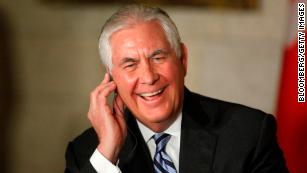
#StateToo: Retired ambassador calls out 'persistent' sexual harassment at State Dept


Laura Koran and Elise Labott, CNN; see also.

Washington (CNN) During Ambassador Leslie Bassett's first tour as a US foreign service officer in Nicaragua, she rebuffed the advances of a male superior. As she describes the encounter, he "showed up uninvited at my home on his birthday, unexpectedly stuck his tongue in my mouth and assumed we would have sex as his present."
"When I declined, I was excluded from meetings and professional opportunities as he very publicly shunned me at both official and private events," Bassett, now retired, adds. "I told no one."
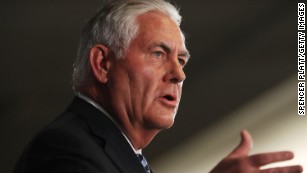
In the cover story for the March Foreign Service Journal, a publication from the American Foreign Service Association, Bassett sheds light on what she sees as a persistent problem of sexual harassment and abuse within the State Department, which she says continues to plague the ranks of the diplomatic corps -- sometimes holding victims back in their careers -- and has attracted the attention of Secretary of State Rex Tillerson.
Bassett, who spoke with CNN ahead of the article's publication, said she was inspired by the recent #MeToo movement, which has sought to counter sexual harassment and violence using the power of social media. She told CNN she hopes the effort will help "foster faster institutional change in the national security agencies, including the State Department."


    On another occasion, Bassett says a different boss callbaced her up late one night, and wanted to know what she was wearing. Bassett was the second highest-ranking official in the embassy at the time, and her boss was the US ambassador.


    The two encounters -- which happened years apart, at dramatically different stages of Bassett's more than three-decade long career -- emphasized to her the pervasiveness of harassment in the State Department, where "deep-seated prejudices" have been tolerated, and where cultural and structural mechanisms have allowed inappropriate behavior to continue, often unaddressed.
    "The problem of sexual harassment and even assault is persistent; it is real; and it needs to be addressed," she writes. "We can't wait any longer to make meaningful change."
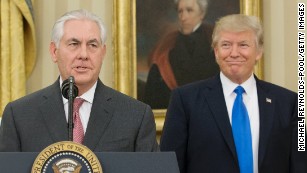
    It's a problem Secretary Tillerson has acknowledged, and addressed publicly in a recent town hall with employees.
    "Harassment and abuse have no place in a nation founded on the ideals of individual liberty and the pursuit of happiness, and it can have no place in this organization, our State Department," he said to applause. "Not here in Washington, not at post abroad. Nowhere. I cannot and I will not tolerate it."
    Tillerson was briefed on the agency's harassment and abuse statistics when he first took office and has since spoken to staff about his zero-tolerance approach on the issue at embassies and consulates around the world.
    He also told senior staff at a recent leadership meeting, that his concerns about the issue were further triggered when, during his January remarks, he saw women crying in the audience as he spoke about the issue, according to Undersecretary for Public Diplomacy Steve Goldstein [JB emphasis], who was in the leadership meeting. Between the statistics and witnessing the emotional reaction, said Goldstein, Tillerson knew he had a problem and has been trying to aggressively attack it.
    "Sexual harassment will not be tolerated at the Department of State," State Department Spokeswoman Heather Nauert told CNN in a statement Wednesday. "This has been made clear to Department employees -- both domestic and international -- and our senior-most officials have taken the lead in efforts to staunch unacceptable workplace behavior."
    She referenced Tillerson's January remarks to staff and said the secretary has mandated anti-harassment training for all employees in the coming weeks.
    "Addressing sexual harassment is one of Secretary Tillerson's priorities and he has been hands on in this effort, drawing a clear line in the sand regarding behaviors that will not be tolerated at the State Department," said Nauert.
    Bassett's article includes stories from six current State Department employees who shared their experiences with her anonymously, in part because they are still working for the agency.
    Most of the women whose stories are featured in the article spoke with CNN. While we cannot independently confirm elements of their experiences, the women corroborated the accuracy of their accounts as they appear in the Foreign Service Journal.
    One woman explained to Bassett how, as a senior foreign service officer, she and two female colleagues were approached by three junior officers at the end of their first overseas post. They shared an array of worrying behaviors they'd encountered there and wanted to know whether these were typical of what they could expect in a foreign service career.
    Another agency employee states in the article, "I have a co-worker who almost every time we interact feels the need to remind me that he thinks we should date because I have 'a nice ass'—despite the fact that I made it clear that I am not interested years ago."
    Another describes accompanying a visiting US congressman to the airport after he persistently badgered her to have a drink with him at his hotel bar and "looked pointedly" down her shirt.
    Bassett told CNN she was encouraged by conversations she'd had with other women in the national security realm who have recounted similar experiences to her. More than 200 such women, including Bassett, signed an open letter in November, calling on the national security community to take specific actions to prevent and address abusive behavior that holds women back.
    "It was an opportunity for all of us to acknowledge together for the first time what we had experienced as individuals across a career," Bassett told CNN, "and what we saw continuing as challenges for women in the national security sector, not just the State Department."
    The State Department received 483 reports of harassment in the 2017 fiscal year, 225 of which included "claims of sexual or gender-based harassment," a State Department official tells CNN. Metrics related to harassment can be unreliable because the victims sometimes chose not to come forward, or multiple people come forward to report the same incident.
    While the State Department is hardly alone in its struggle to address harassment, Bassett says there are elements of the culture and structure at the agency that make the problem harder to tackle.
    In particular, Bassett writes about how a heavy reliance on "corridor reputation" in personnel assignments can prevent women from coming forward about abuse out of fear they will be viewed as troublemakers or prone to complaining.
    A current State Department employee who spoke on condition of anonymity told CNN that navigating this word-of-mouth system [JB: see 1st para] is particularly challenging at the State Department, because foreign service officers often work together in small overseas posts where the lines between their personal and professional lives are more blurred.
    Bobby Devadoss, a Dallas-based employment attorney who focuses on cases brought by federal employees, told CNN that, for many government staffers, the concerns outlined by Bassett are, "the gospel truth."
    "Retaliation is very prevalent," he said, and often comes in subtle forms that are hard to pinpoint or address and can lead to questions about performance.
    In her article, Bassett explains how the internal reporting process can be onerous and time consuming for victims, and suggests the agency lacks the kind of clear guidance and mandatory harassment training can lead to better accountability.
    She is calling for the creation of a special committee with a diverse membership, "to investigate all forms of sexual harassment within the State Department and create actionable recommendations on institutional reform within a reasonable time-frame."
    Steve Goldstein told CNN that Tillerson has already instructed staff to develop new compliance procedures so cases do not become buried in the State Department's various bureaus.
    "He tells us, 'there is right and there is wrong and we have to put a stop to it,'" Goldstein recounted. "He is saying 'this is no longer a permissive environment.' By doing that, you reduce instances of it immediately because people get the message it will not be tolerated."
    Bassett and others who spoke with CNN for this story point out that locally employed staff at US embassies and consulates are particularly vulnerable to harassment and abuse because they don't have access to the same grievance mechanisms as American employees and tend to be outranked by their diplomatic colleagues. Goldstein noted that Tillerson has paid particular attention to this issue.
    A former Equal Employment Opportunity counselor who spoke to Bassett for the article and later recounted her experience to CNN, said that while such cases involving locally employed staff are not commonplace, they are unique because of the lack of formal recourse, and because victims can face additional cultural stigmas that sometimes lead to self-censorship.
    Beyond her recommendations to the State Department's leadership, Bassett also encourages people who have witnessed or experienced harassment to come forward.
    She acknowledges she didn't speak up when she encountered harassment in her own career, but says the agency has made improvements in its reporting process since her early days and she hopes the cultural shift brought on by the #MeToo movement will encourage staffers and their managers to speak up when they see inappropriate behavior.
    "We need a united front on the supervisory angle to make sure its zero tolerance, its immediate, its public, its transparent, and it's evident that it just will not be accepted," she said.

    Europe Aims To Fill 'Climate Diplomacy' Vacuum Left By U.S.


    Dave Keating, forbes.com; original article contains links.


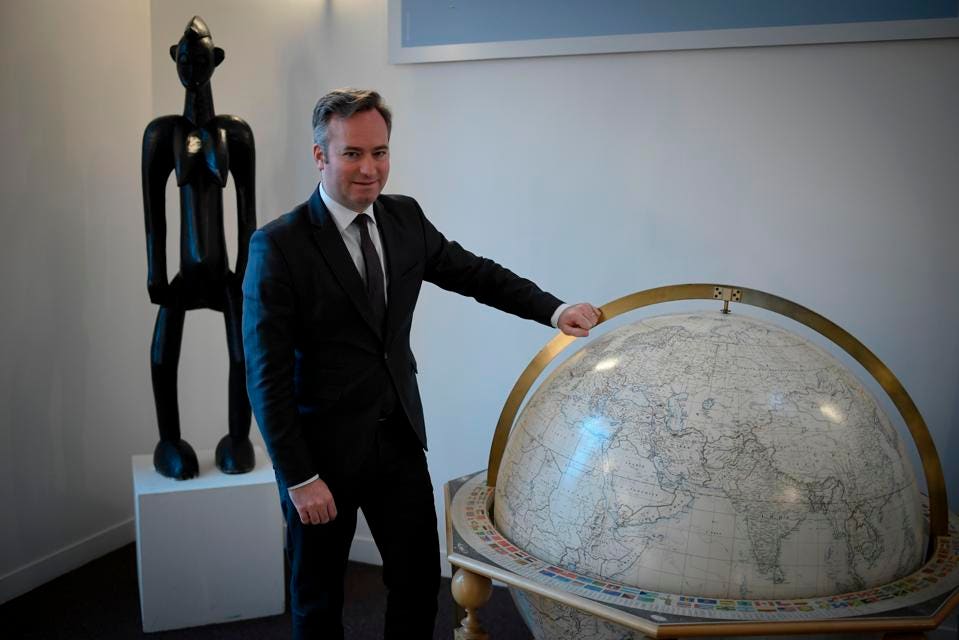
    Image result for French Junior Minister for Foreign Affairs Jean-Baptiste Lemoyne has been pushing for tougher EU climate diplomacy.
    Image from article, with caption: French Junior Minister for Foreign Affairs Jean-Baptiste Lemoyne has been pushing for tougher EU climate diplomacy.

    The European Union will “continue to lead the way in the global pursuit of climate action” through the Paris Agreement “based on a universal regime with rules applicable to all at COP 24,” the 28 foreign ministers of the countries in the European Union affirmed today.

    The resolution on climate diplomacy held firm on the principle that no party to the Paris Agreement should be given special dispensation or exemptions from the agreement. Last year, President Donald Trump said he intends to pull the U.S. out of the agreement unless the conditions of its membership are changed, although he did not specify what that change should be.

    Because of the rules of the agreement, the earliest the U.S. can pull out is November 2020 – shortly after the next U.S. presidential election, but during the current presidential term. Since November’s UN climate summit in Bonn, many have speculated that the U.S. is looking for a face-saving way to rescind its intention to withdraw.

    With the U.S. disengagement, Canada has replaced the U.S. in the "big three" partnership of climate leaders, along with the EU and China. Canada, China and the EU will hold a climate summit in Brussels later this year to “reconfirm leadership and commitment to the full implementation of the Paris Agreement.” The U.S. is not expected to attend.

    Europe, Canada and China have insisted the Paris Agreement is a "take it or leave it” arrangement and cannot be renegotiated. But there may be specific text that could be added to the agreement’s "rulebook," to be agreed on this November at a UN summit in Poland, that could persuade the U.S. to stay without having to renegotiate the agreement itself.

    Today’s resolution by EU foreign ministers signals they may be open to this, as long as the principles of the Paris Agreement are not violated. The ministers emphasized “the need to continue to strengthen political outreach and public diplomacy, up to the highest official levels,” implying continued efforts to persuade the Trump administration to change direction on climate issues.

    Climate Tightrope

    But the EU is walking a fine line between being recognized as the global leader on climate issues and also getting everyone on board for a global solution – even some of its own reluctant members such as Poland.

    Some environmentalists have criticized today’s conclusions, saying the resolution did not identify the key diplomatic relationships that need to be improved. The United States was never mentioned by name in the document, although China and Canada were.

    However, civil society actors said the conclusions still fall short of setting out how Europe will scale up climate action. They also do not identify bilateral or multilateral relationships which are key to supporting action within the UN or to boosting the low carbon transition in the EU and its surrounding neighborhood.

    “It’s no surprise Europe is upping its game on climate security,” said Camilla Born, a senior policy advisor with the campaign group E3G. “Europe is uniquely placed to help the many international institutions it is members of to take climate change seriously.”

    But the EU is not doing enough to put on that pressure. "As climate impacts hit harder and other major powers like China rise, Europe must secure its place as a trusted, competitive global partner," she added.

    Many green campaigners and politicians cheered a statement by French Foreign Minister Jean-Baptiste Lemoyne earlier this month, backed by EU Trade Commissioner Cecilia Malmstrom, that the EU will not sign any free trade agreement with any country not in the Paris Agreement.

    But such a sentiment was not included in today's resolution by all 28 foreign ministers. Instead, the ministers concluded that the EU "needs to work bilaterally and multilaterally to promote the mutual supportiveness of trade and climate policies".

    Environmentalists say the EU can do more to keep the pressure on its international partners by naming and shaming those countries, both within and outside the EU, who are not taking climate change mitigation seriously. But at the same time, the EU is aware that the politics and diplomacy of climate change will be essential for keeping all actors on board in the delicate Paris Agreement process.