Friday, March 2, 2018

Myanmar delegation visits Tahoe


Staff Reports, The Record-Courier

Image from article, with caption: The U.S. Forest Service Lake Tahoe Basin Management Unit hosted Republic of the Union of Myanmar delegates Su Hlaing Myint, Swe Zin Phyo, Thin Thin Aung, Thurein Htun, Bawk La, Timber Management Officer Robert Guebard, Interpreter San Ohn, Fuels Battalion Chief Kyle Jacobson, Soe Shwe, Public Affairs Specialist Lisa Herron and Mya Nandar Thin.

Seven delegates visiting from the Republic of the Union of Myanmar in southeast Asia at least got to see snow at Lake Tahoe last week.

The delegates spent two days in Reno and visited Lake Tahoe to learn about the U.S. Forest Service Lake Tahoe Basin Management Unit's role in natural resource management in the Tahoe Basin.

The delegation's visit was made possible through the International Visitor Leadership Program and was coordinated by the University of Nevada Reno's Northern Nevada International Center.

Tahoe Fuels Battalion Chief Kyle Jacobson and Timber Management Officer Robert Guebard facilitated a field visit for the delegation to a recent forest thinning project near Pope Beach and the Emerald Fire area.

The delegation learned about forest health and the benefits that forest thinning projects provide to the forest and surrounding communities and the importance of removing excess vegetation that can feed wildland fires.

Launched in 1940, the Leadership Program supports U.S. engagement with countries around the world in order to cultivate lasting relationships by connecting current and emerging leaders with their American counterparts.

Each year nearly 5,000 exchange participants come to the U.S. through the program.

The objective of International Center is to foster better understanding between people through public diplomacy programs [JB emphasis] and serve as a resource for local residents as well as visitors interested in international activities and events. Key programs include organizing programs for international visitors through the U.S. State Department and other federal agencies, providing interpretation and translation services in over 60 languages and organizing educational events and activities for the university and general community.

To learn more, visit https://eca.state.gov/ivlp/about-ivlp and https://www.unr.edu/nni

Thursday, March 1, 2018

Women and Gender / U.S. Mission to India: TechCamp South Asia for Women Social Entrepreneurs


fundsforngos.org


image (not from entry) from


Deadline: 27 March 2018
The Public Affairs Section (PAS) of the U.S. Embassy in New Delhi has announced an open competition through the Public Diplomacy Grants program for a Cooperative Agreement to implement one or both activities of a “TechCamp” project focused on growing women-owned social enterprises in India and Pakistan.
This funding opportunity is part of Mission India and Mission Pakistan’s support for public diplomacy programming that advances regional and cross-border connectivity goals that support sustainable economic growth by creating a better-educated and more skillful workforce.
Proposals should demonstrate an understanding of the public diplomacy role [JB emphasis] of TechCamps and address the stated goals, objectives and target audiences. The TechCamp will be planned and carried out in close cooperation with the U.S. Department of State, represented by PAS Islamabad, PAS New Delhi, and the Bureau of International Information Programs (IIP).
Project Objectives
Under the title, “TechCamp South Asia for Women Social Entrepreneurs”, this project will advance the following objectives:
  • develop the capacity of Indian and Pakistani female social entrepreneurs to use digital tools and strategies to grow businesses that address social challenges and contribute to economic growth in their communities, and
  • build collaboration among Indian and Pakistani female social entrepreneurs through sustainable formal and informal networks.
Funding Information
  • Estimated Total Program Funding: $200,000
  • Award Ceiling: $200,000
  • Award Floor: $150,000
Eligibility Criteria
  • The target demographic for this project is 25 Pakistani and 25 Indian women social entrepreneurs between the ages of 25-45. Participants will have already launched their enterprises and been in business for 2-10 years.
  • Additional criteria will be developed with the grantee in close collaboration with PAS Islamabad, PAS New Delhi and IIP.
  • Eligibility is open to all registered non-profit, non-governmental organizations with relevant experience. This experience should be documented in the organization’s proposal.
  • Organizations must also show their capacity to administer components of the program as detailed above in India, Pakistan and a third country.
  • Organizations must provide proof of registration and non-profit status with their proposal application.
  • Organizations may sub-contract with other entities, but only one, non-profit, non-governmental entity can be the prime recipient of the award.
  • When sub-contracting with other entities, the responsibilities of each entity must be clearly defined in the proposal.
  • U.S.-based organizations should submit a copy of their IRS determination letter.
  • India-based organizations should submit a copy of their Foreign
  • Contribution Registration Act (FCRA) registration and number. Pakistan-based organizations should submit a copy of their certificate of registration from the appropriate government organization.
  • In order to be eligible to receive an award, all organizations must have a Data Universal Numbering System (DUNS) number from Dun & Bradstreet.
  • Organizations requesting $25,000 or more must also have a valid registration .
  • Previous federal award recipients who are not/were not in compliance with the terms of their financial and program reporting requirements are ineligible to apply.
  • It is the applicant’s responsibility to ensure they are in compliance with all applicable terms, conditions, and Office of Management and Budget guidance and requirements.
  • Those organizations found to be in noncompliance may be found ineligible for funding or designated high risk if selected for funding.
How to Apply
Applicants can apply via given website.
For further information, please visit grants.gov.

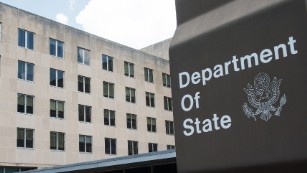
#StateToo: Retired ambassador calls out 'persistent' sexual harassment at State Dept


Laura Koran and Elise Labott, CNN; see also.

Washington (CNN) During Ambassador Leslie Bassett's first tour as a US foreign service officer in Nicaragua, she rebuffed the advances of a male superior. As she describes the encounter, he "showed up uninvited at my home on his birthday, unexpectedly stuck his tongue in my mouth and assumed we would have sex as his present."
"When I declined, I was excluded from meetings and professional opportunities as he very publicly shunned me at both official and private events," Bassett, now retired, adds. "I told no one."
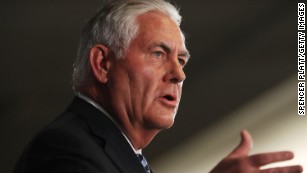
In the cover story for the March Foreign Service Journal, a publication from the American Foreign Service Association, Bassett sheds light on what she sees as a persistent problem of sexual harassment and abuse within the State Department, which she says continues to plague the ranks of the diplomatic corps -- sometimes holding victims back in their careers -- and has attracted the attention of Secretary of State Rex Tillerson.
Bassett, who spoke with CNN ahead of the article's publication, said she was inspired by the recent #MeToo movement, which has sought to counter sexual harassment and violence using the power of social media. She told CNN she hopes the effort will help "foster faster institutional change in the national security agencies, including the State Department."


    On another occasion, Bassett says a different boss callbaced her up late one night, and wanted to know what she was wearing. Bassett was the second highest-ranking official in the embassy at the time, and her boss was the US ambassador.


    The two encounters -- which happened years apart, at dramatically different stages of Bassett's more than three-decade long career -- emphasized to her the pervasiveness of harassment in the State Department, where "deep-seated prejudices" have been tolerated, and where cultural and structural mechanisms have allowed inappropriate behavior to continue, often unaddressed.
    "The problem of sexual harassment and even assault is persistent; it is real; and it needs to be addressed," she writes. "We can't wait any longer to make meaningful change."
    It's a problem Secretary Tillerson has acknowledged, and addressed publicly in a recent town hall with employees.
    "Harassment and abuse have no place in a nation founded on the ideals of individual liberty and the pursuit of happiness, and it can have no place in this organization, our State Department," he said to applause. "Not here in Washington, not at post abroad. Nowhere. I cannot and I will not tolerate it."
    Tillerson was briefed on the agency's harassment and abuse statistics when he first took office and has since spoken to staff about his zero-tolerance approach on the issue at embassies and consulates around the world.
    He also told senior staff at a recent leadership meeting, that his concerns about the issue were further triggered when, during his January remarks, he saw women crying in the audience as he spoke about the issue, according to Undersecretary for Public Diplomacy Steve Goldstein [JB emphasis], who was in the leadership meeting. Between the statistics and witnessing the emotional reaction, said Goldstein, Tillerson knew he had a problem and has been trying to aggressively attack it.
    "Sexual harassment will not be tolerated at the Department of State," State Department Spokeswoman Heather Nauert told CNN in a statement Wednesday. "This has been made clear to Department employees -- both domestic and international -- and our senior-most officials have taken the lead in efforts to staunch unacceptable workplace behavior."
    She referenced Tillerson's January remarks to staff and said the secretary has mandated anti-harassment training for all employees in the coming weeks.
    "Addressing sexual harassment is one of Secretary Tillerson's priorities and he has been hands on in this effort, drawing a clear line in the sand regarding behaviors that will not be tolerated at the State Department," said Nauert.
    Bassett's article includes stories from six current State Department employees who shared their experiences with her anonymously, in part because they are still working for the agency.
    Most of the women whose stories are featured in the article spoke with CNN. While we cannot independently confirm elements of their experiences, the women corroborated the accuracy of their accounts as they appear in the Foreign Service Journal.
    One woman explained to Bassett how, as a senior foreign service officer, she and two female colleagues were approached by three junior officers at the end of their first overseas post. They shared an array of worrying behaviors they'd encountered there and wanted to know whether these were typical of what they could expect in a foreign service career.
    Another agency employee states in the article, "I have a co-worker who almost every time we interact feels the need to remind me that he thinks we should date because I have 'a nice ass'—despite the fact that I made it clear that I am not interested years ago."
    Another describes accompanying a visiting US congressman to the airport after he persistently badgered her to have a drink with him at his hotel bar and "looked pointedly" down her shirt.
    Bassett told CNN she was encouraged by conversations she'd had with other women in the national security realm who have recounted similar experiences to her. More than 200 such women, including Bassett, signed an open letter in November, calling on the national security community to take specific actions to prevent and address abusive behavior that holds women back.
    "It was an opportunity for all of us to acknowledge together for the first time what we had experienced as individuals across a career," Bassett told CNN, "and what we saw continuing as challenges for women in the national security sector, not just the State Department."
    The State Department received 483 reports of harassment in the 2017 fiscal year, 225 of which included "claims of sexual or gender-based harassment," a State Department official tells CNN.Metrics related to harassment can be unreliable because the victims sometimes chose not to come forward, or multiple people come forward to report the same incident.
    While the State Department is hardly alone in its struggle to address harassment, Bassett says there are elements of the culture and structure at the agency that make the problem harder to tackle.
    In particular, Bassett writes about how a heavy reliance on "corridor reputation" in personnel assignments can prevent women from coming forward about abuse out of fear they will be viewed as troublemakers or prone to complaining.
    A current State Department employee who spoke on condition of anonymity told CNN that navigating this word-of-mouth system [JB: see 1st para] is particularly challenging at the State Department, because foreign service officers often work together in small overseas posts where the lines between their personal and professional lives are more blurred.
    Bobby Devadoss, a Dallas-based employment attorney who focuses on cases brought by federal employees, told CNN that, for many government staffers, the concerns outlined by Bassett are, "the gospel truth."
    "Retaliation is very prevalent," he said, and often comes in subtle forms that are hard to pinpoint or address and can lead to questions about performance.
    In her article, Bassett explains how the internal reporting process can be onerous and time consuming for victims, and suggests the agency lacks the kind of clear guidance and mandatory harassment training can lead to better accountability.
    She is calling for the creation of a special committee with a diverse membership, "to investigate all forms of sexual harassment within the State Department and create actionable recommendations on institutional reform within a reasonable time-frame."
    Steve Goldstein told CNN that Tillerson has already instructed staff to develop new compliance procedures so cases do not become buried in the State Department's various bureaus.
    "He tells us, 'there is right and there is wrong and we have to put a stop to it,'" Goldstein recounted. "He is saying 'this is no longer a permissive environment.' By doing that, you reduce instances of it immediately because people get the message it will not be tolerated."
    Bassett and others who spoke with CNN for this story point out that locally employed staff at US embassies and consulates are particularly vulnerable to harassment and abuse because they don't have access to the same grievance mechanisms as American employees and tend to be outranked by their diplomatic colleagues.Goldstein noted that Tillerson has paid particular attention to this issue.
    A former Equal Employment Opportunity counselor who spoke to Bassett for the article and later recounted her experience to CNN, said that while such cases involving locally employed staff are not commonplace, they are unique because of the lack of formal recourse, and because victims can face additional cultural stigmas that sometimes lead to self-censorship.
    Beyond her recommendations to the State Department's leadership, Bassett also encourages people who have witnessed or experienced harassment to come forward.
    She acknowledges she didn't speak up when she encountered harassment in her own career, but says the agency has made improvements in its reporting process since her early days and she hopes the cultural shift brought on by the #MeToo movement will encourage staffers and their managers to speak up when they see inappropriate behavior.
    "We need a united front on the supervisory angle to make sure its zero tolerance, its immediate, its public, its transparent, and it's evident that it just will not be accepted," she said.

    US ambassador to Mexico to step down in May


    Max Greenwood, The Hill; see also.

    US ambassador to Mexico to step down in May


    Roberta Jacobson, the U.S. ambassador to Mexico, will step down from her post in May.
    "It has been an honor and privilege to serve my country as ambassador to Mexico," Jacobson said in statement on Twitter on Thursday. "After serving the U.S. government for 31 years, I will be parting ways in May to pursue other opportunities." 
    Jacobson's planned retirement is the latest in a series of diplomatic departures under the Trump administration and comes at a moment of rocky relations between the U.S. and Mexico. 
    Jacobson made her decision known in a memo to embassy staff on Thursday. 
    "I have come to the difficult decision that it is the right time to move on to new challenges and adventures," Jacobson wrote in the memo, a copy of which was obtained by The Hill. "This decision is all the more difficult because of my profound belief in the importance of the U.S.-Mexico relationship and knowledge that it is at a crucial moment."
    The New York Times first reported Jacobson's planned departure.
    Steve Goldstein, the deputy [sic] under secretary of State for public diplomacy [JB emphasis] , said Thursday that Jacobson agreed to stay in her role until May to facilitate the transition process. He said Jacobson informed Secretary of State Rex Tillerson of her decision last month, while he was visiting Mexico City. 
    "We appreciate everything she’s done and wish her well," Goldstein said in an email to The Hill.
    According to the Times, the Trump administration has chosen a replacement for Jacobson but has not yet released that person's name.
    Jacobson, who is among the State Department's top Latin America experts, was named to the ambassadorship in 2015 by then-President Obama. But she faced a grueling 11-month confirmation fight in the Senate, before finally stepping into the post in May 2016. 
    Her planned retirement comes during a period of heightened tensions between the U.S. and Mexico. President Trump has often taken an antagonistic approach toward the country, vowing to build a wall along U.S.-Mexico border that he has claimed Mexico will pay for. Mexican officials, however, have rejected that demand.
    At the same time, Trump has threatened to cancel the North American Free Trade Agreement between the U.S., Mexico and Canada, which he has claimed is unfair to the U.S. 
    The Washington Post reported last month that Mexican President Enrique Peña Nieto recently scrapped a planned visit to the White House after a contentious phone call with Trump concerning the border wall.
    Updated at 3:00 p.m.

    46 journalists join 2018 China Media Exchange Program


    radyonatin.com

    image from

    BEIJING, China — A total of 46 foreign journalists were welcomed for the China Public Diplomacy Association's (CPDA) 2018 China-Africa Press Center (CAPC) and China-Asia Pacific Press Center (CAPPC) Media Exchange Program here on February 27.

    The participants from African and Asian countries will spend 10 months to learn, promote exchanges and cooperation between China and South Asian, Southeast Asian and African media.

    The journalists will have the opportunity to cover the major events such as the annual sessions 19th Communist Party of China National Congress that would select the new leaders of People's Republic of China.

    "Everyone will be given a chance to interview officials from relevant ministries and departments, think tanks, exchange views with Chinese academics, as part of your learning in this program," said Chen Zhe, head of the CAPC program.

    Towards the third quarter of the year, the journalists will have their two-month internship on various China media outfits and will experience working with Chinese colleagues from chosen outlets such as CCTV, CGTN, China Radio International, Xinhua News Agency, People's Daily, China Daily, and Beijing Review.

    The journalists, Zhe said, will also have the chance to experience the traditional Chinese culture, and study Chinese language and philosophies from China provinces.

    He announced that this is also the first time that CPDA offers a two-year Masters Degree scholarship in Global Journalism and Communication at the Renmin University to eight selected journalists.

    The program aims to understand China, China-Africa, China-South Asia and China-Southeast Asia relations in broader sense with greater depth, also in achieving its purpose of enhancing friendship and cooperation, he added. (PNA) — KBAPI

    Technocratic Fascism


    Monologue Written by Clyde Lewis, groundzeromedia.org

    image from article
    Excerpt:
    We live in an era of ‘sponsored content,’ ‘public diplomacy,’ [JB emphasis] ‘fake news,’ and ‘post-truth’ content: They’re all variations on propaganda, something that was easily identified in the 1920s and 1930s; however, in the era of the technocrats we can’t even discern between what can be called Russian information warfare and reality – and don’t let the media fool you – they are using it against you as well, they just can’t muster up the courage to admit it. They have a good thing going with their ability to conjure information and invent new words and phrases  that cover up what used to trigger repulsive responses. ...

    US ambassador to Mexico to step down in May


    Max Greenwood, The Hill; see also.

    US ambassador to Mexico to step down in May


    © Getty Images
    Roberta Jacobson, the U.S. ambassador to Mexico, will step down from her post in May.
    "It has been an honor and privilege to serve my country as ambassador to Mexico," Jacobson said in statement on Twitter on Thursday. "After serving the U.S. government for 31 years, I will be parting ways in May to pursue other opportunities." 
    Jacobson's planned retirement is the latest in a series of diplomatic departures under the Trump administration and comes at a moment of rocky relations between the U.S. and Mexico. 
    Jacobson made her decision known in a memo to embassy staff on Thursday. 
    "I have come to the difficult decision that it is the right time to move on to new challenges and adventures," Jacobson wrote in the memo, a copy of which was obtained by The Hill. "This decision is all the more difficult because of my profound belief in the importance of the U.S.-Mexico relationship and knowledge that it is at a crucial moment."
    The New York Times first reported Jacobson's planned departure.
    Steve Goldstein, the deputy [sic] under secretary of State for public diplomacy [JB emphasis], said Thursday that Jacobson agreed to stay in her role until May to facilitate the transition process. He said Jacobson informed Secretary of State Rex Tillersonof her decision last month, while he was visiting Mexico City. 
    "We appreciate everything she’s done and wish her well," Goldstein said in an email to The Hill.
    According to the Times, the Trump administration has chosen a replacement for Jacobson but has not yet released that person's name.
    Jacobson, who is among the State Department's top Latin America experts, was named to the ambassadorship in 2015 by then-President Obama. But she faced a grueling 11-month confirmation fight in the Senate, before finally stepping into the post in May 2016. 
    Her planned retirement comes during a period of heightened tensions between the U.S. and Mexico. President Trump has often taken an antagonistic approach toward the country, vowing to build a wall along U.S.-Mexico border that he has claimed Mexico will pay for. Mexican officials, however, have rejected that demand.
    At the same time, Trump has threatened to cancel the North American Free Trade Agreement between the U.S., Mexico and Canada, which he has claimed is unfair to the U.S. 
    The Washington Post reported last month that Mexican President Enrique Peña Nieto recently scrapped a planned visit to the White House after a contentious phone call with Trump concerning the border wall.
    Updated at 3:00 p.m.