Thursday, November 29, 2018

Taiwan Animation Festival held in Singapore


mofa.gov.tw

Date: 2018/11/20 Data Source: Public Diplomacy [JB emphasis] Coordination Council

Image result for ministry of foreign affairs china taiwan

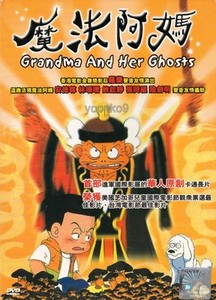
On November 16, Representative Francis Kuo-Hsin Liang launched the Taiwan Animation Festival at the Arts House. The three-day festival showcased five animated films: Grandma and Her Ghosts, The Elephant Apartment, On Happiness Road, Barkley, and Weather Boy. Close to 400 people attended the film screenings.

In his opening remarks, Representative Liang welcomed Wang Shaudi, Director of Grandma and Her Ghosts, to Singapore. On behalf of the Taipei Representative Office in Singapore, he conveyed the wish that the audience will enjoy these animated films from Taiwan. Director Wang’s visit will help spur exchanges between animators of the two countries.

With this year being the 20th anniversary of the release of Grandma and Her Ghosts, Director Wang shared some personal stories that shaped her life, entertaining the audience with his wit and humor. Although many people had seen the film before, they appreciated the opportunity to watch it again, bearing testament to the appeal of the film.

Image result for grandma and her ghosts
image from

Second stage of football cooperation with China


cancilleria.gob.ar


Ministry of Foreign Affairs and Worship. Argentine Republic. Links to home page.


      Tuesday 13 de november de 2018
      image from entryImage result for Second stage of football cooperation with China

      Information for the Press N°: 
      458/18
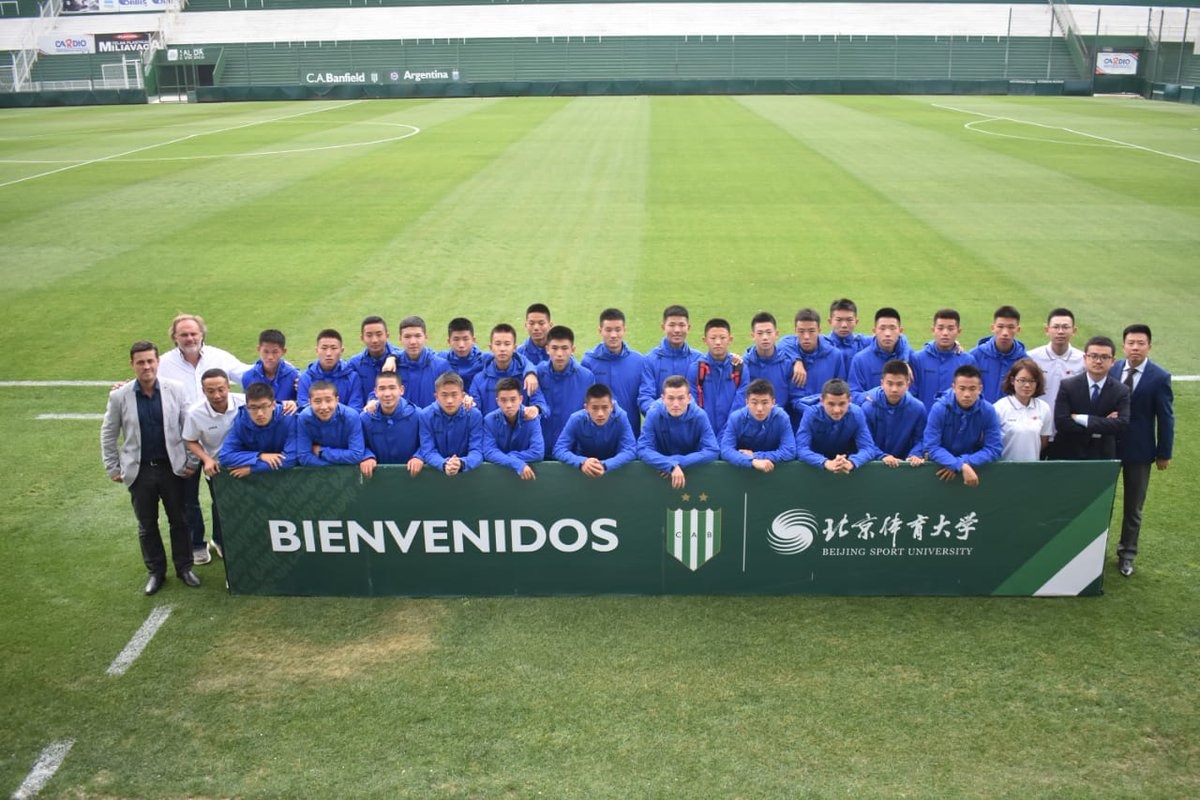
      Within the framework of cooperation in the field of football, Chinese football players will stay in Argentina for a nine-month period, during which they will play approximately 30 friendlies against the youth teams of Banfield Club and other Argentine clubs, in addition to receiving specific training under the supervision of the coaching and physical training staff of Banfield Club.
      The Chinese delegation, comprised of 28 football players between the ages of 14 to 16 and 3 coaches, will be staying at the facilities of Banfield in the municipality of Luis Guillón.
      The presentation and the first official activity of this second stage of the football cooperation agreement signed by Presidents Macri and Xi Jinping in China in May 2017 took place on 9 November at Banfield Club.
      The event included a visit to the stadium facilities and the club, a welcoming address by Banfield's president, Lucía Barbuto, Banfield's Football Director, Carlos Carpaneto, and the representative of IMG Argentina, Martín Alonso. Impressions and expectations regarding the project's progress were later exchanged.
      On behalf of the Foreign Ministry, the Director for Intermediate Organizations and Public Diplomacy [JB emphasis], which is the section in charge of coordinating sports diplomacy initiatives and necessary work to carry out this important bilateral project between various relevant areas of the Foreign Ministry, the company IMG, Banfield Club, the Argentine Secretariat for Sports and the Argentine Embassy to China attended the event.
      Press Release No. 458/18

      Artificial intelligence and diplomacy: A new tool for diplomats?

      3 Dec 2018
      |
      12:00 - 13:30 
      Geneva, Switzerland

      DiploFoundation and the Think Tank Hub are organising: Artificial intelligence and diplomacy: A new tool for diplomats? on Monday 3rd December 2018. The event will take place at the Geneva Internet Platform, WMO Building, 2nd floor, 7bis Avenue de la Paix, Genève, from 12:00 to 13:30 CET. Artificial intelligence (AI) is transitioning from science fiction into our everyday lives. Over the past few years, there has been significant progress in the field of AI, which is increasingly becoming part of our everyday lives - from intelligent digital personal assistants and smart home devices, to autonomous vehicles, smart buildings and medical robots. These advances are expected to have implications in several policy areas (economic, societal, education, etc.), infrastructure and society in general, and governments, the technical community, and private sector actors worldwide are increasingly considering them.
      With AI’s entry into all aspects of society, it will inevitably influence diplomacy. The more deeply AI is integrated into society, the larger the effect will be on the context in which diplomats operate. At the same time, AI can also serve as a tool for diplomatic activities.
      The event will mainly focus on AI as a tool for diplomats and look at ways in which AI application can support the work of diplomats and foreign policy professionals. We will also address the challenges and pitfalls associated with this.
      The event is designed as a highlighly interactive discussion on some of the following topics:
      • Setting the scene: What AI-related changes to the environment and the geopolitics in which states operate can we already see?
      • Learning to speak: What is the (potential) use of chatbots for consular affairs and public diplomacy [JB emphasis] and what are its pitfalls?
      • Ensuring agreements are kept: Can smart contracts be used in diplomacy and international relations?
      • Creating new insights: Can AI act as a smart research assistant for diplomats and foreign policy policy professionals and what kind of insights can we expect?

      Panellists:

      • Dr Katharina Hoene, Senior Lecturer and Researcher Diplomacy and Digital Politics
      • Mr Philippe Lorenz, Project Director in AI and Foreign Policy, Stiftung Neue Verantwortung 

      Going Out Guide: Hidden inside Washington’s embassies: a world of fun (and free) stuff to do


      Fritz Hahn, The Washington Post, November 29 at 10:00 AM; original article contains links

      The House of Sweden is a far cry from D.C.’s other fenced, bunkerlike embassies. (Calla Kessler/The Washington Post)

      There are close to 200 embassies and diplomatic missions in the District, though most Washingtonians don’t think about them unless they’re driving down Embassy Row or trying to park near a “diplomatic vehicles only” sign. But tell friends or co-workers that you’ve been to lunch at the French Embassy or a tango concert at the Embassy of Argentina, and the questions will pour forth: How do you get an invitation? What’s it like inside? Is it true you’re technically on foreign soil? (The answer to that last question: No.)

      The annual E.U. Open House and Passport D.C.’s Around the World Embassy Tour draw long lines for tours, but in many cases, you don’t have to wait until May to experience these international destinations firsthand. Embassies across the District court curious visitors throughout the year with exhibits, concerts, cooking classes and even family story times.

      Navigating the world of embassy events can be tricky, however. Some countries, such as Britain, rarely open their doors to the public. Smaller nations can be more outgoing.

      For some, public diplomacy [JB emphasis] is the mission. “Haiti often makes the news when something bad happens,” Haitian Ambassador Paul G. Altidor says. “Part of what I’m doing is to offer the Washington community a window into that other side of Haiti they’re not accustomed to seeing” through interactions with Haitian artists, musicians and chefs. “We’re showing aspects of our lives, not just our culture.” And, he adds, if the embassy can shape visitors’ perceptions of Haiti, that vibrant culture might just encourage them to vacation and spend money there.

      Sweden’s, which opened on the Georgetown waterfront in 2006, is a far cry from the city’s other fenced, bunkerlike embassies. Last year, says communications counselor Monica Enqvist, it hosted 95 events, including 11 concerts, 17 movie nights and 28 seminars on various topics, in addition to ongoing art exhibits and weekly family days. Over the past 12 years, the House of Sweden has welcomed more than 700,000 visitors. But it’s not just about entertainment: Each year, the staff selects a theme reflecting “Swedish values,” such as migration or gender equality, and shapes its events around the particular topic.

      Whether you’re trying to broaden a child’s international outlook or take in art from around the globe, embassies and their cultural centers are an amazing resource. Below is a selection of embassies that open their doors for exhibits, concerts and special events on a monthly or even daily basis. Even better: Most events and exhibitions are free. Each embassy handles events differently — some require RSVPs, some are drop-in — so check the embassy’s website before showing up.

      Argentina

      Sultry tango music is the soundtrack on New Hampshire Avenue NW, as the Embassy of Argentina draws crowds for free concerts featuring tango orchestras. The annual D.C. Tango Festival, held in the spring, brings milongas, or tango dance parties, as well as lessons for those who want to learn before joining in on the fun. Outside of Argentina’s national dance, the embassy hosts rotating exhibitions in its galleries — a moving series about Holocaust survivors living in Argentina lasts until Dec. 6, followed by abstract works by Argentine artist Alexandra Arata — which are open to the public on weekday afternoons, and offers regular concerts and film series. 1600 New Hampshire Ave. NW.

      The Austrian Cultural Forum organizes many events, including this concert from the Karklina Trio, at the embassy in Van Ness. (Courtesy of the Austrian Cultural Forum Washington)

      Austria

      The airy auditorium inside the Embassy of Austria in Van Ness is the setting for numerous cultural events, organized by the Austrian Cultural Forum. While it’s best known as an outlet for up-and-coming Austrian classical musicians — a few of whom might perform works by Mozart, Liszt and Schumann — the schedule is far more diverse than you might expect. So far this year, visitors have heard a bilingual poetry slam as part of the Words, Beats and Life hip-hop festival; watched silent films accompanied by live piano music; and listened to experts discuss the viability of a universal basic income. 3524 International Ct. NW.

      Canada

      The Embassy of Canada occupies a prominent building on Pennsylvania Avenue NW, and although its exterior might not look welcoming, its small art gallery is open to the public on weekdays. Through February, the room is filled with portraits of the “100 greatest” NHL players, a series painted by Canadian artist Tony Harris to celebrate the league’s centennial. (Shockingly, only 83 of them are Canadian.) Previous exhibitions have included works by Inuit artists and photographs of famous Canadians taken by Bryan Adams. (Yes, that Bryan Adams.) 501 Pennsylvania Ave. NW.

      Chef Mark Courseille prepares lunch at Le Café Descartes in the French Embassy. (Matt McClain/The Washington Post)

      An assortment of desserts at Le Café Descartes at the French 


      The French Embassy hosts a variety of activities in its event space, La Maison Française, in Georgetown. It’s best known for regular, free screenings of French films; other programming includes concerts, wine tastings and, last summer, packed World Cup viewing parties that ended in a champagne-drenched celebration.

      Perhaps the most interesting aspect of the embassy, though, is Le Café Descartes, a cafeteria and restaurant open to anyone who fills out a form on its website. The kitchen is run by Mark Courseille, a native of Bordeaux who served as pastry chef at Citronelle and Et Voila! The most popular order, says general manager Max Jacquet, is the three-course, $30 menu du jour, which might include butternut squash soup and sauteed sea scallops. And although fine dining is a draw, don’t overlook the cafeteria, where daily specials, such as duck confit or a haddock filet in sancerre sauce, cost $10. Both are open for lunch daily; the bar hosts Friday happy hours from May through September. 4101 Reservoir Rd. NW.

      Haiti

      The Embassy of Haiti is regularly open to the public and is one of the most welcoming spots on Embassy Row. Free tours of its art collection are available (reservations are needed only for groups), and on Friday evenings, there’s an open invitation to happy hour: “Come to the embassy and have a rum sour, Haitian-style, on us,” says Paul G. Altidor, who was named ambassador to the United States in 2012. Harder to get into: Manje Lakay, a popular free cooking class with Haitian chefs from around the area. (The lengthy waiting list includes members of Congress, the ambassador boasts.)

      One advantage of being a smaller embassy is the personal touch, Altidor says: “If you come to the cooking class, I’m there with you as a student in the class. I could be the one giving you the tour of the embassy and explaining the artwork.” On Dec. 16, Altidor is hosting a holiday market with gifts made by Haitian artisans. 2311 Massachusetts Ave. NW.

      Twins brothers play with toy blocks in the Room for Children at the House of Sweden. (Calla Kessler/The Washington Post)

      Sweden

      The House of Sweden helped redefine embassy events in Washington, booking fashion shows, Eurovision parties, movie nights and Scandinavian indie-rock and hip-hop acts that appealed to a hipster audience instead of the diplomatic community. But that Scandi-cool vibe isn’t the only reason this place is so hot: Its free exhibits and lectures, such as a symposium with American Nobel Prize laureates, challenge visitors to think about larger issues in the world. What the embassy does well is combining the two: On International Women’s Day, for instance, the embassy invited female American and Swedish musicians to talk about gender inequality in the music scene and followed it with a performance from the panelists.

      On Saturdays and Sundays, Sweden opens its Room for Children, a space filled with toys, games and books for kids up to 10 years old. (Story time is 2 p.m. Saturday.) The Swedes want to engage children as well as adults, so stories and art workshops become teaching opportunities, explains cultural counselor Monica Enqvist: “The kids love creativity, but we can use it to bring up issues that are important to us all, like climate change.” 2900 K St. NW.

      The Mexican Cultural Institute on 16th Street NW, just north of Meridian Hill Park. (Evy Mages/For The Washington Post)

      Non-embassy embassy events

      Some countries take their roles as cultural ambassadors seriously, but for reasons of security or space, don’t open their embassy’s doors to outsiders often. Instead, some, like Spain and Mexico, have turned historical buildings into designated cultural centers, with daily or weekly programming for visitors, as well as movie nights and other special events.

      Former residence of the ambassadors of Spain

      This beautiful old building on 16th Street NW fell into disrepair after the Spanish ambassador moved out to Foxhall Road, but the airy mansion has been restored and turned into one of the city’s more modern cultural centers. Exhibitions have covered the art of tapas and Spain’s contributions to the Revolutionary War, while the Spanish Embassy’s arts and culture program books a steady stream of concerts, films and dance performances in the space. 2801 16th St. NW.

      Goethe-Institut

      It often seems like the Goethe-Institut’s primary focus is teaching the German language: The downtown office space offers courses ranging from basic to superintensive, and there are German-only literature classes and conversation groups. But there’s much more available, such as Thursday lunchtime jazz performances, Oktoberfest parties and an English-language book club focused on contemporary German authors. Cinephiles and newcomers alike can enjoy the German Cinema 101 series, which is bringing films from the 1920s to the present to Landmark West End movie house. Most events are free, though the films cost $5 each. 1990 K St. NW.

      Japan Information and Culture Center

      The Japan Information and Culture Center has become the anime capital of Washington, thanks to its Animezing! series of free screenings. (November featured “Metropolis”; “Cowboy Bebop” is being shown Dec. 12.) The JICC, in a downtown office building, also has an exhibition space; “Folding the Future” looks at how the traditional art of Japanese paper origami could be modified with new materials. In the spring, the JICC hosts a number of events connected to the National Cherry Blossom Festival. 1150 18th St. NW.

      Korean Cultural Center

      The Korean Cultural Center is located down Embassy Row from the Korean Embassy and Chancery, which puts just the right amount of separation between the two facilities. One is for visas and business meetings; the other organizes a K-pop academy with singing and dance classes. The KCC, as it’s known, underwent a major renovation this year, with a design that takes inspiration from a traditional Korean house. The KCC is open on weekdays for visitors to drop in and peruse the galleries, which change regularly, and the free monthly movie screenings are preceded by an “appetizer social” with snacks. (You have to RSVP, because the free passes can go quickly.) 2370 Massachusetts Ave. NW.

      The stairs at the Mexican Cultural Institute are lined with a detailed mural showing the history of Mexico. (Calla Kessler/The Washington Post)

      Mexican Cultural Institute

      From 1921 to 1989, the Embassy of Mexico occupied a landmark Beaux-Arts mansion on 16th Street NW, just north of Meridian Hill Park. When it moved to a building in the West End, it converted its historical home into the Mexican Cultural Institute, preserving the epic and colorful mural painted by Roberto Cueva del Río. The busy calendar of events includes concerts on the first Thursday of the month; movie screenings; seminars with Mexican artists and musicians; and contemporary art exhibitions, which are on display Monday through Saturday. The current “Voice Array,” by Rafael Lozano-Hemmer, is a companion piece to his “Pulse” installation at the Hirshhorn, and is on display until Jan. 31. All of the events are free, except for the cooking classes and dinners taught by James Beard Award-winning chef Pati Jinich, which cost $115 for a series of four and sell out quickly. 2829 16th St. NW.

      The Communication Students of the European University of Madrid Return to the Embassy


      es.usembassy.gov

      uncaptioned image from entry

      The Communication students of the European University of Madrid return to the embassy. After a first visit in which we explained them the objectives, priorities and way of working of the Department of Public Diplomacy [JB emphasis], the students come back to tell us what they have been working on during these past weeks and present us their own communication projects. Thanks guys for your ideas and talent! We take note of your suggestions!

      U.S. Embassy Tokyo PAS: Seeking Applications for Public Diplomacy Small Grants Program

      www2.fundsforngos.org

      Embassy of the United States in Tokyo
      駐日アメリカ合衆国大使館
      image from

      Deadline: 31 July 2019


      The U.S. Embassy Tokyo Public Affairs Section (PAS) of the U.S. Department of State has announced that funding is available through its Public Diplomacy  [JB emphasis] Small Grants Program.
      PAS Tokyo invites Statement of Interest (SOI) for projects that strengthen cultural ties between the U.S. and Japan through cultural and exchange programming that highlights shared values and  promotes bilateral cooperation. All programs must include an American cultural element, or connection with American expert/s, organization/s, or institution/s in a specific field that will promote increased understanding of U.S. policy and perspectives.
      Priority Program Areas
      • U.S. – JAPAN BILATERAL RELATIONSHIP: Programs that seek to explain U.S. policies, culture, and values to Japanese audiences, resulting in a positive impact on the bilateral relationship.
      • REGIONAL SECURITY: Programs that address issues of regional security, non-proliferation, and countering violent extremism, as well as exchanges that promote multilateral cooperation and enhance stability in the Asia-Pacific region.
      • ECONOMIC GROWTH: Programs related to bilateral trade, investment, economic integration, entrepreneurship, innovation, intellectual property rights, and women’s empowerment.
      • SOCIAL ISSUES: Programs that seek to promote a better understanding of human rights and diversity and inclusion.
      • ENGLISH TEACHING: Programs that promote teacher training in areas related to English teaching, or those that enhance English learning among Japanese youth.
      • EDUCATION: Programs related to promoting study in the United States, the internationalization of Japanese universities, and/or capacity the building of linkages between American and Japanese institutions of higher learning.
      Participants and Audiences
      PAS will only consider grants that are geared to Japanese audiences.
      Award Information
      • Award amounts: awards may range from a minimum of $1,000.00 to a maximum of $100,000.00
      • Total available funding: $200,000.00
      Eligible Applicants
      The Public Affairs Section encourages applications from U.S. and Japan:
      • Registered not-for-profit organizations, including think tanks and civil society/nongovernmental organizations with programming experience
      • Individuals
      • Non-profit or governmental educational institutions
      • Governmental institutions
      How to Apply
      Applicants should send their project and budget Statement of Interest (SOI) via email at the address given on the website.
      For more information, please visit https://www.grants.gov/web/grants/view-opportunity.html?oppId=310635

      Wednesday, November 28, 2018

      Smart Power Myanmar Communication Specialist - MIMU


      themimu.info


      Image result for smart power myanmar
      image from

      With funding from the Rockefeller Foundation, and support from the World Bank, USAID, Yoma Strategic Holdings and Shell, Pact has launched a new platform for accelerating national-level rural electrification and related economic development, Smart Power Myanmar (SPM). This platform acts at the intersection of the private, public, financial and community development sectors, and will help to catalyze the overall energy/rural development market. We hope to connect more than 10 million people to reliable electricity access in the next 5 years. We are looking for outstanding candidates to work with us to design, develop and operate SPM. In particular, we seek experts with proven track records in energy and rural development who are passionate about energy as a driver of Myanmar’s economic growth. SPM team will have exceptional experience and credentials in a range of areas, including but not limited to: policy development and advocacy, investment facilitation, energy project development and demand creation at the community level as well
      as knowledge and data management.

      Role Purpose

      The Communication Specialist will spearhead the implementation of the SPM communications strategy, knowledge management, outreach, content creation and other communication activities for SPM. S/he will be responsible for creating a comprehensive body of evidence on rural energy access (resource materials, research briefs, and technical assistance) and ensure that all knowledge
      products are effectively disseminated and made publicly available through effective communication and knowledge sharing channels.

      S/he will engage with consultants contracted by SPM for specific research and knowledge deliverables, ensuring the quality of research and learning studies carried out. S/he will support regular reporting to donors, and help plan and organize SPM’s learning and knowledge sharing events.

      S/he will be responsible for regular updates of SPM’s online knowledge platform and design of effective communication and knowledge sharing channels. S/he will oversee the development and implementation of correct branding and liaise with external communication companies. The Communication Specialist will work under the leadership of the SPM External Relations and Policy Director in a small team of energetic professionals who are results-oriented and dedicated to the pursuit of excellence in a challenging and diverse environment. This position will work closely with the Pact Myanmar communications team for technical communications guidance and additional oversight as needed.

      This particular position is open to suitably qualified Myanmar nationals or early career professionals with outstanding potential and interest to work in Myanmar. Applications from women professionals are strongly encouraged.

      Key Responsibilities

      The Communication Specialist will demonstrate exceptional performance in the following functional areas:
      • Engage with SPM's staff and Founding Members to design, implement, review and update SPM's communication and branding strategy to effectively reflect SPM's role in Myanmar's energy access sector
      • Facilitate streamlining of knowledge and lessons learnt through SPM's activities to engage in planning for energy access initiatives in Myanmar
      • Provide support for the establishment and nurturing of communities of practice, including support to relevant workshops, conferences, and meetings
      • Prepare and disseminate knowledge products developed by SPM and its partners, including periodically producing feature stories, compelling photo essays and short videos to highlight impact
      • Cultivate SPM online presence via content creation for the SPM website and social media presence in collaboration with the SPM team to disseminate timely information on activities, events, achievements, and success stories from the field, actively engaging local and global audiences and key stakeholders;
      • Build-up close working relationships with local and international media outlets (traditional and digital) to help promote the work of SPM

      Entry Requirements

      Bachelor’s degree in journalism, marketing, communication strategies, public diplomacy [JB emphasis] or other similar field
      • At least 7 years of experience in designing and implementing internal and external business communication strategies
      and products such as press kits, media, videos, feature stories, etc.
      • Professional multimedia skills set (in audio visual production would be a strong asset)
      • Professional communications skills in written and spoken Myanmar and English language
      • Knowledge and experience/interest in energy sector
      • Ability to analyze data, interpret findings and craft content for various audiences, preferably with an emphasis on
      highlighting socio-economic impacts
      • Creative and agile thinking in designing knowledge products, managing websites and preparing reports
      • High cultural sensitivity and awareness of the diverse environment, politics and history of Myanmar is considered anasset
      • Commitment to live and work in Myanmar, incl. willingness to travel extensively in challenging conditions

      Interested candidates are invited to submit a cover letter and resume, including contact details, two referees and vacancy reference addressed to the following contact by 11 December 2018 (Tuesday) 5 PM (MMT).

      Human Resources Officer, Pact in Myanmar
      No. 608, Penthouse, Bo Son Pat Condominium
      Corner of Merchant Road and Bo Son Pat Street,
      Pabedan Township, Yangon 11141, Myanmar
      Email: myanmarhr@pactworld.org; Tel: 09 – 4200 74221; 95-1-373221, 378931, 245447 (Ext: 73 & 74)

      Note:
      1) Earlier application is encouraged to every interested person. After receiving an application from a potential candidate, position may be filled up prior to closing date.
      2) Application via email: Please do not enclose copy (ies) of other relevant supporting documents (such as educational certificate and testimonials) if the application submitted via email.
      Only shortlisted candidates will be notified