Tuesday, June 23, 2015

Planning for the Obama-Xi Summit


Xie Tao, thediplomat.com

image from article

Excerpt from article:
Mr. Xi is no stranger to the United States, a country he has visited six times before — probably more than any other Chinese leader. He made his first U.S. trip in 1985, then visited twice in the 1990s and once in 2006. ...
During his 2012 tour, President Xi stopped by a small town in Iowa and had a reunion with old American friends from his 1985 visit. He also watched a basketball game at the Staples Center in Los Angeles before heading back to Beijing. These two items on his itinerary clearly show that he wants to connect with the American people. To continue his public diplomacy, Mr. Xi could be the guest of honor at a baseball game, or he could flip a burger with Obama on the White House lawn. It is also highly desirable that he meet with American students who have studied in China. In the long term there is nothing more important than people-to-people ties in stabilizing the bilateral relationship.

Chronology of conclusions foretold


Aviad Hacohen, israelhayom.com

Hacohen image from article
Extract from article:
As the late Prime Minister Yitzhak Shamir once said, the ocean is the same ocean, Hamas is the same Hamas. On the same note, the U.N. is the same U.N., and the report is the same report.
Israel did not need a world-renowned legal expert in international law to predict the findings of the U.N. Human Rights Council's investigation into 2014's Operation Protective Edge in the Gaza Strip.
The conclusions could be foretold long before the report was ever printed, and true to UNHRC form, its authors were never confused by actual facts. ...
Unlike the U.N. Security Council, however, the UNHRC is toothless, and unlike the International Criminal Court in The Hague, its resolutions cannot translate into legal actions against Israeli soldiers.
What the UNHRC lacks in bite, however, it makes up for with its very loud bark. The UNHRC cannot impose sanctions of any kind, but its skilled officials know how to spit their venom and spread incitement.
Israel must persist with its public diplomacy efforts to ensure the truth is told in a loud and clear voice -- even if it falls on deaf ears. This must be done inward as well as outward, so to correct any flaws and draw the necessary conclusions for the future.

NFL Hall of Famers Arrive in Israel on Solidarity Blitz with Jewish State


breakingisraelnews.com

image from article, with caption: Israeli Prime Minister Benjamin Netanyahu and Patriot’s owner Robert Kraft share a laugh at the Prime Minister’s Office

Extract from article:
New England Patriot’s owner Robert Kraft is in Israel this week along with 19 NFL Hall of Fame football stars as part of a special solidarity mission with the Jewish state.
“Touchdown in Israel: Mission of Excellence” is being sponsored by the Jewish billionaire, the first trip of its kind specific to former Pro Football Hall of Famers, ESPN reported. ...
Right behind the US, Kraft said that “Israel is my favorite place to be. Where else can you find the two holiest sites to the monotheistic faiths side by side?”
“Touchdown in Israel” is one of Kraft’s ways of helping to improve the worldview image of the Jewish state. The idea to bring the Hall of Famers to Israel originally came from current Israeli ambassador to the US Ron Dermer.
“I was on a trip to Canton, Ohio, and I visited the Hall of Fame. I thought to myself that these people are like modern gladiators; people in American worship them. They have the same value as a year’s worth of public diplomacy [for Israel],” he told Israel Hayom.

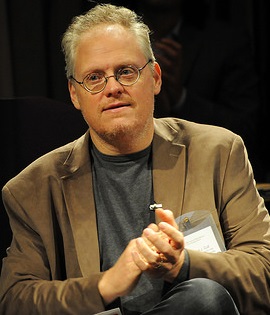
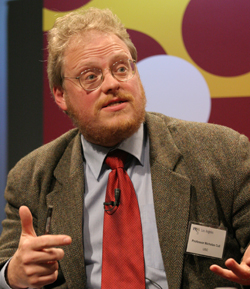
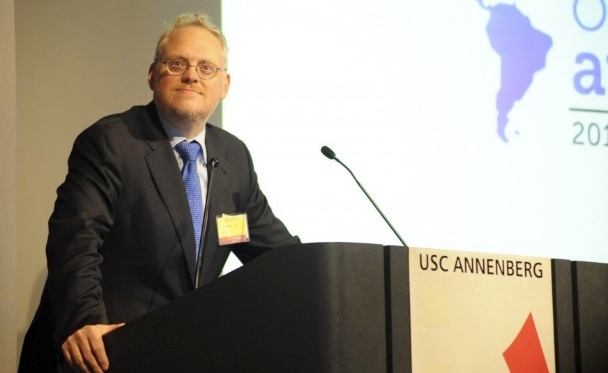
Interview: Nick Cull, Professor of Public Diplomacy at USC Annenberg


placebrandobserver.com


Following our research insight and case study on the public diplomacy strategy of Catalonia as stateless nation earlier this week, today we’d like to introduce you to Nicholas (Nick) Cull, Professor of Public Diplomacy at the University of Southern California Annenberg School. Nick has been at the forefront of public diplomacy research and teaching for many years and, together with Robert Govers, edits the Palgrave Journal Place Branding and Public Diplomacy.

USC Public Diplomacy Professor Nicholas Cull testimonial The Place Brand ObserverNick, do you remember the first time you heard about public diplomacy?

I was born in 1964 and grew up in the UK. As long as I can remember, I was fascinated by both the broadcast media and international affairs.
Even as a child I was aware that the memories and political experiences of my family members were not always in step with the dominant story of the British government or press let alone the picture of the world presented by Hollywood, and the word ‘propaganda’ soon loomed large as a catch-all description of the maze of overlaps and disconnects between the media and international relations.
Specifically I was fascinated by the US government’s spinning of the Bicentennial in 1976, by the discrepancies between BBC news broadcasts for foreign and domestic audiences during the Falklands War of 1982, and – in my own life – by the power of personal interaction with people from elsewhere in Europe, whom I met during summer holidays on a farm in Denmark. All of these experiences touch on the field of public diplomacy.
I was fortunate that when seeking a chance to study international history at degree level I found a wonderful program at the University of Leeds, where a small group of historians led by Nicholas Pronay and Philip M. Taylor were studying propaganda.
I began working in earnest on what I now recognize as public diplomacy, rather than propaganda, in 1985, when I began a research project on the ways in which the British Ambassador to the US during the war – Lord Halifax – worked to rebuild a tarnished personal image and to become a valuable player in Britain’s outreach to the American public.
My PhD, also at Leeds (under Taylor), looked at the whole story of Britain’s communication battle to overcome American isolationism before Pearl Harbor. Looking back on that work, it amazes me how many staples of contemporary public diplomacy and place branding were on display in this period under a different umbrella title.
As my studies advanced chronologically from the Second World War to the Cold War to the post-Cold War period, the vocabulary used in the sources changed from propaganda to information to public diplomacy and ‘new’ public diplomacy, and practices shifted too.
My focus shifted in the process from propaganda to public diplomacy. I find it helpful to look at the differences between the two and stress this when introducing the subject to students and diplomatic trainees.
I knew the term public diplomacy from the late 1980s onwards, but didn’t think of myself explicitly as a public diplomacy scholar until 1995, when I began my history of the United States Information Agency.
I remember the USIA veteran Hans ‘Tom’ Tuch giving me an early masterclass in the use of the term during an oral history interview.

Nick Cull - USC Annenberg(How) has your view on public diplomacy changed over the years?

When I began thinking about the field as a student in 1985, I was drawn to the idea of mastering some kind of alchemy to turn the base metal of unformed public opinion into the gold of a fully mobilized and committed movement.
I no longer see public diplomacy this way. I think it is better understood as a process of bringing the public dimension into foreign policy formation and practice — and getting better policies and better relationships as a result.
Public diplomacy is the process of bringing the public dimension into foreign policy formation and practice – and getting better policies and better relationships as a result.

How does public diplomacy relate to the concept of nation branding?

I see nation branding as one of the most important tools of contemporary public diplomacy. I do classes specifically on nation branding in both my regular Cultural Diplomacy class and the summer class I teach to professional diplomats through USC’s Center on Public Diplomacy.
Like public diplomacy, nation branding relies on a foundation of listening.
Interestingly, the concept of nation branding has added a domestic dimension to public diplomacy, as the best branding campaigns require listening at home as well as overseas, and sometimes that leads to communications interventions at home to ‘maintain the quality of the brand.’

Your key insights so far as Professor of Public Diplomacy at the University of Southern California (Annenberg)?

Public diplomacy expert Nick Cull, USC AnnenbergIt has been one of my great privileges to have spent the last ten years launching and running the world’s first public diplomacy master’s degree at USC.
The quality of the students admitted to that program each year is amazing. They come from around the world and with a range of life experiences but share a conviction that better communication can make the world a better place.
I was surprised by how many of the students were not seeking jobs in government service but rather wanted to work in non-governmental communications, so one insight would be the extent to which PD is moving beyond the state to be a practice of regions, cities and any group with a reason to engage international opinion.

How important is public diplomacy in the 21st century for national but also regional or local governments?

I was struck by Simon Anholt’s remark at the COP 16 climate summit in Cancun back in 2010, that there was only one super-power left on the planet – public opinion – and feel that fact alone means that public diplomacy must be central to the practice of international relations for the century ahead.
I see more players coming into the mix every year and consider cities and regions as among the most significant of these. I’ve been involved in the project to establish a global parliament of mayors, which is part of this process.

Your thoughts on the various country and nation brand rankings out there – good or bad? Which ones do you find most useful and relevant?

To be honest, I rely on the Anholt-Gfk Nation Brands Index. I’ve worked with Simon Anholt over the years and trust his methodology. I think there is a special value in having such an immense data series.
I am a little shocked by the number of competitors springing up – some of which seem mysteriously related to consultancies promising to change a country’s standing in the rankings.
Of the others, I enjoy the Monocle index because it is so well presented, even if the methodology is open to question.

The Good Country Index 2014Your thoughts on the Good Country Index?

I am most impressed by the Good Country Index as a way to encourage countries to contribute to the global commons. I think that its founding insight – that people around the world are more impressed by good countries than strong or rich countries – is profound.
I’ve been fascinated by the way in which the index has teased out ‘good’, which other indices had missed and revealed under-performance in some who assume they are #1. I certainly use it in my teaching.

In your view, what does the future of public diplomacy look like?

I think that the future of public diplomacy lies in collaboration. No single player is rich enough or credible enough to ‘go it alone’ as the US or the USSR could do in the Cold War. Today, actors need to arrange coalitions and partnerships around issues.
While coalition has happened in the past – the anti-Apartheid network of the 1970s and 80s is especially instructive – I see partnerships around issues as the dominant mode of operation in the 21st century. Partners will include state, regional, commercial and NGO voices.

Through a Screen Darkly Media, US, Public Diplomacy book by Martha BaylesYour favorite public diplomacy books in 2014/15?

It is great to see the field evolving. Of books in print, I commend Martha Bayles’ bookThrough a Screen Darkly, which opens the whole issue of how the media is damaging US public diplomacy.
As an academic I am often asked to read books in preparation and my two favorite books of this year are both PhD thesis by students from the program at which my own work began at the University of Leeds: Caitlin Schindler’s book on the pre-history of US public diplomacy and Molly Bettie’s take on the evolution of the Fulbright program.
I also enjoyed a new book by Sarah Ellen Graham of University of Sydney on the progressive origins of US public diplomacy, which is due out from Ashgate later this year.
Thank you, Nick.

Professor Nick Cull, USC AnnenbergAbout Nick Cull

Nicholas J. Cull is Professor of Public Diplomacy and Director of the Master’s Program in Public Diplomacy at USC. His research and teaching interests are inter-disciplinary, and focus on the role of public engagement in foreign policy.
He is the author of The Cold War and the United States Information Agency: American Propaganda and Public Diplomacy, 1945-1989 (Cambridge, 2008) andThe Decline and Fall of the United States Information Agency: American Public Diplomacy, 1989-2001 (Palgrave, 2012).
His first book was Selling War (Oxford, 1995), a study of British information work in the United States before Pearl Harbor. He has published numerous articles on the theme of public diplomacy and media history.

Monday, June 22, 2015

All Tehran’s sister cities


en.mehrnews.com

image from from article

Extract from the article:
Gholamreza Ansari, member of City Council Planning and Budget Commission believes that sisterhood is very critical to exchange of experiences between two cities, provided that the agreement is taken seriously and cultural ties of cities are restored; “all sisterhood agreements had not gone beyond the paper, with little work done to address the agreement articles; adopting positive cultural aspects of the city and exporting our own culture would help public diplomacy of the country,” Ansari told Mehr News.

Sunday, June 21, 2015

Radio Free Asia finances criticized in IG report


publicdiplomacycouncil.org

Via ACP III on Facebook
Sunday, June 21st 2015
Radio Free Asia’s finances were sharply criticized in a report by the Office of the Inspector General released last week, which received little attention in the media.  You can read the entire report at https://oig.state.gov/system/files/aud-fm-ib-15-24.pdf  Here are some highlights: “RFA did not fully comply with Federal procurement requirements for grantees or its own internal procurement process. Specifically, OIG identified instances of noncompliance with Office of Management and Budget (OMB) conflict-of-interest requirements... OIG found that RFA entered into 14 contracts, totaling $4.0 million...with organizations that had some affiliation with either RFA officials or members of the OTF Advisory Council [emphasis added]. Further, of six RFA contracts tested, OIG found that none of the contracts fully complied with other Federal procurement requirements for grantees. Specifically, none of the six contracts were competed, and RFA did not have adequate justification for the lack of competition… Specifically, OIG identified four RFA officials who had some affiliation with two organizations that were awarded a total of seven contracts during FYs 2012 and 2013.”


image from

One of the conflicts involves a foundation started by RFA’s president: “The President of RFA established the Freedom2Connect Foundation (Foundation) in 2011 as a private non-profit 501(c)(3) organization. In addition, RFA employees serve as the Secretary and Treasurer of Freedom2Connect... RFA awarded two contracts, totaling $1.2 million, to the Foundation for anti-censorship projects. The RFA President informed OIG that she disassociated herself from the Foundation
after it was established. However, on her conflict-of-interest form for 2012, she lists herself as a Freedom2Connect advisor." In addition, "the Foundation’s address and suite number are the same as RFA’s address and suite number, and RFA is the registered agent for the Foundation."  [emphasis added]
The foundation then gave the funds “as an unrestricted gift” [emphasis added] to the University of California at Berkeley, prompting the OIG to note that RFA “did not comply with OMB guidance that prohibits grantees from using Government funds for donations or contributions.” And Berkeley was cited in the report as one of the “organizations affiliated with Advisory Council Members,” which the OIG indicated raised a question of conflict of interest.  RFA’s defense was that the two-step transfer of funds eliminated the federal ban on donations: “RFA officials indicated that since RFA did not gift the funds directly to Berkeley but through the Foundation, RFA complied with the OMB requirement. The RFA General Counsel also stated that she believed that the OMB guidance restricting the use of grant funds did not extend beyond the transfer of funds to the Foundation.”
"RFA did not return all unused unobligated funds to BBG at the end of FY 2013 as required by the grant agreement... RFA’s practice was to keep funds received from BBG for 5 years and, at the end of the 5-year period, request permission to use the unused funds for other purposes."
RFA’s personnel-related costs were not in technical compliance with Federal law and grant requirements. Specifically, maximum salary levels for four of seven RFA positions OIG reviewed were higher than the maximum salary levels of comparable BBG [Broadcasting Board of Governors] positions. In addition, 4 of 11 benefits reviewed exceeded the benefits provided to Federal employees."
The report also criticized BBG for failing to supervise RFA properly.
“BBG did not have a well-defined structure for overseeing RFA or its other grantees. Specifically, no single individual or office had primary responsibility for monitoring grantees. … Even within an office, no single individual had primary responsibility for grantee oversight. For example, one individual responsible for monitoring the performance of BBG grants stated that she viewed her responsibilities as performance planning and reporting and not as monitoring. This employee indicated that she had never read the RFA grant agreement.” Further, "the BBG employee who monitored RFA’s financial performance stated that he was not aware of the [BBG] Grantee Handbook until the financial statement auditors asked him about it in FY 2013. The BBG employee who oversees the performance portion of the RFA grant also said that she was not familiar with the Handbook." 
“One BBG official stated...that some officials believed that oversight was not needed because funds were basically 'passed through' BBG to RFA.”
The report included 21 recommendations for improved BBG oversight. BBG agreed with all 21 recommendations.

Israel removes satirical clip on press coverage of Gaza war


After Foreign Press Association protest, Foreign Ministry takes down video ridiculing international journalists

BY Eytan Weinstein, June 21, 2015, 4:59 pm, timesofisrael.com

Extract from article:
The Foreign Ministry pulled an animated 50-second video clip it uploaded last week which ridiculed foreign correspondents for their coverage of last summer’s Israel-Hamas fighting.
image from entry, with caption: A still from a Foreign Ministry clip about news coverage in the Gaza Strip (YouTube screenshot)
The video sparked complaints from the foreign press. The Foreign Press Association said it was “surprised and alarmed by the Israeli Foreign Ministry’s decision to produce a cartoon mocking the foreign media’s coverage of last year’s war in Gaza.”
“It is disconcerting that the ministry would spend its time producing a 50-second video that attempts to ridicule journalists reporting on a conflict in which 2,100 Palestinians and 72 Israelis were killed,” the FPA said.
Ronen Polak, the diplomatic correspondent for Israel Radio, said Sunday, “The Foreign Ministry decided to remove the facetious video, supposedly there to ridicule the journalists of the Foreign Press Association for the nature of their coverage of Operation Protective Edge. In the Foreign Ministry, they’ve understood that it wasn’t a successful joke.”
Ruth Eglash, a writer for The Washington Post in Israel, said, “I’m happy that the Foreign Ministry decided to remove the video clip which represented an unnecessary attack on foreign correspondents and did very little for Israeli public diplomacy.”